There used to be this tiny restaurant tucked away on a side street in Portland, Oregon, called The Gathered Table, that made a fall vegetable stew I still dream about. When they closed their doors after the owner retired in 2018, I honestly felt a little lost. It sounds dramatic, I know, but that stew had become my go-to comfort meal every time I visited the city. After twelve tries — and one particularly sad batch that tasted like soggy cardboard — I finally got it.
I remember the day I cracked the code. It was a rainy Tuesday in October, and I had just pulled out my slow cooker in defeat, thinking, “Let’s just see what happens.” The smell that filled my kitchen that afternoon was so spot-on, I actually texted my sister a photo with the caption, “We’re back, baby.” That first bite brought me right back to that little wooden table by the window, watching the rain streak down the glass while I warmed my hands around that bowl.
This cozy slow cooker fall vegetable and white bean stew is my love letter to that restaurant. It has all the deep, earthy flavors — the tender squash, the creamy beans, the hint of rosemary that somehow makes everything feel like a hug. Maybe you’ve been there, chasing a dish from a place that no longer exists. If so, this one is for you.
Why You’ll Love This Recipe
Let me tell you why this stew has become my secret weapon for every fall gathering I host. It’s not just another vegetable soup — it’s the dish that makes people ask for the recipe before they’ve even finished their bowl.
- Incredibly Easy : You literally toss everything in the slow cooker and walk away. No chopping drama, no standing over a hot stove while your guests are arriving.
- Made with Simple Ingredients : Everything here is from a standard grocery run. No fancy truffle oil or hard-to-find spices — just real, honest food.
- Perfect for Fall Gatherings : Whether it’s a Friendsgiving, a cozy dinner party, or a potluck, this stew screams autumn in the best way possible.
- Crowd-Pleaser : I’ve served this to vegans, meat-eaters, and picky kids, and every single person went back for seconds. It’s that good.
- Unbelievably Satisfying : The combination of creamy white beans and tender vegetables creates this hearty texture that makes you forget there’s no meat in it.
What makes this recipe different from every other vegetable stew out there? It’s the technique of sautéing the tomato paste and aromatics before they hit the slow cooker. That one extra step — taking maybe five minutes — builds a flavor foundation that tastes like the stew simmered all day on a restaurant stove. I learned this trick from a chef friend who told me, “You have to wake up the tomatoes before they go to sleep in the slow cooker.” Honestly, she was right.
This isn’t just a stew — it’s the kind of meal that makes your whole house smell like comfort. The kind where your guests walk in and say, “What is that amazing smell?” before they even take off their coats. It’s perfect for impressing a crowd without any stress, and it lets you actually enjoy your own party instead of being stuck in the kitchen.
What Ingredients You Will Need
This recipe uses simple, wholesome ingredients that come together to create a deeply flavorful and satisfying stew. Most of these are pantry staples or easy fall finds, which makes this perfect for a last-minute gathering.
- Butternut squash, peeled and cubed (about 4 cups) — (adds natural sweetness and a creamy texture when cooked down)
- Carrots, sliced into half-moons (3 medium) — (brings earthy sweetness and color)
- Celery stalks, diced (3 stalks) — (adds a savory backbone)
- Yellow onion, diced (1 large) — (the aromatic foundation)
- Garlic cloves, minced (4 cloves) — (I use fresh, not jarred, for the best punch)
- Cannellini beans, drained and rinsed (2 cans or 3 cups cooked) — (I prefer Progresso or Jovial for their creaminess)
- Diced tomatoes, fire-roasted (1 can, 14.5 oz) — (fire-roasted adds a subtle smokiness that makes this stew special)
- Tomato paste (2 tablespoons) — (this is the secret to deep, rich flavor)
- Vegetable broth, low-sodium (4 cups) — (homemade is lovely, but Better Than Bouillon works beautifully)
- Fresh rosemary, chopped (2 tablespoons) — (dried works too, use 2 teaspoons)
- Fresh thyme leaves (1 tablespoon) — (or 1 teaspoon dried)
- Bay leaves (2) — (don’t skip these, they add background depth)
- Olive oil (3 tablespoons) — (use a good one for sautéing)
- Salt and black pepper — (to taste, I start with 1 teaspoon salt and 1/2 teaspoon pepper)
- Kale or Swiss chard, stems removed and chopped (2 cups) — (adds color and a nutrient boost, stir in at the end)
- Optional garnish: Fresh parsley, grated Parmesan (or nutritional yeast for vegan), crusty bread for serving
When choosing butternut squash, look for one that feels heavy for its size and has a firm, unblemished skin. If you’re short on time, pre-cubed squash from the grocery store works perfectly — just make sure the pieces are roughly the same size for even cooking.
For the white beans, you can use great northern beans or chickpeas if you can’t find cannellini. I’ve made this with both, and honestly, they all work beautifully. Just don’t skip rinsing the canned beans — it washes away the excess sodium and gives you a cleaner flavor.
Equipment Needed
You don’t need a fancy kitchen to make this stew, which is part of its charm. Here’s what you’ll need:
- Slow cooker (5 to 6-quart size) — I use a Crock-Pot brand, but any brand works. If yours runs hot, check the stew an hour earlier than the recipe says.
- Large skillet or sauté pan — for that crucial step of sautéing the tomato paste and aromatics. A 12-inch pan gives you enough room.
- Cutting board and sharp chef’s knife — a dull knife makes squash prep miserable. Trust me on this one.
- Vegetable peeler — for the carrots and squash. A Y-shaped peeler makes quick work of butternut squash skin.
- Wooden spoon or spatula — for stirring the sautéed mixture.
- Measuring cups and spoons — standard set will do.
- Mixing bowl — for holding your prepped vegetables before they go into the slow cooker.
If you don’t have a slow cooker, you can make this in a Dutch oven on the stovetop or in the oven at 325°F for about 2 hours. I’ve done it both ways, and while the slow cooker version is more hands-off, the stovetop version develops a slightly deeper flavor from the direct heat. Both are fantastic.
Preparation Method
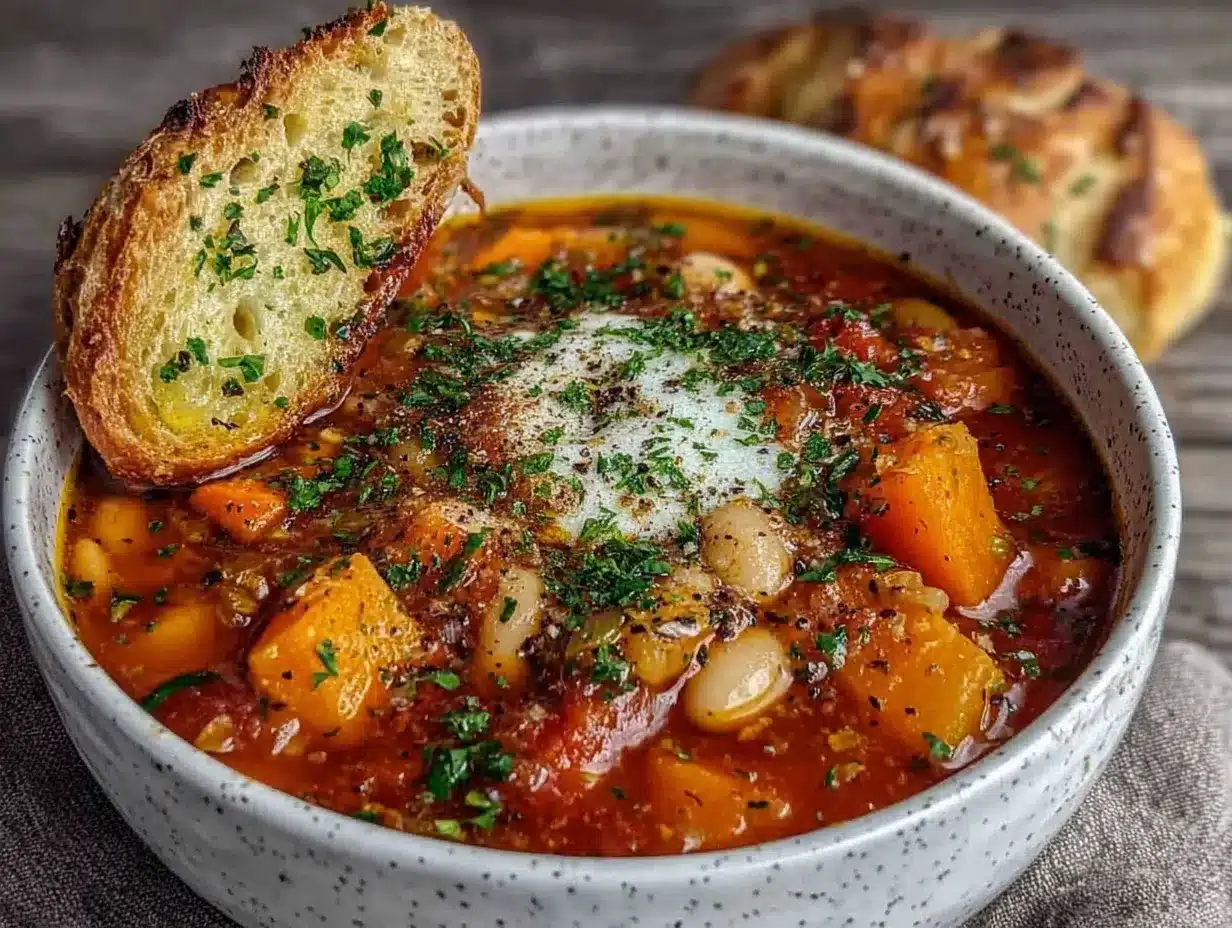
Let me walk you through this step by step. I promise, it’s easier than it looks, and your kitchen will smell incredible.
- Prep your vegetables first. Peel and cube the butternut squash into 1-inch pieces. Slice the carrots into half-moons, dice the celery and onion, and mince the garlic. Put everything except the garlic into the slow cooker insert. This takes about 15 minutes, and I usually do it while listening to a podcast.
- Now for the flavor-building step. Heat the olive oil in your large skillet over medium heat. Add the diced onion and cook for about 4 minutes, until it turns translucent and starts to smell sweet. Add the minced garlic and cook for another 30 seconds — just until fragrant, don’t let it burn.
- Add the tomato paste. Stir it into the onion and garlic mixture and cook for 2 to 3 minutes, stirring constantly. You’ll notice it darkens slightly and smells richer. This is where the magic happens. If it starts sticking to the pan, add a tiny splash of vegetable broth.
- Deglaze the pan. Pour in about 1/2 cup of the vegetable broth and scrape up any browned bits from the bottom of the skillet. This is pure flavor, my friend. Pour this entire mixture into the slow cooker over the vegetables.
- Add the remaining ingredients except the kale. Pour in the rest of the vegetable broth, the drained and rinsed white beans, the fire-roasted diced tomatoes (with their juices), the chopped rosemary, thyme, and bay leaves. Season with salt and pepper. Give everything a good stir to combine.
- Set it and forget it. Cover the slow cooker and cook on LOW for 6 to 7 hours or on HIGH for 3 to 4 hours. The stew is ready when the squash is tender enough to be pierced easily with a fork but still holds its shape. Don’t open the lid too often — every time you do, you lose heat and add cooking time.
- Finish with the greens. About 15 minutes before serving, stir in the chopped kale or Swiss chard. Let it wilt into the stew — it will turn bright green and soften beautifully. Taste and adjust the seasoning one more time. Remove the bay leaves before serving.
- Serve with love. Ladle the stew into bowls and top with fresh parsley and a sprinkle of Parmesan if you’re using it. A slice of crusty bread for dipping is non-negotiable in my house.
A quick note: if your stew seems too thick at the end, stir in an extra 1/2 cup of broth or water. If it’s too thin, leave the lid off for the last 30 minutes of cooking to let some liquid evaporate. I’ve had to do both, and it always works out.
Cooking Tips & Techniques
Over the years, I’ve made every mistake in the book with this stew, so let me save you some trouble.
Don’t skip the sauté step. I know it’s tempting to just dump everything in the slow cooker and call it a day. I’ve done it. The result is a flat, one-dimensional stew that tastes like boiled vegetables. That five-minute sauté of the tomato paste is what gives this stew its deep, almost roasted flavor. It’s non-negotiable.
Cut your vegetables uniformly. This is one of those tips that sounds fussy but actually matters. If your squash pieces are all different sizes, some will turn to mush while others stay crunchy. Aim for 1-inch cubes, and your stew will cook evenly and look beautiful.
Layer your ingredients wisely. Put the harder vegetables like carrots and squash at the bottom of the slow cooker, closer to the heat source. The beans and tomatoes can go on top. This helps everything cook at the same rate.
Resist the urge to peek. Every time you lift that lid, you release steam and add 20 to 30 minutes to your cooking time. I learned this the hard way when I kept checking on my first batch and ended up with undercooked squash after 8 hours. Trust the process.
Season in stages. Add salt at the beginning, but go easy — about 1 teaspoon. Taste at the end and adjust. Beans and broth can vary widely in saltiness, and you can always add more but you can’t take it out.
Make it ahead. This stew actually tastes better the next day. The flavors meld together overnight into something truly magical. If you’re hosting, make it a day ahead and reheat it gently on the stovetop or in the slow cooker. Your guests will think you spent all day cooking.
Variations & Adaptations
One of the things I love most about this stew is how flexible it is. Here are some ways to make it your own.
Make it heartier with meat. Brown 1 pound of Italian sausage or diced chicken thighs in the skillet before sautéing the onions. Remove the meat, then proceed with the recipe. Add the cooked meat back in when you add the broth. I’ve done this for my meat-loving friends, and it disappears fast.
Switch up the vegetables. Use sweet potatoes instead of butternut squash, or add parsnips, turnips, or even chopped cauliflower. In the summer, I swap in zucchini and yellow squash — just add them in the last hour so they don’t turn to mush.
Try different beans. Chickpeas, great northern beans, or even kidney beans work beautifully. Each brings a slightly different texture, but they all work. I once used leftover homemade chickpeas, and the creaminess was next level.
Make it gluten-free and vegan. This recipe is naturally gluten-free as written. For a vegan version, skip the Parmesan garnish and use nutritional yeast for a cheesy flavor. I’ve served this to vegan friends with a dollop of cashew cream on top, and they said it was the best stew they’d ever had.
Add a spicy kick. Stir in 1/2 teaspoon of red pepper flakes along with the rosemary for a subtle heat. Or serve the stew with a drizzle of chili oil on top for a dramatic presentation.
Go herb-crazy. In the summer, I use fresh basil and oregano instead of rosemary and thyme. It gives the stew a completely different personality — brighter and more Mediterranean. Both versions are wonderful in their own way.
Serving & Storage Suggestions
This stew is a showstopper at any fall gathering, and how you serve it makes all the difference.
Serving temperature and presentation. Serve the stew piping hot in deep bowls. I like to garnish each bowl with a sprinkle of fresh parsley, a crack of black pepper, and a drizzle of good olive oil right before serving. It adds a touch of elegance that your guests will notice. A side of crusty bread or garlic toast is perfect for sopping up every last drop.
What to serve alongside. A simple green salad with a tangy vinaigrette cuts through the richness of the stew beautifully. I also love serving this with a side of roasted Brussels sprouts or a crusty baguette with herbed butter. For drinks, a glass of dry red wine or a warm apple cider pairs perfectly with the fall flavors.
Storage instructions. Let the stew cool completely before storing it in an airtight container. It will keep in the refrigerator for up to 5 days. The flavors actually deepen and improve over the first couple of days, so don’t be afraid to make it ahead.
Freezing instructions. This stew freezes like a dream. Portion it into freezer-safe containers or zip-top bags, leaving about an inch of headspace for expansion. It will keep for up to 3 months. Thaw overnight in the refrigerator before reheating.
Reheating methods. Reheat the stew gently on the stovetop over medium-low heat, stirring occasionally. You can also microwave individual portions in 1-minute intervals, stirring between each. If the stew has thickened too much during storage, stir in a splash of broth or water to loosen it up.
How flavors develop. I’ll be honest — this stew is good on day one, but it’s transcendent on day two. The beans continue to absorb the broth, the squash breaks down slightly to thicken everything, and the herbs settle into a beautiful harmony. If you can, make this a day ahead of your gathering.
Nutritional Information & Benefits
This stew isn’t just delicious — it’s packed with nutrients that make you feel as good as you taste.
Estimated nutritional values per serving (1.5 cups): Calories: 285, Total Fat: 8g, Saturated Fat: 1g, Cholesterol: 0mg, Sodium: 580mg, Total Carbohydrates: 45g, Dietary Fiber: 12g, Sugars: 9g, Protein: 12g.
Health benefits of key ingredients. Butternut squash is loaded with vitamin A and fiber, which supports eye health and digestion. White beans are a fantastic source of plant-based protein and iron — perfect for keeping you full and energized. Kale brings a serious dose of vitamins K, A, and C, plus antioxidants that help fight inflammation. The olive oil provides healthy monounsaturated fats that are great for heart health.
Dietary considerations. This stew is naturally vegetarian, vegan (if you skip the Parmesan), gluten-free, and dairy-free. It’s also low in saturated fat and high in fiber, making it a great choice for heart-healthy eating. If you’re watching your sodium, use low-sodium broth and no-salt-added canned tomatoes.
Potential allergens. This recipe is free of the top eight allergens except for possible cross-contamination in canned beans or broth. Always check labels if you’re cooking for someone with severe allergies.
My personal wellness perspective. I love that this stew feels indulgent while being genuinely good for you. It’s the kind of meal that fills you up without weighing you down, and I’ve found it’s perfect for those days when I want comfort food that doesn’t leave me feeling sluggish.
Conclusion
This cozy slow cooker fall vegetable and white bean stew is more than just a recipe — it’s a way to bring people together around your table without spending all day in the kitchen. It’s the dish that makes your house smell like autumn, that makes your guests feel welcomed and cared for, and that leaves everyone asking for the recipe before they leave.
I hope you make this stew your own. Add your favorite vegetables, play with the herbs, serve it with whatever bread you love. That’s the beauty of a recipe like this — it’s a starting point for your own kitchen memories. And honestly, the best version is the one you make with love for the people you care about.
So go ahead, pull out that slow cooker, and give this a try. I’d love to hear how it turns out for you. Drop a comment below and tell me about your favorite fall gathering dish, or tag me in your photos if you share them. Until next time, happy cooking, and may your kitchen always smell like comfort.
Frequently Asked Questions
Can I make this stew on the stovetop instead of a slow cooker?
Absolutely! Use a large Dutch oven or heavy-bottomed pot. After sautéing the aromatics and tomato paste, add all the ingredients except the kale. Bring to a boil, then reduce the heat to low, cover, and simmer for 45 minutes to 1 hour, or until the squash is tender. Stir in the kale and cook for another 5 minutes.
Can I use frozen butternut squash instead of fresh?
Yes, you can use frozen cubed butternut squash. There’s no need to thaw it first — just add it directly to the slow cooker. Keep in mind that frozen squash tends to break down a bit more than fresh, so your stew will be slightly thicker and creamier. I’ve done this many times, and it’s still delicious.
How can I thicken the stew if it’s too watery?
If your stew is thinner than you’d like, try one of these methods: remove the lid for the last 30 to 45 minutes of cooking to let some liquid evaporate, or mash about 1/2 cup of the cooked beans against the side of the slow cooker and stir them back in. The bean starch will naturally thicken the broth without changing the flavor.
Can I add potatoes to this stew?
Definitely! Dice 2 medium Yukon Gold or red potatoes into 1-inch pieces and add them along with the other vegetables. Potatoes add heartiness and help thicken the stew slightly. Just keep in mind that they will increase the total cooking time by about 30 minutes on low heat.
Is this stew freezer-friendly?
Yes, this stew freezes beautifully. Let it cool completely, then transfer it to freezer-safe containers or zip-top bags. It will keep for up to 3 months. When you’re ready to eat it, thaw overnight in the refrigerator and reheat gently on the stovetop. The texture of the beans and squash remains excellent after freezing.
Pin This Recipe!
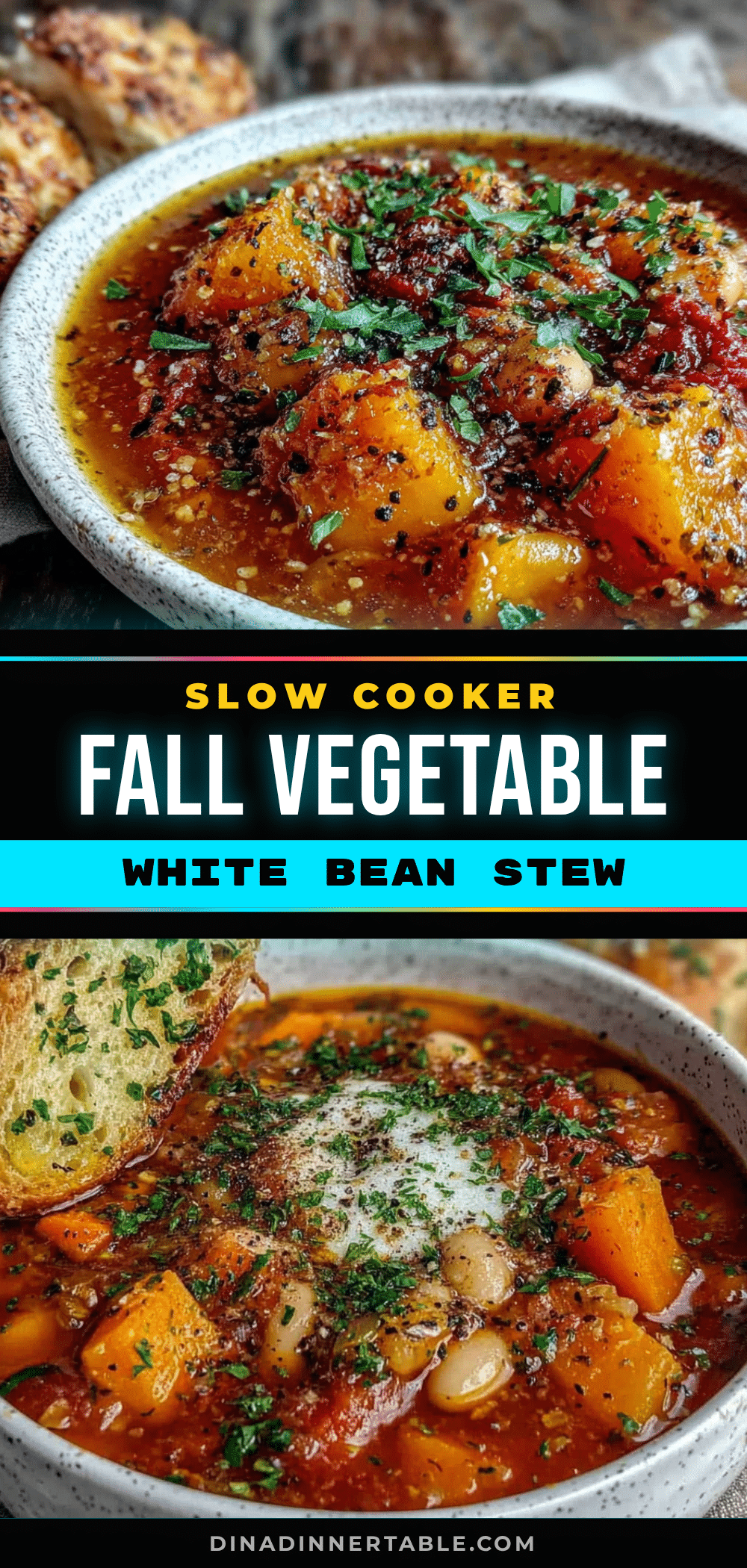
Cozy Slow Cooker Fall Vegetable and White Bean Stew

A hearty, comforting slow cooker stew packed with tender butternut squash, creamy white beans, and earthy fall vegetables, all simmered in a rich, aromatic broth. This easy, crowd-pleasing recipe is perfect for autumn gatherings and tastes even better the next day.
- Prep Time: 15 minutes
- Cook Time: 6 hours (low) or 3.5 hours (high)
- Total Time: 6 hours 15 minutes (low) or 3 hours 45 minutes (high)
- Yield: 6 servings
- Category: Main Course
- Cuisine: American
Ingredients
- Butternut squash, peeled and cubed (about 4 cups)
- Carrots, sliced into half-moons (3 medium)
- Celery stalks, diced (3 stalks)
- Yellow onion, diced (1 large)
- Garlic cloves, minced (4 cloves)
- Cannellini beans, drained and rinsed (2 cans or 3 cups cooked)
- Diced tomatoes, fire-roasted (1 can, 14.5 oz)
- Tomato paste (2 tablespoons)
- Vegetable broth, low-sodium (4 cups)
- Fresh rosemary, chopped (2 tablespoons) or dried (2 teaspoons)
- Fresh thyme leaves (1 tablespoon) or dried (1 teaspoon)
- Bay leaves (2)
- Olive oil (3 tablespoons)
- Salt and black pepper (to taste; start with 1 teaspoon salt and 1/2 teaspoon pepper)
- Kale or Swiss chard, stems removed and chopped (2 cups)
- Optional garnish: Fresh parsley, grated Parmesan (or nutritional yeast for vegan), crusty bread for serving
Instructions
- Prep your vegetables first. Peel and cube the butternut squash into 1-inch pieces. Slice the carrots into half-moons, dice the celery and onion, and mince the garlic. Put everything except the garlic into the slow cooker insert.
- Heat the olive oil in a large skillet over medium heat. Add the diced onion and cook for about 4 minutes, until translucent. Add the minced garlic and cook for another 30 seconds until fragrant.
- Add the tomato paste. Stir it into the onion and garlic mixture and cook for 2 to 3 minutes, stirring constantly, until it darkens and smells richer. If it starts sticking, add a tiny splash of vegetable broth.
- Deglaze the pan. Pour in about 1/2 cup of the vegetable broth and scrape up any browned bits from the bottom of the skillet. Pour this entire mixture into the slow cooker over the vegetables.
- Add the remaining ingredients except the kale. Pour in the rest of the vegetable broth, the drained and rinsed white beans, the fire-roasted diced tomatoes (with their juices), the chopped rosemary, thyme, and bay leaves. Season with salt and pepper. Stir to combine.
- Cover the slow cooker and cook on LOW for 6 to 7 hours or on HIGH for 3 to 4 hours, until the squash is tender but still holds its shape.
- About 15 minutes before serving, stir in the chopped kale or Swiss chard. Let it wilt. Taste and adjust seasoning. Remove the bay leaves before serving.
- Serve hot, garnished with fresh parsley and a sprinkle of Parmesan if desired. A slice of crusty bread for dipping is recommended.
Notes
Don’t skip the sauté step—it builds deep flavor. Cut vegetables uniformly for even cooking. Layer harder vegetables at the bottom of the slow cooker. Resist peeking to avoid heat loss. Season in stages. This stew tastes even better the next day. For stovetop: use a Dutch oven, simmer 45 minutes to 1 hour. For frozen squash, add directly without thawing. To thicken, remove lid for last 30 minutes or mash some beans. Freezes well for up to 3 months.
Nutrition
- Serving Size: 1.5 cups
- Calories: 285
- Sugar: 9
- Sodium: 580
- Fat: 8
- Saturated Fat: 1
- Carbohydrates: 45
- Fiber: 12
- Protein: 12
Keywords: slow cooker, fall vegetable stew, white bean stew, butternut squash, vegetarian, vegan, gluten-free, comfort food, autumn recipe