There used to be this tiny Italian joint tucked between a laundromat and a dusty antiques shop on the south side of town called Rosalina’s. It wasn’t fancy—the red-checkered tablecloths had seen better days, and the waiter always called me “hon.” But they made this garlic butter shrimp pasta that ruined me for all others. When they closed suddenly two years ago (the owner retired to Florida, I heard), I honestly went through a little mourning period. After twelve tries—twelve, let me tell you, some of which ended up in the trash—I finally cracked the code. This quick garlic butter shrimp pasta for spring evenings is the exact recreation of that unforgettable dish, and it comes together in the time it takes to boil water. You know that feeling when you take a bite and your eyes close involuntarily? That’s what we’re going for here.
The first time I nailed it, I actually called my sister at 9 PM on a Tuesday. “I did it,” I said, mouth half-full. She thought I’d finally organized the pantry. Nope—I’d resurrected Rosalina’s magic in my own kitchen, and it only took twenty minutes. This recipe is built for those spring evenings when the light lingers until almost eight, when you want something satisfying but don’t want to spend your whole evening in the kitchen. It’s got that garlic butter thing happening that makes the whole house smell incredible, plump shrimp that cook in minutes, and pasta that soaks up all that saucy goodness. I’ve streamlined every step so there’s no wasted motion—honestly, I’m a little obsessed with efficiency in the kitchen these days.
The beauty of this quick garlic butter shrimp pasta is how it captures that perfect spring moment—not too heavy, not too light, just right. The lemon brightens everything up, the parsley adds that fresh green pop, and the garlic butter coats every strand of pasta like a warm hug. I’ve made this on a Tuesday when I had nothing planned and wanted something comforting, and I’ve made it for friends who showed up unexpectedly on a Saturday. It works every time. Maybe you’ve been there—standing in front of your pantry at 6 PM, hungry and tired, wondering what to make. This is your answer. Let’s get cooking.
Why You’ll Love This Recipe
This isn’t just another pasta recipe—it’s the one that’ll save your weeknights and impress your dinner guests without breaking a sweat. Here’s why it’s earned a permanent spot in my rotation:
- Quick & Easy: From start to finish, this comes together in under 20 minutes. We’re talking faster than takeout delivery, honest to goodness. The shrimp cook in about 3 minutes flat, and the sauce comes together while your pasta boils.
- Simple Ingredients: You probably already have most of this in your kitchen right now. Garlic? Check. Butter? Check. Pasta and shrimp? Those are the only things you might need to grab. No fancy specialty items, no trips to three different stores.
- Perfect for Spring Evenings: This is the kind of meal that matches the season perfectly—light enough for those warm evenings but satisfying enough to feel like a real dinner. It’s great for al fresco dining on the patio or a quick meal before an evening walk.
- Crowd-Pleaser: I’ve served this to picky kids, seafood skeptics, and pasta purists. Everyone loves it. The garlic butter is universally appealing, and the shrimp are mild and sweet enough to win over almost anyone.
- Unbelievably Delicious: The texture is everything—tender shrimp, al dente pasta, and a sauce that’s silky without being heavy. The lemon and parsley cut through the richness just enough to keep you going back for seconds.
What makes this version different from every other garlic butter shrimp pasta out there? Two things. First, I use a technique where you finish cooking the pasta in the sauce for the last minute—this makes the pasta absorb all that garlicky, buttery flavor instead of just being coated in it. Second, I add a splash of pasta water at just the right moment to create an emulsified sauce that clings to every strand. It’s these small moves that take this from good to “close your eyes and savor it” territory.
This recipe is the kind that makes you feel like a genius in the kitchen with minimal effort. It’s comfort food that feels a little fancy but comes together with the ease of a weeknight staple. Perfect for those spring evenings when you want something delicious without spending your whole evening cooking and cleaning up.
What Ingredients You Will Need
This recipe uses simple, wholesome ingredients that come together to create something greater than the sum of their parts. Everything here is easy to find at any grocery store, and most are pantry staples you likely already have on hand.
For the Pasta
- 8 ounces linguine or spaghetti (I prefer De Cecco for its texture, but any good-quality pasta works—use gluten-free if needed)
- Salt for the pasta water (be generous—the water should taste like the sea)
For the Garlic Butter Shrimp
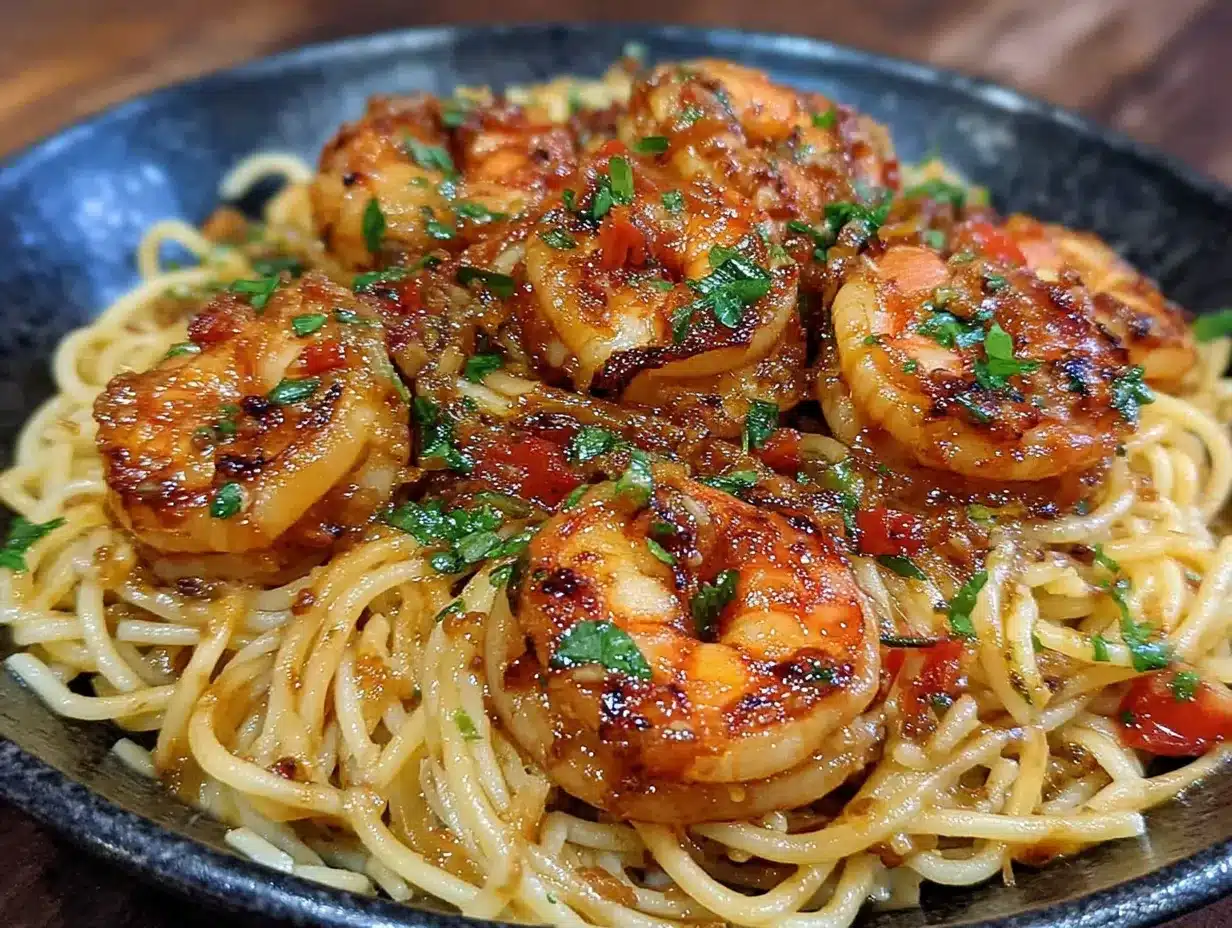
- 1 pound large shrimp, peeled and deveined (look for 21-25 count per pound—they’re the perfect size for this dish)
- 4 tablespoons unsalted butter, divided (use salted butter and reduce added salt if that’s what you have)
- 6 cloves garlic, minced (fresh only—please don’t use the jarred stuff here, it makes a real difference)
- 1/4 teaspoon red pepper flakes (optional, but I love the tiny kick it adds—adjust to your heat preference)
- 1/2 teaspoon salt, plus more to taste
- 1/4 teaspoon black pepper, freshly ground
For the Sauce and Finish
- 1/4 cup dry white wine (something you’d drink—I use Pinot Grigio, but any dry white works; substitute with chicken broth if needed)
- 1/3 cup reserved pasta water (this is liquid gold for creating the sauce)
- 2 tablespoons fresh lemon juice (about half a lemon—always use fresh, not bottled)
- 1 teaspoon lemon zest (don’t skip this—it adds brightness you can’t get from juice alone)
- 1/4 cup fresh parsley, chopped (flat-leaf Italian parsley has the best flavor)
- Freshly grated Parmesan cheese for serving (get a block and grate it yourself—it melts so much better)
A few ingredient notes from my kitchen to yours. For the shrimp, I always buy frozen and thaw them myself—they’re typically flash-frozen right after catching, so they’re actually fresher than the “fresh” shrimp at the counter. Just place them in a colander under cold running water for about 5 minutes, and they’re ready to go. Look for shrimp that are firm and smell like the ocean, not fishy or ammonia-like. If you’re using previously frozen shrimp, pat them very dry with paper towels before cooking—excess moisture is the enemy of a good sear.
For the butter, I use unsalted so I can control the salt level myself. If all you have is salted butter, just cut back on the added salt by about half. And that garlic—please, please use fresh cloves. The pre-minced stuff in oil has a different flavor that just doesn’t deliver the same punch. It takes about 30 seconds to mince six cloves, and the difference is night and day. Trust me on this one.
If you’re looking to make substitutions, here are some that work well. Use gluten-free pasta if needed—just adjust cooking time according to the package directions. For a dairy-free version, substitute the butter with a good quality vegan butter or olive oil (the flavor will change but it’ll still be delicious). No white wine on hand? Chicken or vegetable broth works fine, though you’ll lose a bit of that acidity. And if you’re watching your carb intake, this works beautifully over zucchini noodles or spaghetti squash—just reduce the cooking time significantly.
Equipment Needed
The beauty of this recipe is that it doesn’t require any fancy equipment. Here’s what you’ll need:
- Large pot for boiling pasta (at least 4 quarts capacity)
- Large skillet or sauté pan (12-inch is ideal—you need room for the shrimp to cook in a single layer)
- Colander for draining pasta (or just use tongs to transfer pasta directly to the skillet)
- Chef’s knife and cutting board for mincing garlic and chopping parsley
- Measuring spoons and a liquid measuring cup
- Microplane or zester for the lemon zest (a box grater works too)
- Tongs for tossing everything together
- Wooden spoon or spatula for stirring
If you don’t have a microplane, honestly, a vegetable peeler can get you strips of lemon peel that you can mince finely. And if you’re short on skillets, a deep sauté pan or even a wok works great for this dish. The key is having enough surface area to cook the shrimp without crowding them—if they’re piled on top of each other, they’ll steam instead of sear, and you’ll miss out on that lovely browning.
I’ve made this recipe with a cheap non-stick skillet and with my fancy stainless steel pan, and both work fine. The non-stick is easier to clean, but the stainless gives you a bit more browning on the shrimp. Your call. Just don’t use cast iron unless it’s very well-seasoned—the wine and lemon juice can react with the metal and give everything a metallic taste. Learned that one the hard way.
Preparation Method
Let’s walk through this together. I’ve timed everything so it comes together smoothly with no wasted moments. Set a timer for 20 minutes and let’s go.
- Bring a large pot of water to a rolling boil. Add a generous tablespoon of salt—the water should taste like the sea. This is the only chance you have to season the pasta from the inside out. While the water comes to a boil, prep your ingredients: mince the garlic, chop the parsley, zest and juice the lemon, and pat the shrimp very dry with paper towels. Season the shrimp with 1/4 teaspoon salt and 1/8 teaspoon pepper.
- Cook the pasta according to package directions until al dente. For linguine or spaghetti, this is usually about 8-10 minutes. Set a timer for 1 minute less than the package says—you’ll finish cooking it in the sauce. Before you drain the pasta, scoop out about 1 cup of the starchy pasta water and set it aside. This is crucial for the sauce, so don’t forget this step. I’ve done it, and the sauce just isn’t the same without it.
- While the pasta cooks, start the shrimp. Heat a large skillet over medium-high heat. Add 2 tablespoons of the butter and let it melt until it’s foaming but not browning. Add the shrimp in a single layer—cook for about 90 seconds on the first side until they’re pink and slightly browned. Flip them and cook for another 60 seconds. They should be just cooked through, with a slight curl. Remove the shrimp to a plate and set aside. Don’t overcook them here—they’ll get a little more heat when you add them back to the sauce.
- Make the garlic butter sauce. Reduce the heat to medium and add the remaining 2 tablespoons of butter to the same skillet. Once melted, add the minced garlic and red pepper flakes. Cook for about 30-45 seconds, stirring constantly, until the garlic is fragrant but not browned. Burnt garlic is bitter and will ruin the dish, so keep an eye on it. When you can smell that amazing garlic aroma filling your kitchen, you’re ready for the next step.
- Deglaze the pan with the wine. Pour in the white wine and use your wooden spoon to scrape up any browned bits from the bottom of the pan. These bits are packed with flavor from the shrimp and butter, so don’t leave them behind. Let the wine simmer for about 1 minute until it’s reduced by about half. You’ll see it thicken slightly and the alcohol will cook off.
- Add the pasta water and lemon. Pour in 1/3 cup of the reserved pasta water, the lemon juice, and the lemon zest. Stir everything together and let it simmer for about 30 seconds. The sauce should look slightly creamy and emulsified—that’s the starch from the pasta water doing its magic. Taste it and add the remaining 1/4 teaspoon salt and 1/8 teaspoon pepper, or adjust to your preference.
- Finish the pasta in the sauce. Using tongs, transfer the cooked pasta directly from the pot to the skillet with the sauce. Don’t drain it completely—a little bit of pasta water clinging to the noodles is fine. Toss the pasta with the sauce for about 1 minute over medium heat. You’ll see the sauce thicken and coat every strand beautifully. If it seems too thick, add a splash more pasta water. If it’s too thin, let it cook another 30 seconds.
- Add the shrimp back in. Return the cooked shrimp to the skillet along with any juices that accumulated on the plate. Toss everything together for about 30 seconds, just until the shrimp are heated through. Add the chopped parsley and give it one final toss. The parsley will wilt slightly and add that fresh, bright flavor.
- Serve immediately. Divide the pasta between warm bowls and top with freshly grated Parmesan cheese. A little extra parsley and a pinch of red pepper flakes make a pretty garnish. Serve right away while everything is hot and the pasta is perfectly coated.
A few notes on timing. If you’re serving this to guests, have everything prepped before you start cooking—the actual cooking time is only about 12 minutes, but it moves fast. I like to set out the cheese grater and the serving bowls before I even turn on the stove. And here’s a pro tip: warm your serving bowls in the microwave for 30 seconds or in a low oven. Cold bowls can cool down the pasta before it even hits the table, and you worked too hard for that perfect sauce to let it get cold.
The sensory cues to watch for: the garlic should be fragrant but not browned, the wine should reduce until it coats the back of a spoon, and the pasta should be glossy and well-coated when you’re done tossing. The shrimp should be pink and slightly curled—if they’re tightly curled into little O’s, they’re overcooked. You want a gentle C shape. And that moment when you add the pasta water and see the sauce come together into something silky and beautiful? That’s the magic. That’s when you know you’ve got it right.
Cooking Tips & Techniques
After making this dish more times than I can count (and messing it up plenty along the way), I’ve gathered some tips that’ll help you nail it on the first try.
Don’t overcook the shrimp. This is the number one mistake I see people make. Shrimp cook incredibly fast—about 2-3 minutes total—and they go from perfectly cooked to rubbery in about 30 seconds. The moment they turn pink and start to curl, get them out of the pan. They’ll finish cooking when you add them back to the sauce at the end. I learned this lesson the hard way when I made this for a dinner party and served shrimp that bounced off the plate. Not my finest moment.
Reserve more pasta water than you think you need. I always scoop out at least a full cup, even though I only use about a third of it. Sometimes the sauce needs a little extra to get the right consistency, and there’s nothing worse than having to use plain water because you ran out of pasta water. The starch in that water is what makes the sauce cling to the pasta instead of pooling at the bottom of the bowl.
Use the right heat levels at the right time. High heat for searing the shrimp, medium heat for cooking the garlic, and medium heat for finishing the pasta. If you keep the heat too high when adding the garlic, it’ll burn before you even get the wine in. If the heat is too low when you add the pasta, the sauce won’t emulsify properly. It sounds fussy, but once you get the feel for it, it becomes second nature.
Timing is everything. Start the pasta first, then start the shrimp about 2 minutes before the pasta is done. This way, everything finishes at the same time. I like to set my pasta timer for 1 minute less than the package says, then start the shrimp. By the time the shrimp are done and the sauce is coming together, the pasta is ready to transfer. It takes a little coordination, but it’s worth it for that perfectly timed finish.
Pat those shrimp dry. I cannot stress this enough. Wet shrimp won’t brown properly—they’ll steam in the pan and release liquid that dilutes your sauce. Take the extra 30 seconds to really blot them dry with paper towels. Your future self will thank you when you get that beautiful golden-brown sear.
One more thing—taste as you go. I know it sounds obvious, but I’ve caught myself skipping this step when I’m in a hurry. Taste the sauce before you add the pasta. Does it need more salt? More lemon? A pinch more red pepper? Adjust it now, not after everything’s combined. Your taste buds are the best tool in your kitchen.
Variations & Adaptations
This recipe is wonderfully adaptable, and I’ve tried several variations over the years. Here are some of my favorites:
Vegetable-Loaded Version: Add a cup of halved cherry tomatoes and a handful of baby spinach when you add the wine. The tomatoes will soften and burst, adding sweetness, and the spinach will wilt into the sauce. I made this version last spring when I had an abundance of cherry tomatoes from the farmer’s market, and it was honestly just as good as the original. Add some asparagus spears cut into 2-inch pieces for extra spring vibes—just blanch them in the pasta water for 2 minutes before adding the pasta.
Spicy Cajun Twist: Replace the red pepper flakes with 1 teaspoon of Cajun seasoning and add a diced bell pepper along with the garlic. Use andouille sausage instead of shrimp for a different take, or keep the shrimp and add the sausage too. This version is fantastic for when you want something with a little more kick. My neighbor brought over some homemade Cajun seasoning once, and I’ve been using it in this dish ever since.
Lighter Lemon-Herb Version: Cut the butter in half and use 2 tablespoons of olive oil instead. Increase the lemon juice to 3 tablespoons and add a teaspoon of fresh thyme leaves along with the parsley. This version is perfect for those hot spring days when you want something bright and fresh. It’s still satisfying but feels lighter on the palate.
Dairy-Free Adaptation: Use a high-quality vegan butter or good olive oil in place of the regular butter. The texture will be slightly different—less creamy, more silky—but the flavor is still fantastic. I’ve also used cashew cream (soaked cashews blended with water) added at the end for richness. It’s not the same as butter, but it’s delicious in its own right.
Protein Swap: Chicken works beautifully here—just slice boneless, skinless chicken breasts into thin strips and cook them the same way as the shrimp. Scallops are also amazing if you’re feeling fancy. And for a vegetarian version, try it with pan-seared mushrooms or crispy tofu. The sauce is versatile enough to work with just about anything.
Serving & Storage Suggestions
This dish is best served immediately, right from the skillet to the bowl. The pasta continues to absorb the sauce as it sits, so leftovers will be a bit drier the next day. But that doesn’t mean you can’t enjoy them—they just need a little love during reheating.
Serving Temperature: Serve hot, straight from the stove. The butter and cheese should be melted and glossy, the shrimp warm throughout. I like to serve this in wide, shallow bowls with a sprinkle of extra Parmesan and a lemon wedge on the side. A little fresh parsley on top adds color and freshness.
What to Serve With It: A simple green salad with a lemony vinaigrette is perfect alongside—it adds freshness and crunch. Crusty bread is also essential for sopping up any extra garlic butter sauce left in the bowl. For drinks, a crisp white wine like Pinot Grigio or Sauvignon Blanc complements the dish beautifully. A cold beer works too—something light and citrusy like a wheat beer or pale ale.
Storage Instructions: Store leftovers in an airtight container in the refrigerator for up to 3 days. The pasta will absorb some of the sauce, so don’t expect it to be quite as saucy the next day. To reheat, add a splash of water or chicken broth to a skillet over medium heat, add the pasta, and toss until heated through. The microwave works in a pinch, but the stovetop method gives you better control and helps revive the sauce.
Freezing: I don’t recommend freezing this dish. The texture of both the shrimp and the pasta suffers significantly upon thawing. If you must freeze it, do so before adding the shrimp—freeze the pasta and sauce separately, then add fresh shrimp when you reheat. But honestly, this is one of those dishes that’s so quick to make that freezing doesn’t really save you much time.
Flavor Development: Interestingly, the sauce flavors actually meld and deepen overnight. While the texture isn’t as perfect as fresh, the garlic and lemon flavors become more integrated. Some people actually prefer the leftovers for this reason. Just don’t expect the shrimp to be as tender—they’ll be a bit firmer after sitting in the fridge.
Nutritional Information & Benefits
Here’s a rough estimate for one serving (about 1/4 of the recipe, using 8 ounces of pasta and 1 pound of shrimp):
- Calories: Approximately 480
- Protein: 32g
- Carbohydrates: 45g
- Fat: 18g
- Fiber: 3g
- Sodium: 780mg
These values will vary based on your specific ingredients and portion sizes. The Parmesan cheese and extra butter will add more calories, so adjust accordingly.
Health Benefits: Shrimp is an excellent source of lean protein, providing about 20 grams per 3-ounce serving with very little fat. It’s also rich in selenium, an important antioxidant, and contains omega-3 fatty acids that support heart and brain health. Garlic has been studied for its potential to support immune function and cardiovascular health. The lemon juice provides a good dose of vitamin C, and the parsley adds vitamin K and antioxidants.
Dietary Considerations: This recipe is naturally low in sugar and can be made gluten-free by using gluten-free pasta. For a lower-carb option, serve over zucchini noodles or spaghetti squash instead of traditional pasta. It’s also relatively low in saturated fat if you use a heart-healthy oil instead of butter. The main allergens are shellfish (shrimp), dairy (butter and Parmesan), and gluten (pasta), so keep those in mind for guests with sensitivities.
I personally love that this dish feels indulgent but doesn’t leave me feeling heavy afterward. It’s satisfying without being overwhelming, which is exactly what I want on a spring evening when I still have energy to go for a walk after dinner.
Conclusion
This quick garlic butter shrimp pasta is everything I loved about Rosalina’s version—the garlicky richness, the tender shrimp, the perfectly coated pasta—but made in my own kitchen in under 20 minutes. It’s become my go-to for those spring evenings when I want something that feels special but doesn’t require a whole production. The recipe is forgiving enough for beginners but rewarding enough for experienced cooks, and the flavor is honestly restaurant-quality.
I hope you’ll give this a try and make it your own. Maybe you’ll add extra red pepper for heat, or throw in some vegetables, or serve it with a different type of pasta. That’s the beauty of a simple recipe like this—it’s a foundation you can build on. The first time you take that bite and your eyes close involuntarily, you’ll know you’ve got it right.
If you make this recipe, I’d love to hear about it. Drop a comment below and let me know how it turned out, what variations you tried, or just share your own garlic butter shrimp pasta story. And if you loved it, share it with a friend who needs a quick, delicious dinner in their life. Happy cooking, friends—here’s to many more spring evenings spent around the table with good food and good people.
Frequently Asked Questions
Can I use frozen shrimp for this recipe?
Absolutely—I actually prefer frozen shrimp for this dish. Just thaw them completely under cold running water and pat them very dry before cooking. Wet shrimp won’t brown properly, so don’t skip the drying step.
What’s the best pasta shape for this recipe?
Linguine or spaghetti are traditional, but any long pasta works beautifully. I’ve also made this with fettuccine and angel hair. Short pasta like penne or fusilli works too, though the sauce doesn’t cling quite as well. Use whatever you have on hand.
Can I make this without wine?
Yes! Substitute the white wine with chicken broth or vegetable broth. Add an extra squeeze of lemon juice at the end to make up for the acidity the wine would have provided. It won’t be exactly the same, but it’ll still be delicious.
How do I know when the shrimp are perfectly cooked?
Perfectly cooked shrimp are pink on the outside and white on the inside, with a gentle C-shaped curl. If they’re tightly curled into an O shape, they’re overcooked. They should feel firm but still have a slight give when you press them. When in doubt, take them out a little early—they’ll continue cooking from residual heat.
Can I prepare this dish in advance for a dinner party?
I don’t recommend fully preparing this in advance, as the pasta will continue to absorb the sauce and the shrimp will become rubbery. However, you can prep all the ingredients ahead of time—peel and devein the shrimp, mince the garlic, chop the parsley, and zest the lemon. Then the actual cooking takes only about 12 minutes. Your guests will be impressed by how quickly dinner appears!
Pin This Recipe!
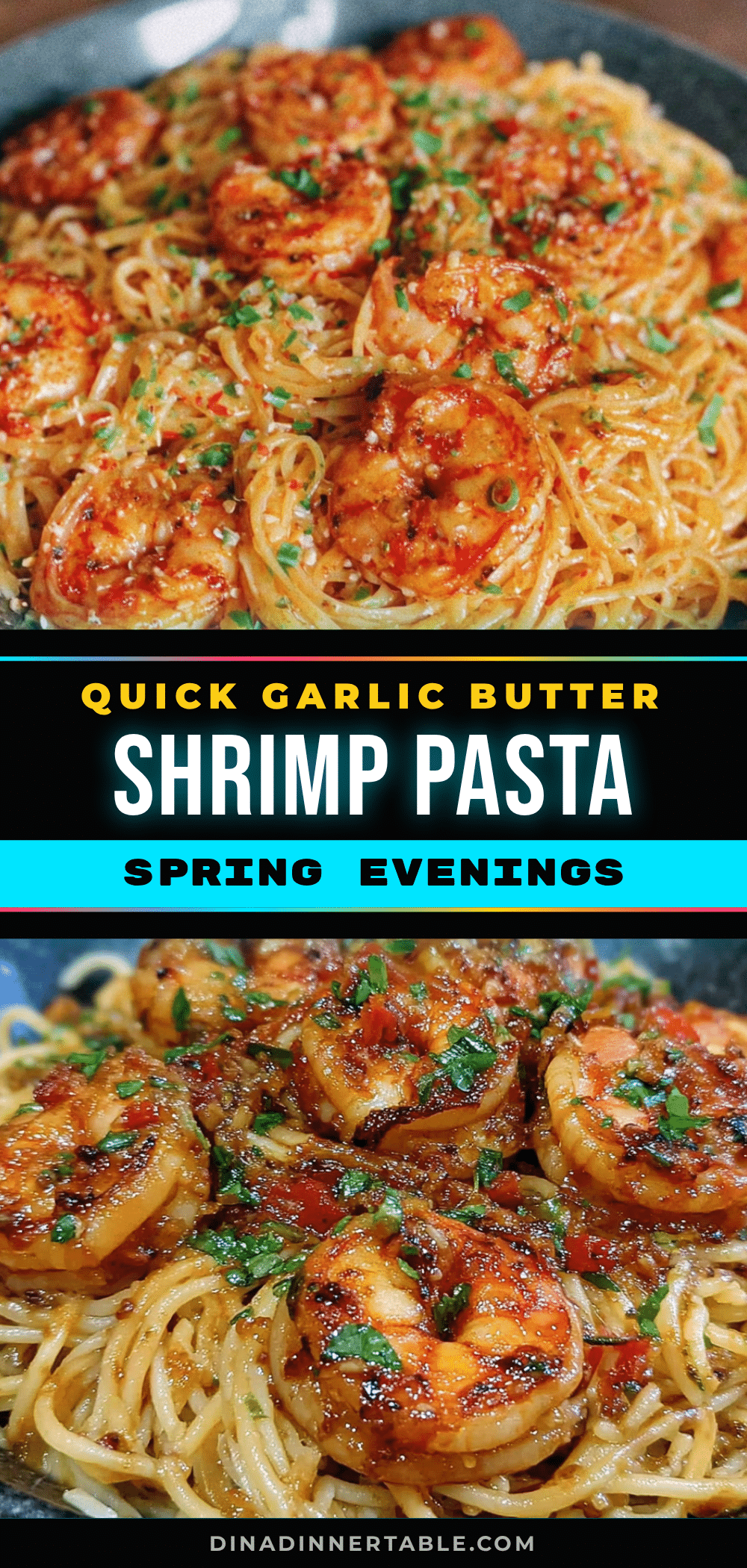
Quick Garlic Butter Shrimp Pasta: Easy 20-Minute Spring Dinner
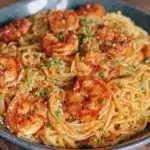
This quick garlic butter shrimp pasta is a recreation of a beloved dish from a tiny Italian joint, coming together in under 20 minutes. It features tender shrimp, al dente pasta, and a silky garlic butter sauce brightened with lemon and parsley.
- Prep Time: 10 minutes
- Cook Time: 10 minutes
- Total Time: 20 minutes
- Yield: 4 servings 1x
- Category: Main Course
- Cuisine: Italian
Ingredients
- 8 ounces linguine or spaghetti
- Salt for pasta water
- 1 pound large shrimp, peeled and deveined (21–25 count)
- 4 tablespoons unsalted butter, divided
- 6 cloves garlic, minced
- 1/4 teaspoon red pepper flakes (optional)
- 1/2 teaspoon salt, plus more to taste
- 1/4 teaspoon black pepper, freshly ground
- 1/4 cup dry white wine (e.g., Pinot Grigio)
- 1/3 cup reserved pasta water
- 2 tablespoons fresh lemon juice
- 1 teaspoon lemon zest
- 1/4 cup fresh parsley, chopped
- Freshly grated Parmesan cheese for serving
Instructions
- Bring a large pot of water to a rolling boil. Add a generous tablespoon of salt. While the water comes to a boil, prep ingredients: mince garlic, chop parsley, zest and juice lemon, and pat shrimp very dry with paper towels. Season shrimp with 1/4 teaspoon salt and 1/8 teaspoon pepper.
- Cook pasta according to package directions until al dente, about 8-10 minutes. Set a timer for 1 minute less than package says. Before draining, scoop out about 1 cup of starchy pasta water and set aside.
- While pasta cooks, heat a large skillet over medium-high heat. Add 2 tablespoons butter and let it melt until foaming but not browning. Add shrimp in a single layer; cook for about 90 seconds on the first side until pink and slightly browned. Flip and cook for another 60 seconds. Remove shrimp to a plate and set aside.
- Reduce heat to medium and add remaining 2 tablespoons butter to the same skillet. Once melted, add minced garlic and red pepper flakes. Cook for 30-45 seconds, stirring constantly, until fragrant but not browned.
- Pour in white wine and use a wooden spoon to scrape up any browned bits from the bottom of the pan. Let simmer for about 1 minute until reduced by half.
- Add 1/3 cup reserved pasta water, lemon juice, and lemon zest. Stir and let simmer for about 30 seconds. Taste and add remaining 1/4 teaspoon salt and 1/8 teaspoon pepper, or adjust to preference.
- Using tongs, transfer cooked pasta directly from the pot to the skillet with the sauce. Toss pasta with sauce for about 1 minute over medium heat until sauce thickens and coats the pasta. Add more pasta water if needed.
- Return cooked shrimp to the skillet along with any accumulated juices. Toss together for about 30 seconds until heated through. Add chopped parsley and give one final toss.
- Serve immediately in warm bowls, topped with freshly grated Parmesan cheese. Garnish with extra parsley and a pinch of red pepper flakes if desired.
Notes
Pat shrimp very dry for best browning. Reserve more pasta water than needed. Taste sauce before adding pasta. Serve immediately for best texture. Leftovers can be stored in an airtight container in the refrigerator for up to 3 days; reheat with a splash of water or broth.
Nutrition
- Serving Size: 1/4 of recipe
- Calories: 480
- Sugar: 2
- Sodium: 780
- Fat: 18
- Saturated Fat: 10
- Carbohydrates: 45
- Fiber: 3
- Protein: 32
Keywords: garlic butter shrimp pasta, quick pasta, spring dinner, shrimp recipe, easy weeknight dinner