I swore I hated mulled wine. For years. The kind of long-held position that becomes part of your identity—I’m just not a hot spiced wine person, I’d announce at holiday parties, waving off steaming cups like I was dodging a bad idea. Then my sister-in-law caught me red-handed at her annual Christmas gathering, hovering near the slow cooker with my third cup, trying to look casual about it.
“I thought you hated this stuff,” she said, not even hiding her grin.
I blame the cinnamon. And the orange. And the fact that this version doesn’t taste like someone dumped a spice rack into cheap wine and called it festive. She’d made it in her slow cooker—that old, slightly stained one she’s had since college—and the whole house smelled like winter in a way that made you forget the freezing rain outside. I mean, honestly, I didn’t stand a chance.
That was three winters ago, and I’ve been making this Guest-Favorite Slow Cooker Mulled Wine with Orange and Cinnamon ever since. It’s become my secret weapon for hosting, the thing people ask for by name when they RSVP. And yes, I still tell that story every time someone says they don’t like mulled wine. Maybe you’ve been there too—certain you hate something until the right version comes along and proves you gloriously wrong.
Why You’ll Love This Recipe
Let me tell you why this mulled wine is different from those sad, syrupy versions you’ve probably tried at holiday parties. I’ve tested this recipe at least a dozen times across different gatherings—from casual Sunday potlucks to my sister’s engagement party—and it’s never let me down. The secret isn’t complicated; it’s just about letting the slow cooker do the heavy lifting while you focus on being a host.
- Set It and Forget It: This recipe comes together in under 10 minutes of active prep. The slow cooker handles the rest, which means you’re not stuck stirring a pot when your guests arrive.
- Simple Ingredients: No hunting down obscure spices or expensive liqueurs. You probably have most of this in your pantry right now—cinnamon sticks, whole cloves, a good bottle of red wine, and fresh oranges.
- Perfect for Hosting: This is the ultimate party drink. It fills your home with that cozy, welcoming aroma before anyone even walks through the door. Guests gravitate toward it like moths to a flame.
- Crowd-Pleaser: I’ve served this to wine snobs and casual drinkers alike, and everyone goes back for seconds. Even people who claim they don’t like sweet drinks end up asking for the recipe.
- Unbelievably Easy to Scale: Hosting a crowd of twelve? Just double everything. Having a quiet night in? Halve it. The ratios stay the same, and it always comes out perfect.
This isn’t just another mulled wine recipe. It’s the one that makes you close your eyes after that first sip—the kind where the warmth spreads from your chest to your fingertips. It’s comfort in a mug, but with enough sophistication to impress your most discerning guests. And honestly, it makes you look like you spent hours in the kitchen when you really just sliced some oranges and turned on a slow cooker.
What Ingredients You Will Need
This recipe relies on simple, wholesome ingredients that work together to create something genuinely special. The magic happens when the citrus, spices, and wine meld together over low heat, each component playing its part without overpowering the others.
- 1 bottle (750 ml) dry red wine – Go for something drinkable but not expensive. A Merlot, Zinfandel, or Cabernet Sauvignon works beautifully. I personally reach for a mid-range Merlot from California—it’s fruity enough to complement the spices without being jammy. (Avoid anything labeled “cooking wine” or overly sweet dessert wines.)
- 1/4 cup (60 ml) brandy or cognac – This adds depth and a little kick. You can skip it if you prefer a lighter drink, but honestly, it makes a difference. I use a basic VS cognac that costs around $20 and it works perfectly.
- 1/4 cup (50 g) brown sugar – Light or dark both work. Dark brown sugar adds a deeper molasses note, while light keeps it milder. You can adjust the sweetness to your taste—start with 1/4 cup and add more if needed. (Honey or maple syrup also work in a pinch.)
- 2 large oranges – One gets sliced into rounds for the pot. The other gets juiced and peeled—the zest goes in for brightness, the juice for sweetness. Look for heavy, firm oranges with thin skin for the best flavor.
- 4 cinnamon sticks – Real cinnamon sticks, not the ground stuff. Cassia cinnamon is the most common and works great, but if you can find Ceylon cinnamon, it has a milder, more delicate flavor. (Ground cinnamon will make the wine cloudy and muddy—stick with whole sticks.)
- 8 whole cloves – A little goes a long way. Too many and your wine will taste like a dentist’s office. I count them out carefully—eight is the sweet spot for one bottle of wine.
- 2 star anise pods – This is optional, but I love the subtle licorice note it adds. If you’re not a fan of anise flavor, just leave it out. No harm done.
- 1 vanilla bean or 1 teaspoon vanilla extract – The vanilla bean adds beautiful little specks and a rounder sweetness. If using extract, stir it in just before serving to preserve the flavor.
- Additional orange slices and cinnamon sticks for garnish – Because presentation matters, especially when you’re hosting. Fresh garnishes make the drink feel special.
Equipment Needed
You don’t need much for this recipe, which is part of its beauty. Here’s what you’ll need:
- Slow cooker (3 to 4-quart size) – This is the star of the show. A smaller slow cooker works best for a single batch because it keeps the liquid deep enough to fully infuse the flavors. My go-to is a basic 4-quart model I picked up at a garage sale for eight dollars—it’s been running strong for years.
- Vegetable peeler – For getting wide strips of orange zest without the bitter white pith. A Y-peeler gives you the most control.
- Sharp knife and cutting board – For slicing oranges cleanly. A serrated knife works especially well for citrus.
- Measuring cups and spoons – For the brandy, sugar, and spices. Eyeballing works for some things, but mulled wine benefits from balance.
- Ladle – For serving. A small one (about 4 ounces) lets guests control how much they take.
- Mugs or heatproof glasses – Clear glass mugs show off the beautiful color and floating orange slices, but ceramic mugs keep the drink warmer longer.
- Cheesecloth or a reusable tea bag (optional) – If you want to contain the whole cloves and star anise for easy removal. I usually just fish them out with a spoon before serving, but the cheesecloth method is neater.
If you don’t have a slow cooker, you can absolutely make this on the stovetop in a large pot over low heat. Just keep it at a gentle simmer—never a boil—and stir occasionally. The slow cooker is just more forgiving and keeps the wine at the perfect temperature for hours without any attention.
Preparation Method
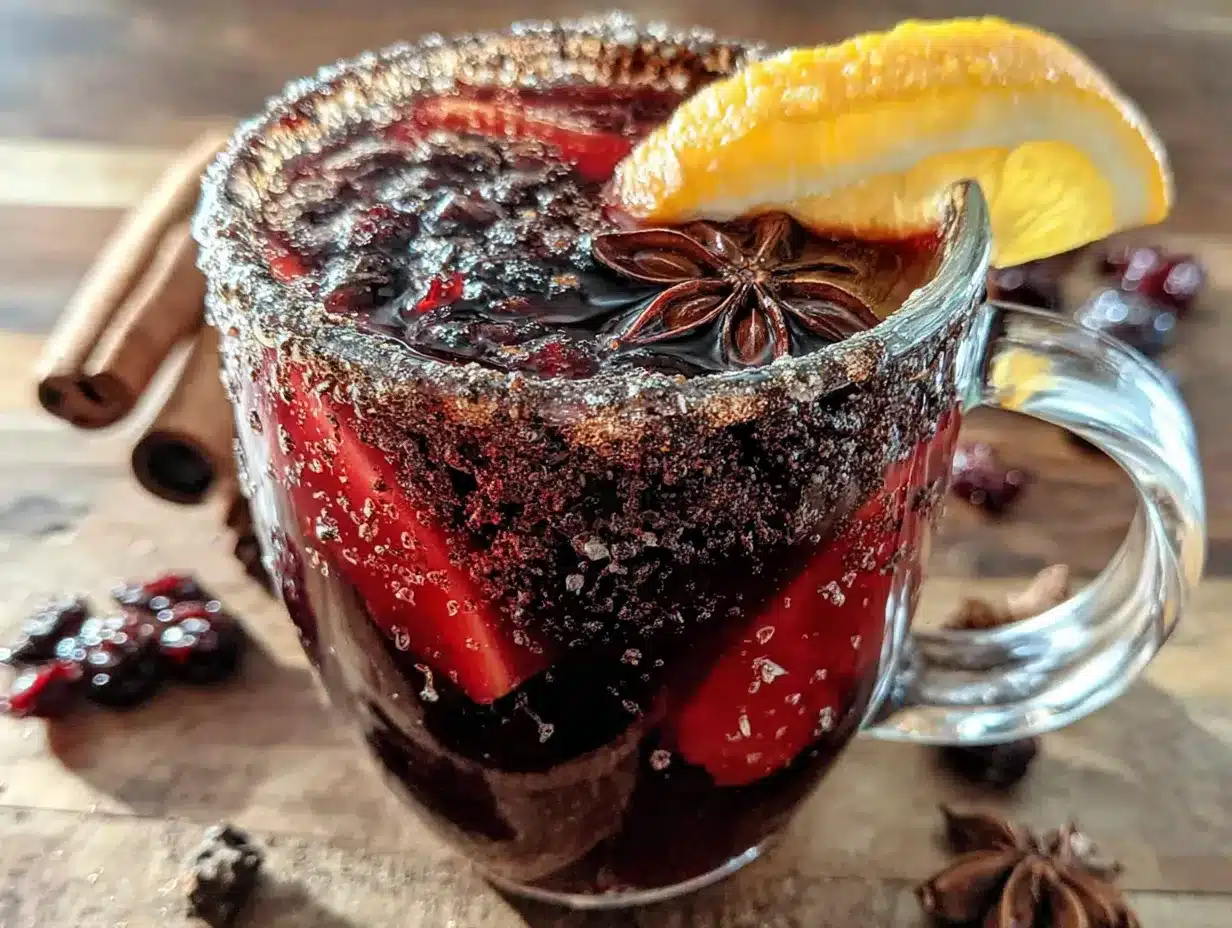
This recipe is almost embarrassingly simple, but I’ll walk you through every step so you get it right the first time. The key is patience—let those flavors meld, and you’ll be rewarded.
- Prep the oranges. Wash both oranges thoroughly under warm water to remove any wax or residue. Using a vegetable peeler, remove the zest from one orange in wide strips—try to avoid the white pith, which is bitter. Then juice that same orange into a small bowl. Slice the second orange into thin rounds, about 1/4-inch thick. Set both aside.
- Combine everything in the slow cooker. Pour the entire bottle of red wine into your slow cooker. Add the brandy or cognac, brown sugar, orange juice, orange zest strips, cinnamon sticks, whole cloves, and star anise (if using). If you’re using a vanilla bean, split it lengthwise with a knife and scrape the seeds into the pot, then toss in the pod. If using vanilla extract, wait until later.
- Stir gently. Give everything a good stir with a wooden spoon to dissolve the sugar. Don’t worry if it’s not fully dissolved yet—the heat will take care of that. Arrange the orange slices on top of the liquid. They’ll float and look beautiful as the wine heats up.
- Cook on low for 2-3 hours. Set your slow cooker to low heat and let it work its magic. The wine should be hot but not boiling—you want it around 160-170°F (70-75°C). If your slow cooker runs hot, check it after an hour. A gentle simmer is perfect; boiling will cook off the alcohol and make the spices bitter.
- Taste and adjust. After 2 hours, give it a taste. This is where you can customize. Need more sweetness? Add another tablespoon of brown sugar. Want more spice? Let it go another 30 minutes. The longer it sits, the more intense the flavors become. I usually let mine go for the full 3 hours for maximum infusion.
- Add vanilla extract (if using) just before serving. Stir in the teaspoon of vanilla extract at the very end. Heat diminishes vanilla extract’s flavor, so adding it late preserves that lovely aromatic quality.
- Strain or serve as-is. You have two options here. For a polished look, strain the wine through a fine-mesh sieve into a clean pot or pitcher to remove the spices and orange zest. For a more rustic presentation, just fish out the cloves and star anise with a slotted spoon and leave the cinnamon sticks and orange slices floating. I prefer the rustic route—it looks gorgeous and guests love seeing the whole spices.
- Keep warm on the “keep warm” setting. Your slow cooker’s warm setting is perfect for holding the mulled wine at serving temperature for hours. Just give it a stir every 30 minutes or so to keep everything well distributed.
Pro tip for hosts: Prep everything the night before. Slice the oranges, measure the spices, and have the wine bottle ready. In the morning or a few hours before guests arrive, just dump everything in the slow cooker and turn it on. You’ll walk into a house that smells like a winter wonderland with zero effort.
Cooking Tips & Techniques
I’ve made this recipe enough times to learn what works and what doesn’t—often the hard way. Here’s what I wish someone had told me:
Don’t boil the wine. This is the number one mistake. Boiling mulled wine makes it taste flat and muddy, and it burns off the alcohol you actually want to keep. If your slow cooker runs hot, check the temperature after an hour. You want steam rising but no bubbles breaking the surface.
Watch the cloves. I once got distracted and tossed in a heaping tablespoon of cloves instead of counting them out. The result was undrinkable—like liquid Novocaine. Cloves are potent, and a little goes a long way. Stick to 8 whole cloves per bottle of wine, and if you’re nervous, start with 6. You can always add more.
Use a dry wine, not a sweet one. I know it’s tempting to reach for something fruity, but dry wine gives you control over the sweetness. A sweet wine plus brown sugar plus orange juice equals a sugar bomb that will give your guests a headache. A dry Merlot or Cabernet Sauvignon provides the perfect backbone for the spices and sweetener.
Taste as you go. Mulled wine changes dramatically over time. What tastes weak at 1 hour might be perfect at 2.5 hours. I always taste at the 2-hour mark, then again at 30-minute intervals. This is how you learn what works for your palate and your particular slow cooker.
Keep a backup batch in mind. If you’re hosting a larger crowd, remember that mulled wine disappears fast. I always have a second bottle of wine and extra spices ready to go. Just mix everything in a bowl and add it to the slow cooker when the first batch starts running low. No need to start from scratch.
Variations & Adaptations
This recipe is wonderfully flexible. Here are some variations I’ve tried and loved:
Spiced Apple Cider Mulled Wine: Replace the orange juice with 1 cup of apple cider and add a few slices of fresh apple. The apple flavor pairs beautifully with the cinnamon and cloves, and it makes the drink feel even more autumnal. I made this version for a Halloween party and it was gone in an hour.
White Wine Version: Use a dry white wine like Sauvignon Blanc or Pinot Grigio instead of red. Add sliced lemons instead of oranges, and use honey instead of brown sugar. The result is lighter, brighter, and surprisingly refreshing. This is my go-to for spring gatherings when red wine feels too heavy.
Spiced Cranberry Mulled Wine: Add 1/2 cup of fresh or frozen cranberries to the pot along with the other ingredients. The cranberries burst as they heat, adding a tartness that cuts through the sweetness beautifully. Plus, they look gorgeous floating in the mugs. I serve this at Thanksgiving and it’s always a conversation starter.
Non-Alcoholic Version: Replace the wine with 4 cups of high-quality grape juice (red or white) and 2 cups of strong black tea. Omit the brandy. Use maple syrup instead of brown sugar for a different sweetness profile. This version is perfect for designated drivers, kids, or anyone avoiding alcohol. It’s so good that even the drinkers in my family reach for it.
Slow Cooker Sangria Twist: Add 1 cup of diced apples, 1/2 cup of brandy-soaked raisins, and a splash of orange liqueur like Cointreau. Serve over ice instead of hot for a completely different experience. This is technically a hot sangria, and it’s dangerous in the best way.
Serving & Storage Suggestions
This mulled wine is best served warm, right from the slow cooker. Set up a self-serve station with the slow cooker on a low table or counter, surrounded by mugs and a small bowl of garnishes—extra cinnamon sticks, star anise, and orange slices. Let guests help themselves; it’s part of the fun.
What to serve alongside: Mulled wine pairs beautifully with cheese boards, especially those featuring sharp cheddar, creamy brie, or nutty gruyere. It also works with spiced nuts, dark chocolate, gingerbread cookies, or a simple apple tart. If you’re serving a meal, it’s lovely alongside roasted pork, braised beef, or a hearty winter stew.
Storage: Leftover mulled wine keeps in the refrigerator for up to 5 days. Store it in an airtight container or a glass jar with a tight-fitting lid. The flavors will continue to meld, and some people actually prefer it the next day—the spices mellow and the wine becomes more harmonious.
Reheating: Gently reheat on the stovetop over low heat, or return it to the slow cooker on low for 30 minutes. Do not microwave it—the uneven heating can make it taste harsh. Add a splash of fresh orange juice or a new cinnamon stick when reheating to brighten the flavors.
Freezing: You can freeze mulled wine for up to 3 months. Pour it into freezer-safe containers, leaving an inch of headspace for expansion. Thaw in the refrigerator overnight, then reheat gently. The texture might be slightly different, but the flavor will still be lovely.
Nutritional Information & Benefits
While mulled wine isn’t exactly health food, it does offer some surprising benefits. Here’s a rough estimate per 5-ounce serving (about one mug):
| Nutrient | Amount per serving |
|---|---|
| Calories | 150-180 |
| Carbohydrates | 15-20g |
| Sugar | 12-15g |
| Alcohol | Approximately 12-15g |
The red wine provides antioxidants like resveratrol, which is linked to heart health. Oranges offer a solid dose of vitamin C—about 30% of your daily needs per serving. Cinnamon has anti-inflammatory properties and may help regulate blood sugar. Cloves are packed with manganese and have antimicrobial effects.
That said, this is still an alcoholic beverage, so moderation is key. If you’re watching your sugar intake, reduce the brown sugar to 2 tablespoons or use a sugar substitute like monk fruit sweetener. For a lower-alcohol version, use less brandy or skip it entirely.
This recipe is naturally gluten-free, dairy-free, and vegan (as long as you use a vegan-friendly wine—some wines are processed with animal products, so check the label if this is a concern).
Conclusion
This Guest-Favorite Slow Cooker Mulled Wine with Orange and Cinnamon has become my signature hosting move, and for good reason. It’s the drink that makes people slow down, lean in, and actually talk to each other—the kind of thing that turns a regular gathering into something memorable. I’ve watched guests who swore they didn’t like mulled wine come back for fourth cups. I’ve seen it spark conversations between strangers. I’ve had people text me the next morning asking for the recipe.
The beauty of this recipe is that it doesn’t require any special skills or expensive equipment. It’s forgiving, flexible, and almost impossible to mess up. Whether you’re hosting a holiday party, a cozy dinner with friends, or just want to make a Tuesday night feel special, this mulled wine delivers.
So go ahead—slice those oranges, break out the cinnamon sticks, and let your slow cooker work its magic. Your guests will think you spent hours in the kitchen. You’ll know the truth, and that’s our little secret.
I’d love to hear how it turns out for you! Drop a comment below with your favorite variation, or tag me in your photos when you serve it at your next gathering. Happy hosting!
Frequently Asked Questions
Can I make this mulled wine in advance?
Absolutely! You can prepare the mulled wine up to 2 days ahead of time. Simply cook it as directed, let it cool, and store it in the refrigerator. When you’re ready to serve, reheat it gently in the slow cooker on low for 1-2 hours. The flavors actually deepen and improve overnight.
What’s the best wine to use for mulled wine?
A dry red wine like Merlot, Zinfandel, or Cabernet Sauvignon works best. Avoid anything labeled “cooking wine” or overly sweet wines like port or sherry. You don’t need an expensive bottle—a $10-15 wine is perfect. The spices and fruit will do the heavy lifting, so save your fancy bottles for drinking on their own.
Can I use ground cinnamon instead of cinnamon sticks?
I don’t recommend it. Ground cinnamon will make the wine cloudy and can create a gritty texture. It also releases its flavor too quickly, which can make the wine taste harsh. Cinnamon sticks are worth seeking out—they infuse slowly and evenly, and they look beautiful floating in the mugs.
How long does mulled wine last in the refrigerator?
Properly stored in an airtight container, mulled wine will keep for up to 5 days in the refrigerator. The flavors will continue to meld, and many people actually prefer it on day two or three. Just be sure to reheat it gently—never boil it—when you’re ready to enjoy it again.
Can I make this in an Instant Pot or on the stovetop?
Yes to both! For the Instant Pot, use the slow cooker function on low for 2-3 hours. For the stovetop, combine everything in a large pot and heat over low heat for 20-30 minutes, stirring occasionally. Never let it boil. The slow cooker is the most forgiving method because it maintains a consistent low temperature without any attention.
Pin This Recipe!
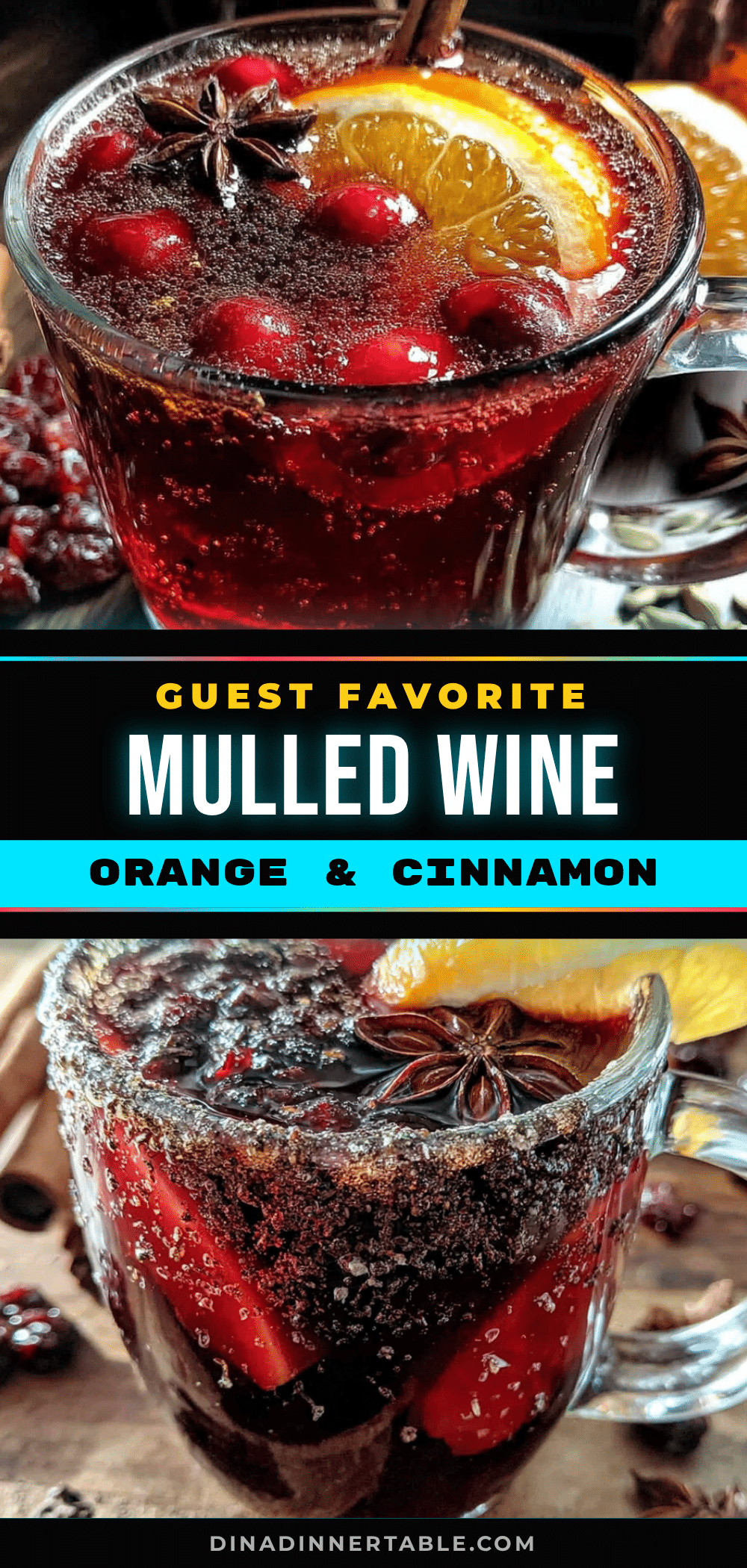
Guest-Favorite Slow Cooker Mulled Wine with Orange

This slow cooker mulled wine with orange and cinnamon is the ultimate party drink—easy to make, full of warm spices, and guaranteed to win over even the skeptics. Set it and forget it for a cozy, crowd-pleasing beverage.
- Prep Time: 10 minutes
- Cook Time: 2-3 hours
- Total Time: 2 hours 10 minutes to 3 hours 10 minutes
- Yield: 4-6 servings 1x
- Category: Beverage
- Cuisine: European
Ingredients
- 1 bottle (750 ml) dry red wine (Merlot, Zinfandel, or Cabernet Sauvignon)
- 1/4 cup (60 ml) brandy or cognac
- 1/4 cup (50 g) brown sugar (light or dark)
- 2 large oranges (one sliced, one juiced and zested)
- 4 cinnamon sticks
- 8 whole cloves
- 2 star anise pods (optional)
- 1 vanilla bean or 1 teaspoon vanilla extract
- Additional orange slices and cinnamon sticks for garnish
Instructions
- Wash both oranges thoroughly. Using a vegetable peeler, remove the zest from one orange in wide strips, avoiding the white pith. Juice that same orange into a small bowl. Slice the second orange into thin rounds, about 1/4-inch thick.
- Pour the entire bottle of red wine into the slow cooker. Add the brandy or cognac, brown sugar, orange juice, orange zest strips, cinnamon sticks, whole cloves, and star anise (if using). If using a vanilla bean, split it lengthwise, scrape the seeds into the pot, and toss in the pod. If using vanilla extract, wait until later.
- Stir gently with a wooden spoon to dissolve the sugar. Arrange the orange slices on top of the liquid.
- Cook on low for 2-3 hours. The wine should be hot but not boiling (around 160-170°F / 70-75°C).
- After 2 hours, taste and adjust sweetness or spice as desired. Let it go the full 3 hours for maximum infusion.
- If using vanilla extract, stir it in just before serving.
- For a polished look, strain the wine through a fine-mesh sieve. For a rustic presentation, fish out the cloves and star anise with a slotted spoon and leave the cinnamon sticks and orange slices floating.
- Keep warm on the ‘keep warm’ setting, stirring every 30 minutes.
Notes
Don’t boil the wine—it will taste flat and burn off the alcohol. Watch the cloves; 8 is the sweet spot. Use a dry wine for balanced sweetness. Prep everything the night before for easy hosting. Leftovers keep in the fridge for up to 5 days; reheat gently on the stovetop or slow cooker.
Nutrition
- Serving Size: 5 ounces (about 1 mu
- Calories: 150180
- Sugar: 1215
- Sodium: 1020
- Carbohydrates: 1520
Keywords: mulled wine, slow cooker, orange, cinnamon, holiday, party drink, winter