Last November, I was at my local farmers’ market, trying to decide between two identical-looking butternut squashes. An older woman next to me watched me pick each one up and put it back, clearly overthinking it. She didn’t say anything at first. Then she reached over, handed me a slightly smaller, uglier squash, and said, “That one’s sweeter. The knobby ones always are.” I thanked her, and we got to talking. She told me she’d been making a version of this lasagna for her family for over thirty years—a recipe she’d adapted from her mother-in-law, who had learned it from a neighbor in Tuscany. I went home with that ugly squash and a new mission.
That conversation stuck with me. I mean, honestly, how often do we get a recipe handed to us with a story? I spent the next few weeks testing and tweaking, trying to capture the warmth she described. The result is this cozy butternut squash lasagna with sage brown butter. It’s not the quickest weeknight dinner, but let me tell you—it’s the kind of meal that makes you slow down. The kind you make on a Sunday when you have time to actually enjoy the process. The kind where the whole house smells like browned butter and sage, and you know something good is happening.
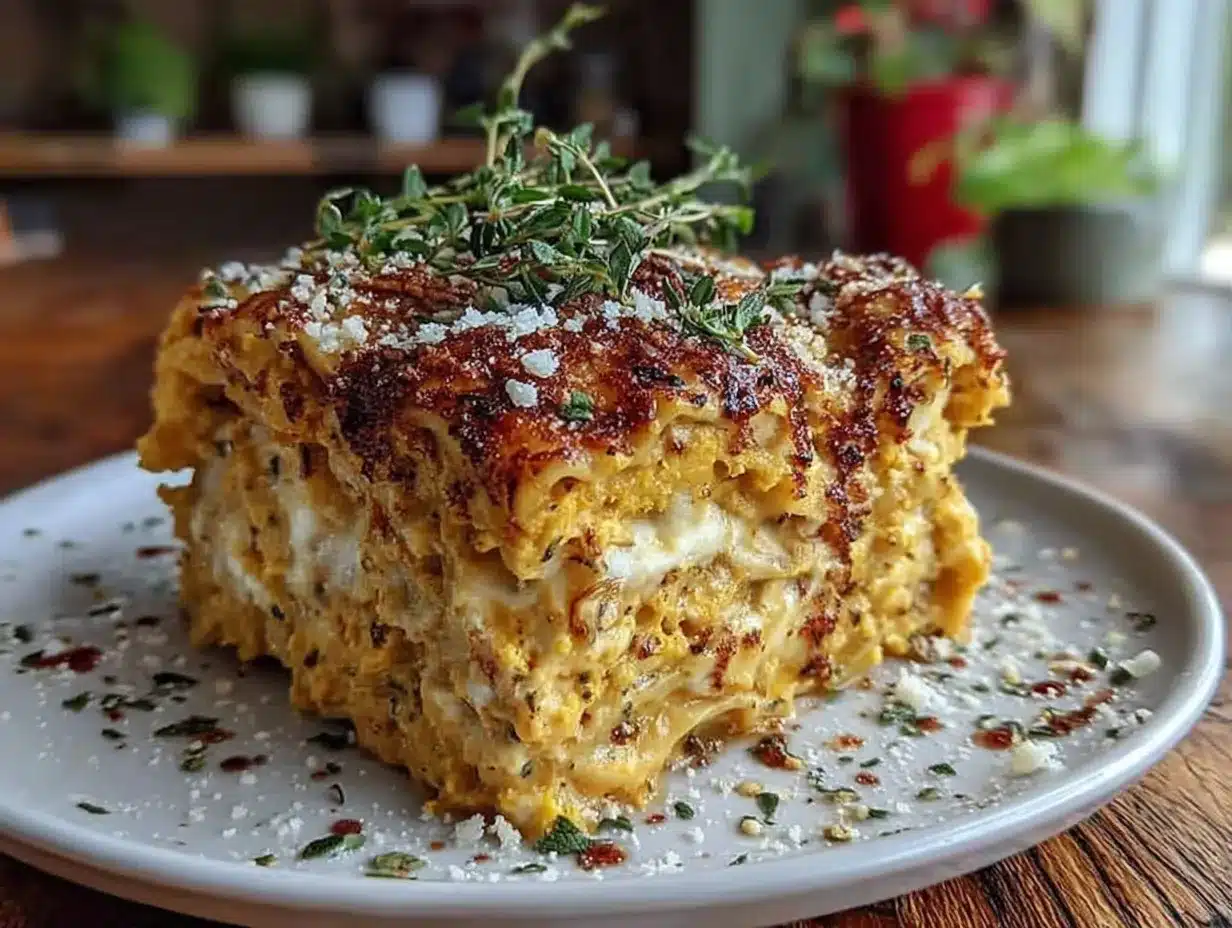
Maybe you’ve been there—standing in the kitchen, craving something that feels like a hug. Something that doesn’t rush you. This lasagna is that. It’s layers of tender pasta, velvety roasted squash, creamy béchamel, and that nutty, aromatic sage brown butter that ties it all together. It’s the recipe I keep coming back to when I need a little comfort. And honestly, I think you will too.
Why You’ll Love This Recipe
This isn’t just another lasagna. It’s a whole experience, and here’s why it stands out from the rest.
- Deep, Cozy Flavor: The combination of sweet roasted butternut squash, nutty brown butter, and fragrant sage creates a flavor profile that’s both sophisticated and deeply comforting. It’s the kind of dish that makes you close your eyes after the first bite.
- Perfect for Make-Ahead Meals: This lasagna actually gets better after a day in the fridge. The flavors meld together beautifully, making it an ideal candidate for weekend meal prep or holiday entertaining.
- Impressive Without the Stress: It looks like a showstopper on the table, but the process is surprisingly forgiving. No delicate techniques or finicky steps—just honest, delicious cooking.
- Vegetarian-Friendly & Crowd-Pleasing: Even dedicated meat-eaters will be reaching for seconds. The richness of the brown butter and the creamy béchamel make it satisfying enough to be the star of the meal.
- Seasonal & Soul-Soothing: It’s the ultimate fall and winter comfort food, perfect for chilly evenings, holiday dinners, or anytime you need a little warmth from the inside out.
What makes this version different from other butternut squash lasagnas I’ve tried? It’s the brown butter. Most recipes just layer in roasted squash and call it a day. But browning the butter with fresh sage adds this incredible nutty, almost toffee-like depth that elevates the whole dish. It’s a simple extra step that makes a world of difference. I tested this recipe six times to get the balance just right—the right ratio of béchamel to squash, the perfect amount of sage, the ideal roasting time for the squash. This is the version I’m proud to share.
What Ingredients You Will Need
This recipe uses simple, wholesome ingredients that come together to create something truly special. Most are pantry staples, and the fresh ones are easy to find at any grocery store. Here’s what you’ll need, along with a few tips I’ve learned along the way.
For the Roasted Butternut Squash
- 1 large butternut squash (about 3 pounds / 1.4 kg), peeled, seeded, and cut into 1-inch cubes. Look for one that feels heavy for its size—that means it’s dense and sweet. The “ugly” knobby ones really are sweeter!
- 2 tablespoons olive oil (I prefer a mild extra-virgin olive oil here, like California Olive Ranch)
- ½ teaspoon salt
- ¼ teaspoon black pepper
For the Sage Brown Butter
- ½ cup (1 stick / 113 g) unsalted butter (European-style butter, like Plugrà, has a higher fat content and browns more beautifully)
- 10-12 fresh sage leaves, plus more for garnish. Don’t use dried sage here—the fresh leaves crisp up in the butter and become a delicious topping.
For the Béchamel Sauce
- ¼ cup (60 g) unsalted butter
- ¼ cup (30 g) all-purpose flour
- 3 cups (720 ml) whole milk, warmed (this prevents lumps)
- ½ teaspoon salt
- ¼ teaspoon freshly grated nutmeg (trust me on this—pre-ground is fine, but fresh is magical)
- ¼ teaspoon white pepper (black pepper works too, but white pepper keeps the sauce visually smooth)
For the Lasagna Assembly
- 12 no-boil lasagna noodles (I like Barilla’s no-boil noodles—they save time and work perfectly)
- 2 cups (200 g) shredded whole-milk mozzarella cheese
- 1 cup (100 g) grated Parmesan cheese, plus more for topping. Buy a block and grate it yourself—the pre-shredded stuff has anti-caking agents that prevent smooth melting.
- 1 cup (240 g) ricotta cheese (full-fat for the creamiest texture)
- 1 large egg
- ¼ teaspoon salt
- ⅛ teaspoon black pepper
If you’re looking for a gluten-free option, use gluten-free lasagna noodles and a gluten-free all-purpose flour blend for the béchamel. For a dairy-free version, substitute the butter with a high-quality vegan butter, use unsweetened oat milk for the béchamel, and choose dairy-free cheeses (though I’ll be honest, the texture won’t be quite as creamy).
Equipment Needed
You don’t need a professional kitchen to make this lasagna, but having the right tools makes the process smoother. Here’s what I use:
- 9×13-inch baking dish (a ceramic or glass dish distributes heat more evenly than metal)
- Large rimmed baking sheet for roasting the squash
- Medium saucepan for the béchamel
- Small skillet for browning the butter (a light-colored pan helps you see the color change)
- Chef’s knife and cutting board (a sharp knife makes cutting the squash much safer)
- Vegetable peeler (a Y-peeler works best for butternut squash skin)
- Whisk for the béchamel
- Large bowl for mixing the ricotta filling
- Liquid measuring cup for the milk
- Aluminum foil for covering the lasagna while baking
If you don’t have a 9×13 dish, you can use two 8×8 dishes and bake them side by side—just reduce the baking time by about 10 minutes. And if you’re using regular lasagna noodles instead of no-boil, you’ll need a large pot to boil them. I’ve made this recipe with both, and honestly, the no-boil version is less fussy and turns out just as good.
Preparation Method
Let’s walk through this step by step. Take your time—this is a labor of love, and the process is part of the pleasure.
Step 1: Roast the Butternut Squash
Preheat your oven to 400°F (200°C). Line a large baking sheet with parchment paper for easy cleanup. Toss the cubed squash with olive oil, salt, and pepper until evenly coated. Spread it out in a single layer—crowding the pan will steam the squash instead of roasting it. Roast for 25-30 minutes, flipping halfway through, until the squash is tender and the edges are lightly caramelized. You’ll know it’s done when a fork slides in easily. Set aside to cool slightly.
Pro tip: If you want to save time, you can buy pre-cut butternut squash from the store. Just make sure the pieces are roughly the same size so they cook evenly.
Step 2: Make the Sage Brown Butter
While the squash roasts, place the ½ cup of butter in a small skillet over medium heat. Add the fresh sage leaves. Let the butter melt, then continue cooking, swirling the pan occasionally. The butter will start to foam, then the foam will subside, and you’ll see little brown specks forming at the bottom of the pan. This is the milk solids toasting—and it’s where the magic happens. Once the butter turns a golden-amber color and smells nutty (about 5-7 minutes), remove the pan from the heat immediately. The sage leaves will be crispy and fragrant. Pour the brown butter and sage leaves into a heatproof bowl to stop the cooking process. Don’t walk away from this—brown butter can go from perfect to burnt in seconds.
Step 3: Prepare the Béchamel Sauce
In a medium saucepan, melt the ¼ cup of butter over medium heat. Whisk in the flour and cook for 1-2 minutes, stirring constantly, until the mixture is bubbly and golden. This is called a roux, and it’s the base of your sauce. Slowly pour in the warm milk, whisking continuously to prevent lumps. Continue cooking, whisking often, until the sauce thickens enough to coat the back of a spoon—about 5-7 minutes. Remove from heat and stir in the salt, nutmeg, and white pepper. Taste and adjust seasoning if needed.
Step 4: Make the Ricotta Mixture
In a medium bowl, combine the ricotta cheese, egg, ¼ teaspoon salt, and ⅛ teaspoon pepper. Mix until smooth. This mixture adds a creamy, rich layer to the lasagna.
Step 5: Assemble the Lasagna
Preheat your oven to 375°F (190°C). Spread a thin layer of béchamel sauce (about ½ cup) on the bottom of your 9×13 baking dish. This prevents the noodles from sticking. Now, layer in this order:
- First layer: 4 lasagna noodles (slightly overlapping if needed)
- Second layer: ⅓ of the roasted squash, spread evenly
- Third layer: Dollops of ⅓ of the ricotta mixture
- Fourth layer: ⅓ of the remaining béchamel sauce
- Fifth layer: ⅓ of the brown butter (drizzle it over the sauce)
- Sixth layer: ⅓ of the mozzarella and ⅓ of the Parmesan
Repeat these layers two more times. For the top layer, finish with the remaining béchamel, brown butter, and a generous sprinkle of Parmesan. Place a few crispy sage leaves on top for garnish.
Step 6: Bake the Lasagna
Cover the dish with aluminum foil (spray the underside with cooking spray to prevent sticking) and bake for 30 minutes. Remove the foil and bake for another 15-20 minutes, until the top is golden and bubbly. Let the lasagna rest for at least 15 minutes before slicing. This is crucial—if you cut into it too soon, it will be a soupy mess. The resting time allows the layers to set.
Cooking Tips & Techniques
I’ve made this lasagna more times than I can count, and I’ve learned a few things the hard way. Here are my best tips for success.
Don’t skip the browning step. The first time I made this, I was in a rush and just melted the butter without browning it. The result was fine, but it wasn’t that lasagna. The brown butter adds a nutty, caramelized depth that makes the dish unforgettable. It’s worth the extra five minutes.
Watch your béchamel like a hawk. I once walked away to answer my phone, and my béchamel developed lumps that no amount of whisking could fix. Keep the heat medium-low and whisk constantly. If you do get lumps, you can strain the sauce through a fine-mesh sieve, but it’s better to avoid them altogether.
Let the squash cool before assembling. If you layer hot squash into the lasagna, it can make the béchamel too thin and create a watery final dish. Let it cool for at least 10 minutes after roasting.
Use a sharp knife for the squash. Butternut squash is dense and can be tricky to cut. I learned this lesson when my knife slipped and I nearly cut my finger. A sharp chef’s knife and a stable cutting board (place a damp paper towel under it) make the job much safer.
Make it ahead for better flavor. This lasagna is one of those dishes that tastes even better the next day. Assemble it completely, cover it, and refrigerate for up to 24 hours before baking. You may need to add 10-15 minutes to the baking time since it’s starting from cold.
Variations & Adaptations
One of the best things about this lasagna is how adaptable it is. Here are a few ways to make it your own.
Add some greens: Sauté a few handfuls of fresh spinach or kale with garlic and layer it in with the squash. It adds color, nutrition, and a nice earthy flavor that complements the brown butter.
Make it a main course with protein: While this lasagna is vegetarian-friendly, you can easily add cooked Italian sausage (casings removed), shredded rotisserie chicken, or even crispy bacon bits between the layers. The salty, savory notes play beautifully with the sweet squash.
Try a different squash: Butternut is my favorite for its sweetness and texture, but you can substitute it with roasted kabocha, delicata, or even sweet potatoes. Each will bring its own unique flavor and color to the dish.
Go vegan: Use a high-quality vegan butter for the brown butter and béchamel, unsweetened oat milk for the sauce, and your favorite vegan mozzarella and Parmesan shreds. I’ve tested this with Miyoko’s vegan butter and Violife cheeses, and while it’s not identical, it’s still incredibly delicious.
Spice it up: Add a pinch of red pepper flakes to the béchamel or the brown butter for a subtle heat that cuts through the richness. It’s a small addition that makes a big impact.
Serving & Storage Suggestions
This lasagna is a showstopper, so serve it with pride. Let it rest for at least 15 minutes after baking, then slice it into generous squares. The layers should hold together beautifully. Serve it warm, with a few extra crispy sage leaves and a sprinkle of flaky sea salt on top.
For sides, I love pairing it with a simple arugula salad dressed with lemon juice and olive oil—the peppery greens cut through the richness perfectly. A glass of full-bodied white wine, like a Chardonnay or Viognier, is a lovely accompaniment. Or, if you’re feeling cozy, a cup of hot apple cider on the side.
Storage: Leftovers can be stored in an airtight container in the refrigerator for up to 4 days. The flavors actually deepen and meld together, making the leftovers even better than the first serving. To reheat, place a slice in a 350°F (175°C) oven for about 15 minutes, or microwave individual portions for 1-2 minutes.
Freezing: This lasagna freezes beautifully. Assemble it completely but don’t bake it. Wrap the dish tightly in plastic wrap, then a layer of aluminum foil, and freeze for up to 3 months. To bake from frozen, remove the plastic wrap, cover with foil, and bake at 375°F (190°C) for about 60 minutes, then remove the foil and bake for another 20 minutes until bubbly and golden.
Nutritional Information & Benefits
While this is definitely a comfort food indulgence, it does have some nutritional perks worth noting. Here’s an approximate breakdown per serving (based on 8 servings):
- Calories: 520
- Protein: 18g
- Fat: 32g
- Carbohydrates: 42g
- Fiber: 5g
- Sugar: 8g
Butternut squash is a star ingredient here—it’s packed with vitamin A (great for eye health), vitamin C, and fiber. The sage in the brown butter is more than just a flavoring; it’s been used for centuries for its antioxidant and anti-inflammatory properties. And the calcium from the cheeses and milk supports bone health.
If you’re watching your carb intake, you can use zucchini or eggplant slices instead of lasagna noodles for a low-carb version. The texture will be different, but the flavor will still be phenomenal. For a lighter version, use part-skim mozzarella and reduce the amount of butter in the béchamel by half.
Conclusion
This cozy butternut squash lasagna with sage brown butter is more than just a recipe—it’s a moment. It’s the kind of dish that makes you want to light a candle, put on some music, and take your time. It’s for those evenings when you need to feel wrapped in warmth, when the world outside is cold and you just want something that feels like home.
I hope you’ll make it your own. Maybe you’ll add a little extra sage, or swap in a different cheese. Maybe you’ll serve it on a Tuesday night just because. Whatever you do, I’d love to hear about it. Leave a comment below and tell me how it turned out—did you make any changes? What did you serve it with? Your stories are what make this community so special.
And if you’re looking for more cozy comfort food, be sure to check out our creamy Tuscan chicken and garlic mushroom risotto—they’re perfect for those chilly nights when you need a little extra warmth. Happy cooking, friends!
Frequently Asked Questions
Can I use frozen butternut squash instead of fresh?
Yes, you can! Thaw the frozen squash completely and pat it dry with paper towels to remove excess moisture before roasting. The texture won’t be quite as caramelized as fresh, but it will still work beautifully in the lasagna.
Do I really need to use no-boil noodles?
No, you can use regular lasagna noodles if you prefer. Just boil them according to the package directions until al dente, then drain and lay them flat on a baking sheet to prevent sticking. The no-boil version is just more convenient and saves a step.
Can I make this lasagna gluten-free?
Absolutely! Use gluten-free lasagna noodles and substitute the all-purpose flour in the béchamel with a gluten-free all-purpose blend. I’ve tested this with Bob’s Red Mill 1-to-1 Baking Flour and it works perfectly.
How do I know when the brown butter is done?
Watch for the butter to turn a golden-amber color and smell nutty and toasty. You’ll also see brown specks forming at the bottom of the pan. Remove it from the heat immediately—it can go from perfect to burnt in less than 30 seconds.
Can I prepare this lasagna ahead of time for a party?
Yes! Assemble the lasagna completely, cover it tightly with foil, and refrigerate for up to 24 hours. When you’re ready to bake, add about 10-15 minutes to the baking time since it’s starting from cold. It’s a great make-ahead option for stress-free entertaining.
Pin This Recipe!
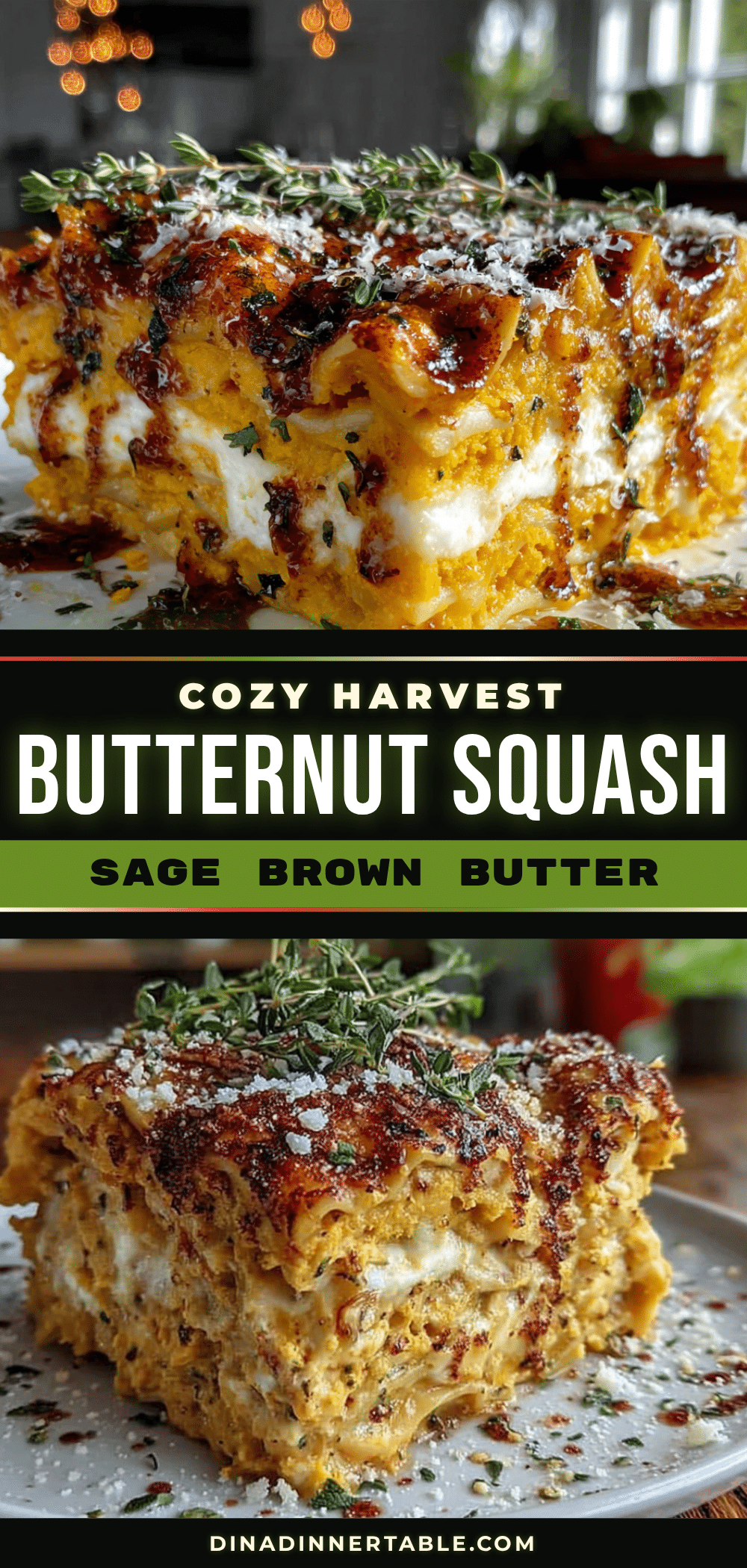
Cozy Butternut Squash Lasagna with Sage Brown Butter

This cozy butternut squash lasagna with sage brown butter features layers of tender pasta, velvety roasted squash, creamy béchamel, and nutty brown butter. It’s a comforting, vegetarian-friendly dish perfect for fall and winter.
- Prep Time: 30 minutes
- Cook Time: 1 hour 10 minutes
- Total Time: 1 hour 40 minutes
- Yield: 8 servings 1x
- Category: Main Course
- Cuisine: Italian
Ingredients
- 1 large butternut squash (about 3 pounds / 1.4 kg), peeled, seeded, and cut into 1-inch cubes
- 2 tablespoons olive oil
- ½ teaspoon salt
- ¼ teaspoon black pepper
- ½ cup (1 stick / 113 g) unsalted butter
- 10–12 fresh sage leaves, plus more for garnish
- ¼ cup (60 g) unsalted butter
- ¼ cup (30 g) all-purpose flour
- 3 cups (720 ml) whole milk, warmed
- ½ teaspoon salt
- ¼ teaspoon freshly grated nutmeg
- ¼ teaspoon white pepper
- 12 no-boil lasagna noodles
- 2 cups (200 g) shredded whole-milk mozzarella cheese
- 1 cup (100 g) grated Parmesan cheese, plus more for topping
- 1 cup (240 g) ricotta cheese
- 1 large egg
- ¼ teaspoon salt
- ⅛ teaspoon black pepper
Instructions
- Preheat oven to 400°F (200°C). Line a large baking sheet with parchment paper. Toss cubed squash with olive oil, salt, and pepper. Spread in a single layer and roast for 25-30 minutes, flipping halfway, until tender and caramelized. Set aside to cool slightly.
- While squash roasts, place ½ cup butter in a small skillet over medium heat. Add sage leaves. Cook, swirling occasionally, until butter turns golden-amber and smells nutty (about 5-7 minutes). Remove from heat immediately and pour into a heatproof bowl.
- In a medium saucepan, melt ¼ cup butter over medium heat. Whisk in flour and cook for 1-2 minutes until bubbly and golden. Slowly pour in warm milk, whisking constantly. Cook until sauce thickens (5-7 minutes). Remove from heat and stir in salt, nutmeg, and white pepper.
- In a medium bowl, combine ricotta, egg, ¼ teaspoon salt, and ⅛ teaspoon pepper. Mix until smooth.
- Preheat oven to 375°F (190°C). Spread a thin layer of béchamel (about ½ cup) on the bottom of a 9×13-inch baking dish. Layer: 4 lasagna noodles, ⅓ of the roasted squash, dollops of ⅓ of the ricotta mixture, ⅓ of the remaining béchamel, drizzle ⅓ of the brown butter, and sprinkle ⅓ of the mozzarella and Parmesan. Repeat layers two more times. Finish with remaining béchamel, brown butter, and a generous sprinkle of Parmesan. Top with crispy sage leaves.
- Cover with foil (spray underside with cooking spray) and bake for 30 minutes. Remove foil and bake for another 15-20 minutes until golden and bubbly. Let rest for at least 15 minutes before slicing.
Notes
Let the lasagna rest for at least 15 minutes before slicing to allow layers to set. For make-ahead, assemble completely, cover, and refrigerate for up to 24 hours before baking (add 10-15 minutes to baking time). To freeze, assemble but do not bake; wrap tightly and freeze for up to 3 months. Bake from frozen at 375°F (190°C) for about 60 minutes covered, then 20 minutes uncovered.
Nutrition
- Serving Size: 1 slice (1/8 of lasa
- Calories: 520
- Sugar: 8
- Sodium: 680
- Fat: 32
- Saturated Fat: 18
- Carbohydrates: 42
- Fiber: 5
- Protein: 18
Keywords: butternut squash lasagna, sage brown butter, vegetarian lasagna, fall lasagna, comfort food, make-ahead lasagna