My sister-in-law claimed she hated persimmons for thirty years. Thirty years. She’d make this face—the same one my toddler makes when I try to sneak zucchini into his mac and cheese—every time someone mentioned the fruit. Too mushy. Too weird. Too whatever.
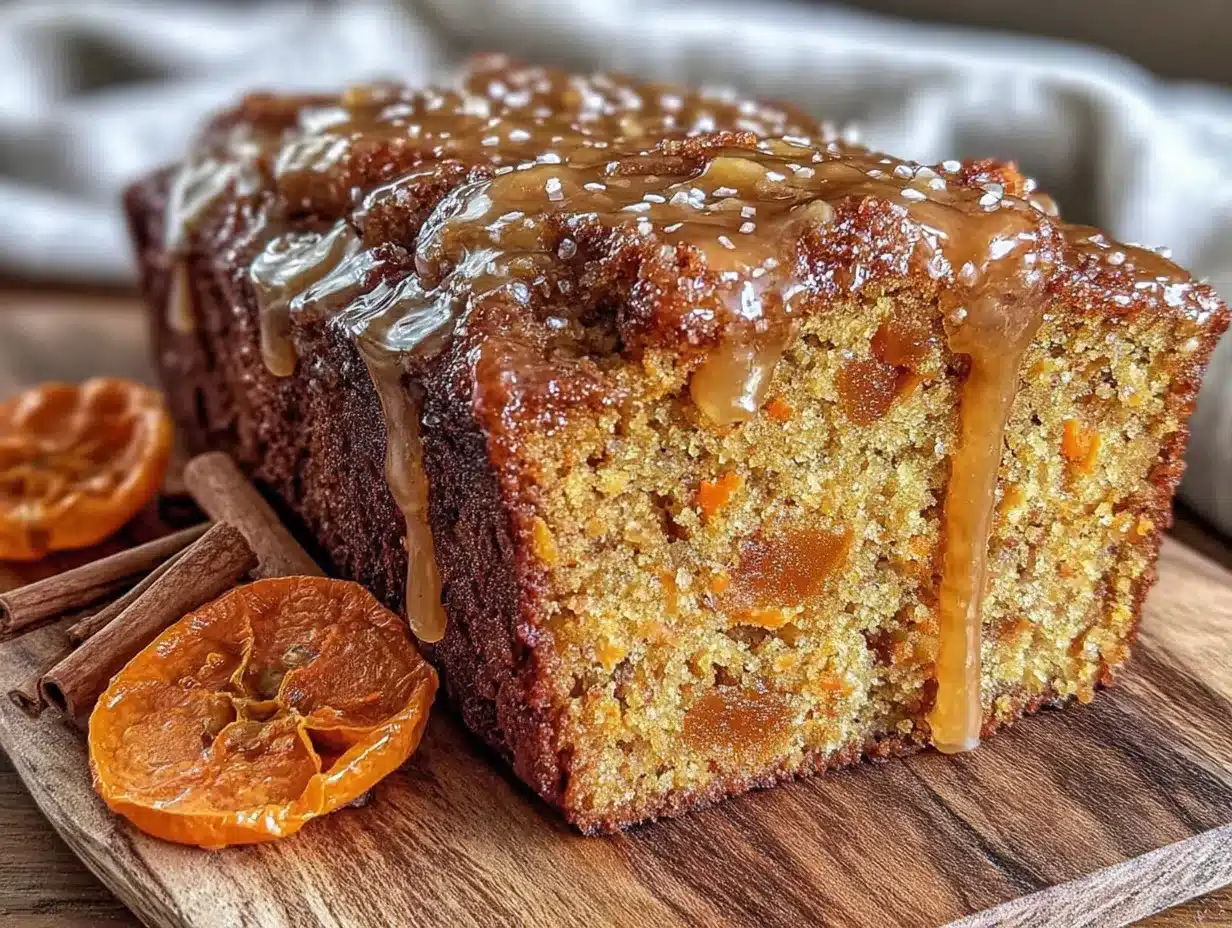
Then I showed up at Thanksgiving last year with this persimmon bread, still warm from the oven, the brown sugar cinnamon glaze dripping down the sides. I set it on the counter and walked away. Twenty minutes later, I caught her standing at the kitchen island, a second slice in her hand, crumbs on her sweater, trying to look casual about it.
“This is persimmon?” she asked, like I’d tricked her.
I mean, I kind of had. But in the best way possible.
That’s the thing about this bread. It doesn’t announce itself as a “persimmon recipe.” It just shows up as the moistest, most fragrant quick bread you’ve ever pulled out of your oven, and by the time anyone asks what’s in it, they’re already reaching for another slice. The persimmon does its work quietly—adding that almost-honey sweetness and a texture so tender it practically melts—while the brown sugar cinnamon glaze steals the show on top.
Honestly, this is the recipe that turned me into a persimmon person. And if you’ve ever stood in the produce aisle staring at those squat orange fruits, wondering what on earth to do with them, let me tell you—this is it. This is the one.
Why You’ll Love This Recipe
Let me be real with you for a second. I’ve tested this persimmon bread six times. Six. The first batch came out too dense. The second was too sweet. The third had a weird gummy texture that I still don’t fully understand. But by batch number four, I knew I had something special. By batch six, my neighbor knocked on my door asking if I was starting a bakery.
Here’s why this version works, especially on a busy weeknight when you’re exhausted and just want something that tastes like you tried harder than you actually did:
- Quick & Easy: From start to finish, you’re looking at about an hour. Ten minutes of active prep, fifty minutes of the oven doing the work. You can literally make the batter, pour it in the pan, and go unload the dishwasher while it bakes.
- Simple Ingredients: No fancy grocery store trips. You need persimmons (obviously), but everything else is probably in your pantry right now. Flour, sugar, eggs, butter, cinnamon, baking soda—standard stuff.
- Perfect for Weeknights: This isn’t a weekend project bread. It’s a “I need something sweet but I’m too tired to go to the store” bread. It’s a “the kids have homework and I have thirty minutes of sanity left” bread.
- Crowd-Pleaser: I brought this to a book club meeting last month, and three people asked for the recipe before I even sat down. One of them doesn’t even bake.
- Unbelievably Delicious: The texture is what gets people. It’s not dry like some fruit breads. It’s not dense like banana bread on a bad day. It’s tender, almost cake-like, with a crumb that holds together perfectly and a glaze that soaks into the top just enough to make every bite feel special.
What makes this different from every other persimmon bread recipe out there? Two things. First, I use Hachiya persimmons at peak ripeness—they’re the ones that look like acorn-shaped tomatoes, and they need to be so soft they practically collapse when you touch them. Second, I blend the persimmon pulp with a tiny splash of vanilla and let it sit for five minutes before mixing. That little rest wakes up the flavor in a way you wouldn’t expect.
This is the kind of bread that makes you close your eyes after the first bite. It’s comfort food, plain and simple—just faster and easier than you’d ever guess.
What Ingredients You Will Need
This recipe uses simple, wholesome ingredients to deliver that bold, cozy flavor and melt-in-your-mouth texture. Most of these are pantry staples, which is exactly what you want on a Tuesday night when the craving hits.
For the Bread
- 2 cups (250g) all-purpose flour — Spoon and level it. Don’t scoop straight from the bag or you’ll end up with dry bread.
- 1 teaspoon baking soda — This does the heavy lifting for rise. Make sure it’s fresh.
- 1/2 teaspoon baking powder — Adds a little extra lift alongside the soda.
- 1/2 teaspoon salt — Don’t skip it. Salt balances the sweetness and makes the persimmon flavor pop.
- 1 teaspoon ground cinnamon — I use Saigon cinnamon when I have it. It’s stronger and warmer than regular cinnamon.
- 1/2 teaspoon ground nutmeg — Freshly grated if you’re feeling fancy, pre-ground is totally fine.
- 1/4 teaspoon ground ginger — Optional but recommended. Adds a tiny warmth that plays nicely with the persimmon.
- 3/4 cup (150g) granulated sugar — Regular white sugar. Nothing special.
- 1/2 cup (100g) packed brown sugar — Light or dark, either works. Dark gives a deeper molasses flavor.
- 1/2 cup (120ml) vegetable oil — Canola or any neutral oil works. Keeps the bread incredibly moist.
- 2 large eggs — Room temperature if you remember. If not, it’s fine—I’ve tested it both ways.
- 1 teaspoon vanilla extract — Pure vanilla, not imitation. Trust me on this.
- 1 1/2 cups persimmon pulp — From about 3-4 very ripe Hachiya persimmons. They should feel like a water balloon when you squeeze them gently.
For the Brown Sugar Cinnamon Glaze
- 1/2 cup (100g) packed brown sugar — Light brown sugar gives a milder flavor; dark makes it more caramel-like.
- 2 tablespoons unsalted butter — Cut into small pieces so it melts evenly.
- 2 tablespoons milk — Whole milk is best, but 2% works. I’ve even used oat milk in a pinch.
- 1/2 teaspoon vanilla extract — Again, pure vanilla.
- 1/2 teaspoon ground cinnamon — Adjust to taste. I sometimes add an extra 1/4 teaspoon because I’m a cinnamon fiend.
- Pinch of salt — Balances the sweetness and brings out the brown sugar flavor.
- 1/2 cup (60g) powdered sugar — Sifted to avoid lumps.
A quick note on persimmons: There are two main types you’ll find at the grocery store. Fuyu persimmons are the squat, tomato-shaped ones that you can eat while they’re still firm. Don’t use those here. You need Hachiya persimmons—the acorn-shaped ones—and they need to be almost embarrassingly soft. Like, “I’m afraid this fruit is going to explode in my hand” soft. That’s when they’re at their sweetest and easiest to turn into pulp.
I usually buy my persimmons at H-Mart or the local farmer’s market when they’re in season (late fall through early winter). If you can’t find them fresh, frozen persimmon pulp works beautifully—just thaw it completely before using.
Equipment Needed
You don’t need much for this persimmon bread, which is exactly how I like my weeknight recipes. Here’s what you’ll need:
- 9×5-inch loaf pan — Standard size. If you use an 8×4, you’ll need to bake it a few minutes longer.
- Parchment paper — Not strictly necessary, but it makes lifting the bread out so much easier. I learned this the hard way after a particularly tragic sticking incident.
- Two mixing bowls — One large, one medium. Nothing fancy.
- Whisk — For the dry ingredients.
- Rubber spatula — For folding everything together without overmixing.
- Small saucepan — For the glaze. You could also use a microwave-safe bowl if you’re in a hurry.
- Cooling rack — Helps the bread cool evenly so the bottom doesn’t get soggy.
- Fine mesh strainer or food mill — For removing the seeds and skin from the persimmons. A fork works in a pinch, but a strainer gives you smoother pulp.
If you don’t have a cooling rack, you can use the inverted loaf pan trick—just balance the bread on its side across two cans. It looks ridiculous but it works.
Preparation Method
Alright, let’s make this persimmon bread. I’ll walk you through every step so you don’t make the same mistakes I did on my first few attempts.
Step 1: Prep the Persimmons (5 minutes)
Start by getting your persimmon pulp ready. Cut the tops off your Hachiya persimmons and scoop the soft flesh into a fine mesh strainer set over a bowl. Press the pulp through with the back of a spoon, discarding the skins and any seeds you find. You should end up with about 1 1/2 cups of smooth, orange pulp. Stir in the vanilla extract and set it aside for five minutes. I don’t know exactly why this helps, but it does—the flavor rounds out somehow.
Step 2: Preheat and Prep (5 minutes)
Preheat your oven to 350°F (175°C). Line your 9×5-inch loaf pan with parchment paper, leaving a little overhang on the two long sides. This is your handle for lifting the finished bread out. Spray the parchment lightly with nonstick spray, just to be safe.
Step 3: Mix the Dry Ingredients (3 minutes)
In a medium bowl, whisk together the flour, baking soda, baking powder, salt, cinnamon, nutmeg, and ginger. Make sure everything is evenly distributed. I always give it an extra few whisks because nobody wants a pocket of baking soda in their slice.
Step 4: Mix the Wet Ingredients (5 minutes)
In a large bowl, whisk together the granulated sugar, brown sugar, and vegetable oil until smooth. Add the eggs one at a time, whisking well after each addition. The mixture should look thick and glossy. Stir in the persimmon pulp mixture until everything is combined. It’ll look a little separated at first—keep whisking until it comes together.
Step 5: Combine Wet and Dry (3 minutes)
Pour the dry ingredients into the wet ingredients. Using your rubber spatula, fold gently until just combined. A few streaks of flour are okay. Overmixing is the enemy here—it develops the gluten and makes the bread tough. You want tender, not tough.
Step 6: Bake (50-55 minutes)
Pour the batter into your prepared loaf pan and spread it evenly. Bake at 350°F for 50-55 minutes, or until a toothpick inserted in the center comes out clean or with just a few moist crumbs. The top should be golden brown and spring back when you touch it gently.
Here’s a sensory cue: about 30 minutes in, your whole kitchen will smell like fall. Cinnamon and brown sugar and something warm and fruity. That’s the persimmon doing its thing.
Step 7: Cool (20 minutes minimum)
Let the bread cool in the pan on a wire rack for 15-20 minutes. Then use the parchment overhang to lift it out and transfer it to the rack to cool completely. Don’t rush this step. If you glaze it while it’s still warm, the glaze will just soak in and disappear. Patience, friend.
Step 8: Make the Glaze (5 minutes)
While the bread cools, make the glaze. In a small saucepan, combine the brown sugar, butter, milk, vanilla, cinnamon, and salt. Cook over medium heat, stirring constantly, until the butter melts and the mixture is smooth—about 2-3 minutes. Remove from heat and whisk in the powdered sugar until smooth. Let it sit for 2-3 minutes to thicken slightly.
Step 9: Glaze and Serve (5 minutes)
Pour the glaze over the cooled bread, letting it drip down the sides. Let it set for about 10 minutes before slicing. Or don’t. I’m not going to judge you if you cut into it immediately. I’ve done it.
Cooking Tips & Techniques
I’ve made this persimmon bread more times than I care to count, and I’ve picked up a few tricks along the way. Here’s what I wish someone had told me:
Don’t overmix the batter. I know I said this already, but it’s worth repeating. Mix until the flour disappears and then stop. A few lumps are fine. Overmixing gives you a tough, dense bread, and nobody wants that.
Check your persimmons carefully. Not all Hachiya persimmons ripen at the same rate. If you cut into one and it’s still firm and astringent (that weird mouth-puckering sensation), it’s not ready. Give it a few more days on the counter. I once ruined a batch because I was impatient. The bread turned out bitter and weird.
Use the toothpick test wisely. If the toothpick comes out wet with batter, it needs more time. If it comes out clean, it’s done. If it comes out with a few moist crumbs, that’s perfect—take it out immediately. Carryover cooking will finish the job.
Room temperature eggs matter. Cold eggs can seize up the oil and sugar mixture, making the batter lumpy. If you forgot to take them out ahead of time, place them in a bowl of warm water for 5 minutes. Problem solved.
Double the recipe. Seriously. This bread freezes beautifully, and you’ll thank yourself later when you have a slice ready to go with your morning coffee. I always make two loaves—one for now, one for later.
My biggest failure: The first time I made this, I used Fuyu persimmons because that’s all the store had. The bread was dry, barely sweet, and honestly kind of sad. Learn from my mistake. Wait for Hachiya season. It’s worth it.
Variations & Adaptations
This persimmon bread is pretty forgiving, and I’ve played around with it quite a bit. Here are some variations worth trying:
Gluten-Free Version: Swap the all-purpose flour for a 1:1 gluten-free baking flour blend. I’ve tested this with King Arthur Measure for Measure, and it works great. Add an extra tablespoon of milk to compensate for the extra absorbency of gluten-free flours.
Dairy-Free Version: Use melted coconut oil or a neutral vegetable oil instead of butter in the glaze. Swap the milk for oat milk or almond milk. The bread itself is already dairy-free if you use oil instead of butter.
Add-Ins: Fold in 1/2 cup of chopped walnuts or pecans for crunch. Or 1/2 cup of chocolate chips if you’re feeling indulgent. I once added dried cranberries and orange zest, and it tasted like Christmas in loaf form.
Spice It Up: Add 1/4 teaspoon of cardamom or allspice along with the other spices. Cardamom pairs beautifully with persimmon—it’s a combination I discovered by accident and now use regularly.
Muffin Version: Divide the batter into a greased 12-cup muffin tin and bake at 350°F for 18-22 minutes. Perfect for grab-and-go breakfasts. The glaze can be drizzled on top or skipped entirely.
Low-Sugar Option: Reduce the granulated sugar to 1/2 cup and skip the glaze. The persimmons provide plenty of natural sweetness, especially if they’re super ripe. I’ve made it this way for my mom, who watches her sugar intake, and she loved it.
Serving & Storage Suggestions
This persimmon bread is best served slightly warm, with the glaze still a little soft. I like to slice it thick—about an inch—and serve it alongside a cup of coffee or a tall glass of cold milk. For dessert, a scoop of vanilla ice cream on top takes it to another level.
At room temperature: Store the bread in an airtight container for up to 3 days. The glaze will soften slightly, but that’s part of the charm. Keep it away from direct sunlight or heat.
In the refrigerator: It’ll last up to a week in the fridge, but the texture will get slightly denser. I recommend bringing slices to room temperature before eating, or warming them in the microwave for 10-15 seconds.
In the freezer: Wrap the cooled, unglazed loaf tightly in plastic wrap, then in aluminum foil. Freeze for up to 3 months. When you’re ready to eat it, thaw overnight in the refrigerator, then make the glaze fresh and pour it over. Trust me—fresh glaze is worth the extra 5 minutes.
Reheating: Pop individual slices in the toaster oven at 300°F for 5-7 minutes. The edges get slightly crispy while the inside stays tender. It’s my favorite way to eat leftovers.
One thing I’ve noticed: the flavors actually get better on day two. Something about the persimmon and spices melding together overnight. So if you can resist eating the whole loaf in one sitting, you’re in for a treat.
Nutritional Information & Benefits
Here’s the approximate nutritional breakdown per slice (based on 10 slices, with glaze):
| Nutrient | Amount per slice |
|---|---|
| Calories | 320 |
| Total Fat | 14g |
| Saturated Fat | 3g |
| Cholesterol | 40mg |
| Sodium | 220mg |
| Total Carbohydrates | 47g |
| Dietary Fiber | 2g |
| Sugars | 32g |
| Protein | 4g |
Persimmons are actually pretty good for you. They’re packed with vitamin A (great for eye health), vitamin C (immune support), and fiber (digestion). They also contain antioxidants like flavonoids and tannins that help reduce inflammation. So yes, this is technically a dessert, but it’s a dessert with benefits.
If you’re watching your sugar intake, you can reduce the sugar in the bread to 1 cup total and skip the glaze. The persimmons provide enough sweetness to carry the bread on their own.
This recipe contains gluten, dairy (in the glaze), and eggs. For allergen-friendly versions, check the variations section above.
Conclusion
Look, I know persimmons can be intimidating. They’re not as common as bananas or apples, and they have that weird astringency thing if you eat them too early. But this persimmon bread is the kind of recipe that makes you wonder why you don’t cook with them more often.
It’s easy. It’s forgiving. And it produces a loaf that looks and tastes like you spent way more effort than you actually did. That’s the kind of recipe I keep coming back to, especially on busy weeknights when I need a small win in the kitchen.
I’d love to hear how yours turns out. Did you add walnuts? Skip the glaze? Try the muffin version? Leave a comment below and let me know. And if you share it on social media, tag me—I want to see your beautiful persimmon bread in all its glazed glory.
Go make some. Your kitchen is about to smell incredible.
Frequently Asked Questions
Can I use Fuyu persimmons instead of Hachiya?
Technically yes, but I wouldn’t recommend it. Fuyu persimmons are firm and less sweet, so your bread will be drier and less flavorful. Wait for Hachiya persimmons—they’re worth the extra effort to find.
How do I know when Hachiya persimmons are ripe enough?
They should feel like a water balloon—very soft to the touch, almost squishy. The skin might look slightly translucent or have small brown spots. If they’re still firm, leave them on the counter for a few more days.
Can I make this recipe vegan?
Yes! Substitute the eggs with flax eggs (2 tablespoons ground flaxseed mixed with 6 tablespoons water, let sit for 5 minutes). Use melted coconut oil instead of butter in the glaze, and use your favorite plant-based milk. The texture will be slightly denser but still delicious.
Why did my bread sink in the middle?
This usually happens for one of three reasons: the oven wasn’t hot enough (use an oven thermometer to check), the batter was overmixed (develops too much gluten), or you opened the oven door too often during baking. Try to resist peeking until the 45-minute mark.
How long does persimmon bread stay fresh?
At room temperature in an airtight container, it stays fresh for up to 3 days. In the fridge, up to a week. In the freezer, up to 3 months. The glaze will soften over time, but the flavor only gets better.
Pin This Recipe!

Easy Persimmon Bread with Brown Sugar Cinnamon Glaze

This moist, tender persimmon bread is the perfect fall treat, featuring a sweet brown sugar cinnamon glaze that soaks into every slice. It’s quick, easy, and made with simple pantry ingredients.
- Prep Time: 15 minutes
- Cook Time: 50 minutes
- Total Time: 1 hour 5 minutes
- Yield: 10 servings 1x
- Category: Dessert
- Cuisine: American
Ingredients
- 2 cups (250g) all-purpose flour
- 1 teaspoon baking soda
- 1/2 teaspoon baking powder
- 1/2 teaspoon salt
- 1 teaspoon ground cinnamon
- 1/2 teaspoon ground nutmeg
- 1/4 teaspoon ground ginger
- 3/4 cup (150g) granulated sugar
- 1/2 cup (100g) packed brown sugar
- 1/2 cup (120ml) vegetable oil
- 2 large eggs
- 1 teaspoon vanilla extract
- 1 1/2 cups persimmon pulp (from about 3–4 very ripe Hachiya persimmons)
- 1/2 cup (100g) packed brown sugar (for glaze)
- 2 tablespoons unsalted butter (for glaze)
- 2 tablespoons milk (for glaze)
- 1/2 teaspoon vanilla extract (for glaze)
- 1/2 teaspoon ground cinnamon (for glaze)
- Pinch of salt (for glaze)
- 1/2 cup (60g) powdered sugar (for glaze)
Instructions
- Prep the Persimmons: Cut tops off Hachiya persimmons and scoop soft flesh into a fine mesh strainer set over a bowl. Press pulp through with the back of a spoon, discarding skins and seeds. You should have about 1 1/2 cups of smooth pulp. Stir in 1 teaspoon vanilla extract and set aside for 5 minutes.
- Preheat and Prep: Preheat oven to 350°F (175°C). Line a 9×5-inch loaf pan with parchment paper, leaving overhang on the two long sides. Spray lightly with nonstick spray.
- Mix Dry Ingredients: In a medium bowl, whisk together flour, baking soda, baking powder, salt, cinnamon, nutmeg, and ginger until evenly distributed.
- Mix Wet Ingredients: In a large bowl, whisk together granulated sugar, brown sugar, and vegetable oil until smooth. Add eggs one at a time, whisking well after each. Stir in persimmon pulp mixture until combined.
- Combine Wet and Dry: Pour dry ingredients into wet ingredients. Fold gently with a rubber spatula until just combined (a few streaks of flour are okay). Do not overmix.
- Bake: Pour batter into prepared loaf pan and spread evenly. Bake at 350°F for 50-55 minutes, or until a toothpick inserted in the center comes out clean or with a few moist crumbs. The top should be golden brown and spring back when touched.
- Cool: Let bread cool in the pan on a wire rack for 15-20 minutes. Then use parchment overhang to lift it out and transfer to the rack to cool completely.
- Make the Glaze: In a small saucepan, combine brown sugar, butter, milk, vanilla, cinnamon, and salt. Cook over medium heat, stirring constantly, until butter melts and mixture is smooth (about 2-3 minutes). Remove from heat and whisk in powdered sugar until smooth. Let sit for 2-3 minutes to thicken slightly.
- Glaze and Serve: Pour glaze over cooled bread, letting it drip down the sides. Let set for about 10 minutes before slicing.
Notes
Use Hachiya persimmons at peak ripeness (very soft). Do not overmix the batter. The flavors improve on day two. For best results, let the persimmon pulp sit with vanilla for 5 minutes before mixing.
Nutrition
- Serving Size: 1 slice
- Calories: 320
- Sugar: 32
- Sodium: 220
- Fat: 14
- Saturated Fat: 3
- Carbohydrates: 47
- Fiber: 2
- Protein: 4
Keywords: persimmon bread, brown sugar cinnamon glaze, quick bread, fall recipe, easy dessert