I was elbow-deep in a pile of vintage linens at a dusty estate sale in Poughkeepsie when the woman running the cash box—a retired schoolteacher named Margie with a no-nonsense bob and a surprisingly soft laugh—started talking about Hanukkah. I wasn’t expecting cooking advice from a woman selling a 1970s fondue set, but there I was, holding a slightly stained doily, listening to her describe exactly how to make the lightest, most pillowy sufganiyot she’d ever eaten. She wasn’t even Jewish, she admitted with a shrug. She’d learned the recipe from her late neighbor, Mrs. Goldfarb, who had apparently been the undisputed sufganiyot champion of their entire street in Brooklyn. Margie had scribbled the recipe on the back of an old receipt, and now, years later, she was telling me about it as if it were a secret she was finally allowed to share. I bought the doily and the recipe, and honestly, that crumpled receipt has changed my entire approach to holiday hosting.
For years, I was terrified of making sufganiyot from scratch. The thought of deep-frying dozens of jelly doughnuts for a house full of guests? Let’s just say the vision involved a lot of smoke, a lingering smell of old oil, and me frantically checking the temperature of a bubbling pot while trying to look like a composed host. It was a nightmare. But this recipe—Margie’s, or rather, Mrs. Goldfarb’s—changed the game. It’s a baked version, and let me tell you, it is nothing short of a miracle for anyone who loves to host. It delivers that same tender, pillowy dough and that glorious burst of sweet-tart raspberry jam, but without the stress of a deep fryer. You get all the glory of a show-stopping, homemade dessert with a fraction of the mess and a whole lot more time to actually enjoy your own party.
This recipe has become my absolute go-to for every holiday gathering, from Hanukkah parties to casual winter brunches. It’s the kind of thing that makes people stop mid-conversation, look down at the little powdered-sugar-dusted pastry in their hand, and just sigh with happiness. You know that feeling when a dish is so good it makes the whole table go quiet for a second? That’s this. And the best part? You can make the dough ahead, have the raspberry filling ready to go, and then bake them fresh right before your guests arrive. Your kitchen will smell like a dream, and you’ll walk into the living room looking like a culinary genius. Trust me, the secret is out—and it came from a cash box at an estate sale.
Why You’ll Love This Recipe
This isn’t just another doughnut recipe. After testing this method for three different holiday seasons, tweaking the hydration of the dough and the ratio of filling, I can confidently say this is the version you’ll want to serve to everyone you know. I’ve brought these to potlucks, served them at formal dinner parties, and even packed them for a casual afternoon coffee with friends. They’ve never let me down.
- No Deep-Frying Required: You get the same soft, yeast-risen dough without the hassle of hot oil. Your house (and your hair) will thank you.
- Perfect for Hosting: The dough can be prepped the night before. You can bake them off in batches while your guests mingle, serving them warm and fresh from the oven.
- Simple, Relatable Ingredients: You probably have flour, sugar, butter, and eggs in your kitchen right now. No fancy stabilizers or specialty fats needed.
- Crowd-Pleasing Flavor: The combination of a tender, slightly sweet dough and a bright, tangy raspberry filling is a guaranteed win. It’s sophisticated enough for adults but beloved by kids.
- Unbelievably Satisfying: The texture is what gets everyone. It’s soft, it’s pillowy, and it has that slight chew that makes a great sufganiyah. Honest to goodness, you won’t miss the deep-fried version one bit.
What makes this recipe different from all the other baked doughnut recipes out there is the technique. I borrowed a trick from Mrs. Goldfarb’s handwritten notes—using a combination of butter and a tiny bit of oil in the dough for tenderness, and a very specific, slightly wetter dough that creates a steamier, softer crumb during baking. It’s not just a “healthier” version; it’s a genuinely better version. It’s the kind of recipe that makes you close your eyes after the first bite, not because you’re being dramatic, but because the texture is just that good. It’s comfort food reimagined—perfect for impressing guests without the stress of a deep fryer.
What Ingredients You Will Need
This recipe uses simple, wholesome ingredients to deliver that classic sufganiyah texture and flavor. Most of these are pantry staples, but a few key choices can make a real difference in the final result. Let’s break down what you’ll need and why each one matters.
For the Dough
- All-purpose flour (3 ½ cups / 440g): This is the backbone. I recommend unbleached all-purpose flour for the best structure. If you use bread flour, the dough might be a touch chewier, which isn’t necessarily bad, but for that classic pillowy softness, stick with AP.
- Active dry yeast (2 ¼ teaspoons / 7g, or one standard packet): This is your leavening agent. I’ve used both active dry and instant yeast here, and they both work beautifully. If you use instant, you can skip the blooming step and just mix it directly with the flour.
- Warm milk (¾ cup / 180ml, warmed to 105-110°F): Milk adds richness and tenderness. Whole milk is best for flavor and fat content, but 2% works in a pinch. Don’t use skim milk—the dough needs that fat.
- Granulated sugar (¼ cup / 50g): Just enough to sweeten the dough and feed the yeast. Don’t be tempted to add more; the filling and the powdered sugar coating will provide plenty of sweetness.
- Large eggs (2, at room temperature): Eggs add structure and richness. Cold eggs can shock the yeast, so make sure they’ve been sitting on the counter for at least 30 minutes.
- Unsalted butter (4 tablespoons / 57g, softened): This is where the tenderness comes from. I always use unsalted so I can control the salt level. Let it soften fully—microwaving it to melting point will change the dough’s texture.
- Vegetable oil (1 tablespoon / 15ml): This is Mrs. Goldfarb’s secret. A little oil alongside the butter keeps the dough extra soft and prevents it from drying out during baking. Use a neutral oil like canola or grapeseed.
- Salt (1 teaspoon / 6g): Don’t skip this! Salt controls the yeast’s activity and enhances the overall flavor of the dough.
- Vanilla extract (1 teaspoon): A small addition that adds a wonderful aromatic depth to the dough. It’s not traditional, but it makes the flavor feel more “baked good” and less “bread.”
For the Raspberry Filling
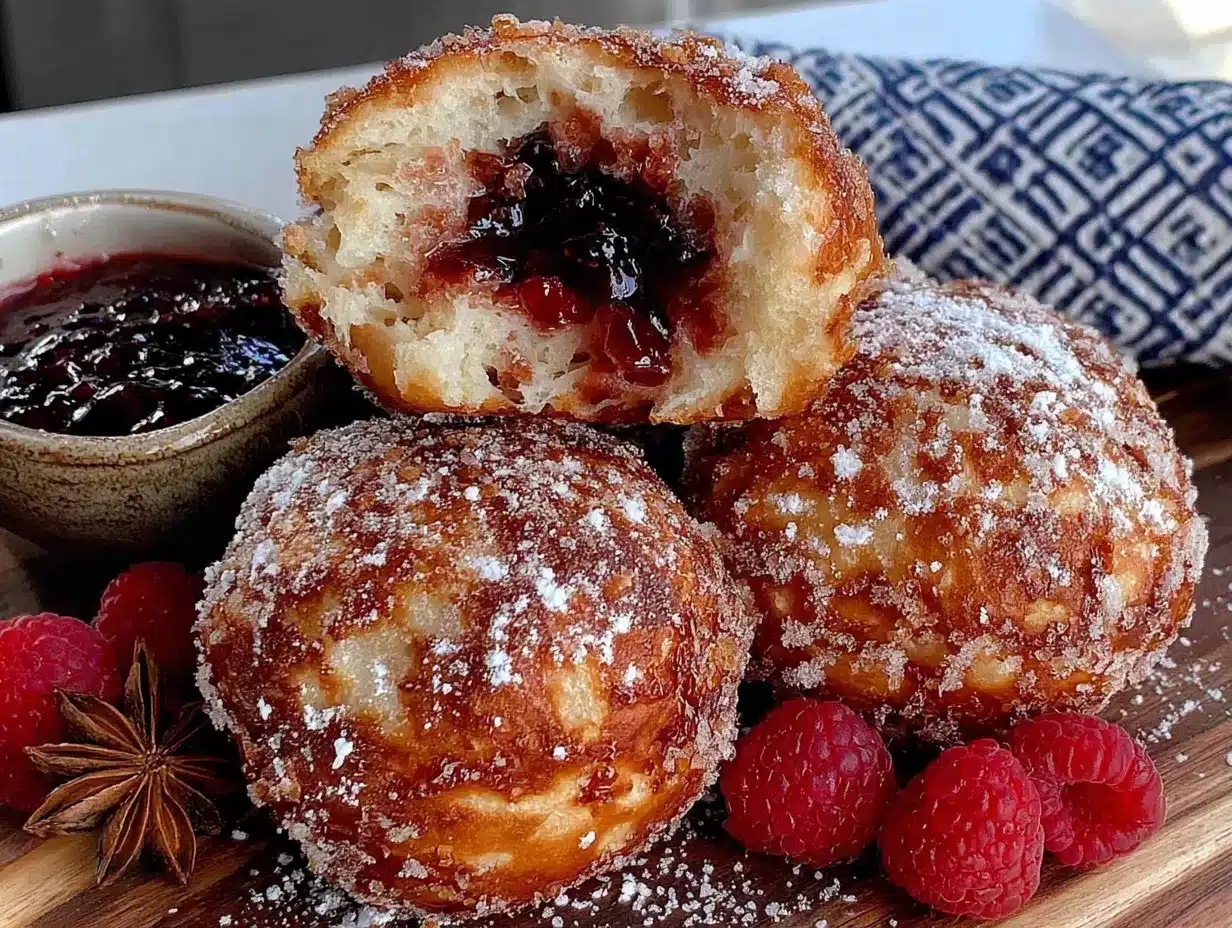
- Seedless raspberry jam (1 cup / 320g): This is the easiest and most reliable option. Look for a good-quality jam with a high fruit content. The Bonne Maman brand is my personal favorite for its bright flavor and perfect consistency. If you can only find jam with seeds, that’s fine—just be aware of the texture.
- Fresh or frozen raspberries (½ cup / 60g): This is optional, but I love adding a few fresh or thawed frozen raspberries to the jam. It gives the filling a more complex, less “jelly-like” flavor and a few beautiful little fruit flecks.
- Lemon juice (1 teaspoon): A tiny squeeze of fresh lemon juice brightens the raspberry flavor and cuts through the sweetness of the dough. Don’t use bottled juice—the fresh stuff makes a real difference here.
For the Coating & Topping
- Powdered sugar (½ cup / 60g): For that classic snowy dusting. You’ll want to sift it over the sufganiyot just before serving for the prettiest presentation.
- Melted butter (2 tablespoons / 28g, optional): If you want an extra-glossy, slightly richer finish, brush the warm sufganiyot with melted butter before dusting with powdered sugar. It helps the sugar stick and adds a beautiful sheen.
Substitution Guidance: For a dairy-free version, use a good-quality plant-based milk (unsweetened oat or soy works best) and replace the butter with a vegan butter stick. The texture will be slightly less rich, but still very good. For a gluten-free version, I haven’t tested this recipe with gluten-free flour, so I can’t guarantee the result. The yeast needs gluten to create that structure.
Equipment Needed
You don’t need a lot of fancy equipment to make these, which is part of the beauty. Here’s what you’ll need to have on hand.
- Stand Mixer with Dough Hook: This is a lifesaver for this dough. You can absolutely knead it by hand, but it’s a slightly sticky, soft dough, and the mixer makes the process much easier and less messy. I’ve used my KitchenAid for this recipe for years.
- Large Mixing Bowl: For proofing the dough. Make sure it’s large enough to allow the dough to double in size.
- Baking Sheets: Two standard 13×18-inch baking sheets. Line them with parchment paper for easy cleanup.
- Rolling Pin: For rolling out the dough to an even thickness.
- Round Cutter (2.5 to 3-inch / 6-7cm): A biscuit cutter or a clean, empty tuna can works perfectly. The size determines the final size of your sufganiyot. I prefer a 2.5-inch cutter for a more classic, two-bite size.
- Pastry Bag or Piping Tip: For filling the baked sufganiyot. A Bismarck tip (a long, thin tip) is ideal, but you can also use a small round tip. If you don’t have a pastry bag, a sturdy zip-top bag with a corner snipped off will work in a pinch.
- Fine-Mesh Strainer or Sifter: For dusting the powdered sugar evenly. A tea strainer works great for this.
- Instant-Read Thermometer: Not strictly necessary, but very helpful for checking the milk temperature for the yeast. I’ve ruined a batch of dough by getting the milk too hot, and a $10 thermometer saved me from doing it again.
A budget-friendly tip: Don’t have a stand mixer? You can knead the dough by hand for about 8-10 minutes. It will be a little sticky, but that’s okay. Just lightly oil your hands and the work surface, and you’ll be fine.
Preparation Method
This method is broken down into clear, manageable steps. Follow them closely, and you’ll have a batch of beautiful, pillowy sufganiyot ready for your guests.
- Bloom the Yeast (if using active dry): In the bowl of your stand mixer, combine the warm milk (105-110°F) and 1 tablespoon of the granulated sugar. Sprinkle the yeast over the top and let it sit for 5-10 minutes until it becomes foamy and fragrant. If it doesn’t foam, your yeast is dead—start over with fresh yeast. (For instant yeast, skip this step and mix the yeast directly with the flour in step 2.)
- Make the Dough: To the yeast mixture, add the remaining sugar, the room-temperature eggs, vanilla extract, salt, softened butter, and vegetable oil. Add 2 cups of the flour and mix on low speed with the dough hook until a shaggy dough forms. Gradually add the remaining 1 ½ cups of flour, mixing until the dough comes together and pulls away from the sides of the bowl. It should be soft, slightly tacky, but not overly sticky. If it’s too sticky, add flour one tablespoon at a time.
- Knead the Dough: Increase the mixer speed to medium-low and knead for 5-7 minutes, until the dough is smooth, elastic, and passes the windowpane test (you can stretch a small piece of dough thin enough to see light through without it tearing). The dough will be soft and supple. If kneading by hand, turn it out onto a lightly floured surface and knead for 8-10 minutes.
- First Proof: Shape the dough into a ball and place it in a lightly oiled large bowl. Turn it once to coat the surface. Cover the bowl tightly with plastic wrap and let it rise in a warm, draft-free place for 1 to 1 ½ hours, or until it has doubled in size. (Tip: I often turn my oven on to the “warm” setting for 2 minutes, then turn it off and place the bowl inside. The residual warmth is perfect.)
- Shape the Sufganiyot: Punch down the risen dough gently to release the air. Turn it out onto a lightly floured surface. Roll the dough out to a ½-inch (1.25 cm) thickness. Use your round cutter to cut out as many rounds as you can. Gather the scraps, re-roll them once, and cut out more rounds. You should get about 14-16 sufganiyot.
- Second Proof: Place the cut rounds on your parchment-lined baking sheets, leaving about 2 inches of space between each one (they will expand). Cover them loosely with a clean kitchen towel or a piece of lightly oiled plastic wrap. Let them rise for another 30-45 minutes, until they are puffy and almost doubled in size.
- Preheat & Bake: About 15 minutes before the second proof is done, preheat your oven to 375°F (190°C). Bake the sufganiyot for 10-12 minutes, until they are golden brown on the bottom and very lightly golden on top. They should feel light and spring back when gently pressed. Don’t overbake them, or they will be dry.
- Prepare the Filling: While the sufganiyot are baking, make the filling. In a small bowl, stir together the seedless raspberry jam, the fresh or thawed raspberries (if using), and the lemon juice. If the jam is very thick, you can warm it gently in the microwave for 10-15 seconds to make it easier to pipe.
- Fill the Sufganiyot: Let the baked sufganiyot cool on the baking sheet for just 5-7 minutes—they need to be warm, but not hot, or the filling will be too runny. Fit your pastry bag with the Bismarck tip and fill it with the raspberry mixture. Insert the tip into the side of each sufganiyah and gently squeeze until you feel the pastry plump up slightly. Don’t overfill, or the jam will burst out the other side. You’ll get a feel for it after the first one.
- Finish & Serve: If using, brush the warm, filled sufganiyot with melted butter. Place the powdered sugar in a fine-mesh strainer and generously dust the sufganiyot. Serve them immediately for the best texture. They are absolutely magical when they’re still slightly warm from the oven.
Sensory Cues: When you roll the dough, it should feel soft and pillowy, like a baby’s cheek. During the second proof, look for the rounds to look puffy and almost “bouncy.” When you press one gently with your finger, the indentation should spring back slowly. When baked, the bottoms should be a deep, even golden brown, and the tops should be just a shade darker than the raw dough.
Cooking Tips & Techniques
Over the years, I’ve made my fair share of mistakes with this recipe, and I’ve learned a few things that I’m happy to pass along. These tips will save you time and heartache.
- The Dough Temperature is Critical: The biggest mistake I made early on was not letting the butter and eggs come to room temperature. Cold ingredients will slow down the yeast and make the dough tough. Set them out on the counter at least an hour before you start. It makes a world of difference.
- Don’t Be Afraid of a Sticky Dough: This is a soft, enriched dough, so it will be stickier than a standard bread dough. Resist the urge to add too much extra flour during kneading. A slightly sticky dough will yield a much softer, more tender final product. Use a bench scraper to help manage it if needed.
- The “Windowpane” Test is Your Friend: This is the single best way to know if your dough is kneaded enough. Tear off a small piece of dough and gently stretch it between your fingers. If it stretches into a thin, translucent membrane without tearing, you’re done. If it tears easily, knead for another minute and test again.
- Perfecting the Fill: The biggest disaster I’ve had was overfilling a sufganiyah and having the jam explode out the side, creating a sticky mess. Start with a gentle squeeze. You’ll feel the pastry start to resist. That’s your cue to stop. It’s better to underfill than to overfill.
- Timing for Hosting: Here’s my game plan for a party. Make the dough and do the first proof the night before. Punch it down, cover it tightly, and refrigerate it overnight. The next day, let it sit at room temperature for 30 minutes, then proceed with shaping and the second proof. This spreads the work out and makes the day-of baking a breeze.
- Consistency is Key: For perfectly uniform sufganiyot, use a kitchen scale to weigh your dough balls. Each one should be about 35-40 grams (roughly 1.2-1.4 ounces) before shaping. This ensures they all bake at the same rate.
Variations & Adaptations
This recipe is a wonderful canvas for your own creativity. Here are a few variations I’ve tried and loved.
- Seasonal Fruit Filling: Raspberry is a classic, but don’t stop there. In the summer, I love using a mix of fresh strawberry and rhubarb jam. In the fall, a spiced apple butter or a fig jam with a pinch of black pepper is absolutely divine. Just make sure whatever jam you use is thick enough to pipe.
- Chocolate Lover’s Sufganiyah: For a richer version, fill the baked sufganiyot with a chocolate pastry cream or a simple chocolate ganache (equal parts warm heavy cream and chopped dark chocolate, stirred until smooth). Dust with powdered sugar or a light dusting of cocoa powder.
- Citrus Glaze: Instead of powdered sugar, make a simple glaze. Whisk together 1 cup of powdered sugar, 2 tablespoons of fresh lemon or orange juice, and a pinch of zest. Dip the tops of the warm sufganiyot into the glaze and let it set for 5 minutes. The bright citrus is a perfect counterpoint to the sweet dough.
- Savory Twist: I know this sounds strange, but hear me out. Omit the vanilla and sugar from the dough (reduce sugar to 1 tablespoon for the yeast). Fill the baked, unsweetened puffs with a mixture of herbed goat cheese and roasted red peppers. It’s an incredible appetizer for a cocktail party and always gets a surprised “what is this?” reaction.
- Dietary Adaptation (Vegan): I’ve tested this with a flax egg (1 tablespoon ground flaxseed + 3 tablespoons water, per egg) and a plant-based butter. The texture is slightly less tender, but the flavor is still fantastic. The dough might be a bit stickier, so add a little extra flour if needed.
Serving & Storage Suggestions
These sufganiyot are best enjoyed the day they are made, ideally within a few hours of baking. Here’s how to serve and store them for the best experience.
- Serving Temperature: Serve them warm, or at room temperature. If you’ve made them ahead, a quick 10-second blast in the microwave will bring back that just-baked softness. Reheat them in a 300°F oven for 3-5 minutes if you have a larger batch.
- Presentation Tips for Hosting: Arrange them on a beautiful platter or a wooden board. A generous, last-minute dusting of powdered sugar just before your guests arrive makes them look incredibly inviting. I like to place a small bowl of extra raspberry jam on the side for dipping, just in case someone wants an extra burst of fruit.
- What to Serve Alongside: For a Hanukkah party, these are perfect alongside a platter of latkes with applesauce and sour cream. For a brunch, serve them with a fresh fruit salad and a pot of strong coffee or a pitcher of mimosas. They also pair beautifully with a cup of hot tea or a glass of cold milk.
- Storage Instructions: Store any leftover sufganiyot in an airtight container at room temperature for up to 1 day. Do not refrigerate them—the fridge will dry them out and make them tough. After a day, they are best used for a bread pudding or, honestly, just toasted and spread with a little butter.
- Freezing: You can freeze the unfilled, baked sufganiyot. Let them cool completely, then place them in a single layer in a freezer-safe bag or container. They will keep for up to 1 month. To serve, thaw them at room temperature, reheat them briefly in the oven, and then fill and dust them fresh. The filling does not freeze well, so always fill them after thawing.
- How Flavors Develop: The dough itself is at its peak flavor on the first day. The yeast’s subtle notes are brightest when fresh. The filling, however, will meld with the dough if you let them sit for an hour or two, creating a more unified flavor profile. This is why I love making them a couple of hours before my guests arrive.
Nutritional Information & Benefits
While these are a treat, it’s good to know what’s in them. I’ve calculated approximate nutritional values for one sufganiyah (based on a batch of 16).
- Estimated Values (per serving): Calories: 195, Fat: 6g (Saturated: 3g), Carbohydrates: 32g, Sugar: 16g, Fiber: 1g, Protein: 4g.
- Health Benefits of Key Ingredients: The raspberries in the filling are packed with antioxidants and vitamin C. The eggs provide high-quality protein and choline, which is good for brain health. The milk and butter offer calcium and vitamin A.
- Dietary Considerations: This recipe is vegetarian. It is not vegan, gluten-free, or dairy-free in its standard form, but substitutions are noted in the variations section. It contains gluten, dairy, and eggs.
- My Personal Perspective: Look, this is a dessert. It’s made with butter, sugar, and jam. I’m not going to tell you it’s a health food. But what I will say is that for me, the joy of sharing a homemade, beautiful treat with the people I love is a form of nourishment all its own. One of these with a cup of coffee and good conversation? That’s a pretty perfect moment.
Conclusion
Honestly, this recipe is a gift. It takes the intimidating process of making sufganiyot and turns it into something achievable, even relaxing. The dough is forgiving, the filling is simple, and the result is absolutely show-stopping. You will look like a hero at your next gathering, and all you have to do is roll, bake, and fill.
I encourage you to make this recipe your own. Maybe you swap the raspberry for a different jam, or you add a pinch of cinnamon to the dough. The first time I made these, I was so nervous about the dough not rising that I checked on it every ten minutes. Now, I make them without a second thought, and the smell of them baking is one of my favorite kitchen scents in the world. They remind me of that dusty estate sale, of Margie’s kindness, and of the simple magic of a shared recipe.
I would love to hear how they turn out for you! Did you try a different filling? Did you serve them for a special occasion? Drop a comment below and let me know. And if you loved them as much as I do, please share this recipe with a friend who loves to host. Happy baking, and may your holidays be filled with warmth, light, and a whole lot of powdered sugar.
Frequently Asked Questions
Can I use instant yeast instead of active dry yeast?
Yes, absolutely. If you are using instant yeast, you can skip the blooming step in the instructions. Simply mix the instant yeast directly into the flour along with the other dry ingredients, then add the warm milk and proceed with the recipe. The rising times might be slightly shorter, so keep an eye on the dough.
My dough didn’t rise. What went wrong?
This is the most common issue. The most likely culprit is that the milk was too hot and killed the yeast. It should be between 105-110°F, like a warm bath. Another possibility is that your yeast is old and expired. Always check the expiration date on the packet. If your dough hasn’t doubled in size after 1.5 hours in a warm place, it’s likely a yeast issue, and you’ll need to start over.
Can I make the dough in a bread machine?
You can! Use the “dough only” cycle on your bread machine. Add the ingredients in the order recommended by your machine’s manufacturer (usually liquids first, then dry ingredients, with the yeast on top). Let the machine complete the kneading and first rise cycle. Then, proceed with shaping, the second proof, and baking as directed.
How do I keep the powdered sugar from melting into the warm sufganiyot?
This is a great question. The trick is to let the sufganiyot cool for at least 10-15 minutes after baking and filling before you dust them with powdered sugar. If they are too hot, the steam will immediately melt the sugar. For the best presentation, dust them right before serving.
Can I use a different fruit for the filling, like strawberry or blueberry?
Definitely! This recipe is very flexible. Any good-quality seedless jam will work beautifully. Strawberry, blueberry, apricot, or even a mixed berry jam are all fantastic options. Just make sure the jam is thick enough to pipe—if it’s very runny, you can simmer it on the stovetop for a few minutes to reduce it and thicken it up.
Pin This Recipe!

Best Baked Sufganiyot with Raspberry Filling Recipe

These baked sufganiyot deliver the same tender, pillowy dough and sweet-tart raspberry filling as the classic fried version, without the mess of deep-frying. Perfect for holiday hosting, this recipe yields a show-stopping dessert that will have everyone asking for more.
- Prep Time: 30 minutes
- Cook Time: 12 minutes
- Total Time: 2 hours 30 minutes (includes rising time)
- Yield: 14-16 servings 1x
- Category: Dessert
- Cuisine: Jewish
Ingredients
- 3 ½ cups (440g) all-purpose flour
- 2 ¼ teaspoons (7g) active dry yeast (or one standard packet)
- ¾ cup (180ml) warm milk (105-110°F)
- ¼ cup (50g) granulated sugar
- 2 large eggs, at room temperature
- 4 tablespoons (57g) unsalted butter, softened
- 1 tablespoon (15ml) vegetable oil
- 1 teaspoon (6g) salt
- 1 teaspoon vanilla extract
- 1 cup (320g) seedless raspberry jam
- ½ cup (60g) fresh or frozen raspberries (optional)
- 1 teaspoon lemon juice
- ½ cup (60g) powdered sugar
- 2 tablespoons (28g) melted butter (optional, for brushing)
Instructions
- Bloom the yeast (if using active dry): In the bowl of a stand mixer, combine the warm milk (105-110°F) and 1 tablespoon of the granulated sugar. Sprinkle the yeast over the top and let it sit for 5-10 minutes until foamy and fragrant. (For instant yeast, skip this step and mix the yeast directly with the flour in step 2.)
- Make the dough: To the yeast mixture, add the remaining sugar, room-temperature eggs, vanilla extract, salt, softened butter, and vegetable oil. Add 2 cups of the flour and mix on low speed with the dough hook until a shaggy dough forms. Gradually add the remaining 1 ½ cups of flour, mixing until the dough comes together and pulls away from the sides of the bowl. It should be soft, slightly tacky, but not overly sticky. If too sticky, add flour one tablespoon at a time.
- Knead the dough: Increase the mixer speed to medium-low and knead for 5-7 minutes, until the dough is smooth, elastic, and passes the windowpane test (stretch a small piece thin enough to see light through without tearing). If kneading by hand, turn out onto a lightly floured surface and knead for 8-10 minutes.
- First proof: Shape the dough into a ball and place it in a lightly oiled large bowl. Turn once to coat. Cover tightly with plastic wrap and let rise in a warm, draft-free place for 1 to 1 ½ hours, or until doubled in size.
- Shape the sufganiyot: Punch down the risen dough gently. Turn out onto a lightly floured surface. Roll the dough to ½-inch (1.25 cm) thickness. Use a 2.5 to 3-inch round cutter to cut out rounds. Gather scraps, re-roll once, and cut more rounds. You should get about 14-16.
- Second proof: Place the cut rounds on parchment-lined baking sheets, leaving about 2 inches of space between each. Cover loosely with a clean kitchen towel or lightly oiled plastic wrap. Let rise for 30-45 minutes, until puffy and almost doubled in size.
- Preheat & bake: About 15 minutes before the second proof is done, preheat oven to 375°F (190°C). Bake for 10-12 minutes, until golden brown on the bottom and very lightly golden on top. They should feel light and spring back when gently pressed. Do not overbake.
- Prepare the filling: While baking, stir together the seedless raspberry jam, fresh or thawed raspberries (if using), and lemon juice in a small bowl. If the jam is very thick, warm gently in the microwave for 10-15 seconds.
- Fill the sufganiyot: Let the baked sufganiyot cool on the baking sheet for 5-7 minutes (warm, not hot). Fit a pastry bag with a Bismarck tip and fill with the raspberry mixture. Insert the tip into the side of each sufganiyah and gently squeeze until the pastry plumps slightly. Do not overfill.
- Finish & serve: If using, brush the warm, filled sufganiyot with melted butter. Dust generously with powdered sugar using a fine-mesh strainer. Serve immediately for best texture.
Notes
The dough can be prepped the night before: after the first proof, punch down, cover tightly, and refrigerate overnight. The next day, let sit at room temperature for 30 minutes before shaping. For uniform sufganiyot, weigh each dough ball to about 35-40 grams. Do not overfill to avoid bursting. Serve warm for best texture.
Nutrition
- Serving Size: 1 sufganiyah
- Calories: 195
- Sugar: 16
- Sodium: 150
- Fat: 6
- Saturated Fat: 3
- Carbohydrates: 32
- Fiber: 1
- Protein: 4
Keywords: baked sufganiyot, Hanukkah, jelly doughnuts, raspberry, holiday dessert, baked doughnuts