I was trying to make ramen. Not just any ramen, but the kind that comes with those perfectly jammy, dark-brown eggs that make you question every life choice that led you to eating plain hard-boiled eggs for breakfast. I had the broth simmering, the noodles ready, and I was feeling pretty good about myself. Then I realized I didn’t have a single egg in the fridge. That’s how this whole thing started—not with a plan, but with a desperate trip to the corner store at 9 PM on a Tuesday.
I grabbed a carton of eggs, rushed home, and boiled them while frantically throwing together a soy sauce marinade I’d seen in a video somewhere. The problem? I forgot to set a timer. By the time I remembered, the eggs were hard-boiled—fully cooked, no jammy center in sight. I was annoyed, honestly. The whole point was that soft, custard-like yolk. But I’d already made the marinade, and I wasn’t about to waste good soy sauce. So I peeled the eggs, dropped them in the liquid, and shoved the container in the fridge. Maybe they’d be good for something else, I figured. Maybe I’d chop them up for a salad.
The next day, I pulled one out, sliced it in half, and just stared. The white had taken on this deep, caramel-brown color, and the yolk—well, the yolk was still fully cooked, but something had happened. The soy sauce had seeped in, creating this savory, umami-packed flavor that was almost better than the jammy version I’d been chasing. I ate three of them standing over the sink. Maybe you’ve been there—when a kitchen mistake turns into something you secretly like better than the original plan. These soy sauce eggs have been in my fridge ever since, and honestly, I don’t think I’ll ever go back to plain boiled eggs again.
Why You’ll Love This Recipe
These soy sauce marinated eggs are the kind of thing that makes you wonder why you haven’t been making them your whole life. They’re stupidly simple, but the payoff is massive. Here’s why they’ve become a staple in my kitchen:
- Unbelievably Easy: Boil eggs, make a marinade, wait 8 hours. That’s it. No complicated techniques or fancy equipment.
- Simple Ingredients: Soy sauce, mirin, a bit of sugar, and some aromatics. You probably have most of this in your pantry right now.
- Perfect for Meal Prep: Make a batch on Sunday, and you’ve got protein-packed snacks or ramen toppers all week.
- Crowd-Pleaser: I’ve brought these to potlucks and watched people go quiet. That’s the sound of pure egg appreciation.
- Way Better Than Takeout: The flavor is deeper, more complex, and you control exactly what goes in. No mystery ingredients.
What makes these different from every other soy sauce egg recipe out there? It’s the timing. That 8-hour cure hits the sweet spot where the marinade penetrates just enough without making the eggs too salty or rubbery. I’ve tested shorter times (not enough flavor) and longer times (hello, salt bomb), and 8 hours is the magic number. Plus, I use a touch of honey instead of all sugar, which gives the marinade a subtle floral note that really rounds things out.
These eggs are my go-to when I want something that feels indulgent but is secretly pretty healthy. They’re comfort food that doesn’t leave you feeling heavy—just satisfied. Perfect for throwing on top of a bowl of noodles, smashing onto toast, or just eating straight from the jar when nobody’s watching.
What Ingredients You Will Need
This recipe uses simple, pantry-friendly ingredients that come together to create something seriously special. The marinade is where the magic happens, and each component plays a specific role.
- 6 large eggs, room temperature (cold eggs can crack when boiled; letting them sit out for 15 minutes helps)
- ½ cup soy sauce (I prefer low-sodium for better control—Kikkoman or San-J are my go-tos)
- ¼ cup mirin (sweet rice wine—adds that subtle sweetness and depth you can’t get from sugar alone)
- 2 tablespoons honey (balances the saltiness and gives a glossy finish; maple syrup works too)
- 2 cloves garlic, smashed (not minced—smashing releases flavor without making the marinade cloudy)
- 1-inch piece ginger, sliced into rounds (adds warmth and a little kick)
- 1 tablespoon rice vinegar (brightens everything up and helps the marinade penetrate the eggs)
- Optional: 1 teaspoon sesame oil (for a nutty, toasty note—add it if you’re feeling fancy)
- Optional: 1-2 dried chilies or a pinch of red pepper flakes (for heat lovers)
A few notes on ingredients. Mirin is worth tracking down—it’s not expensive and it makes a real difference. You can substitute with ¼ cup dry sherry plus 1 tablespoon sugar, but it won’t be quite the same. For the soy sauce, avoid the “light” stuff if you can; it’s too thin and won’t give you that rich color. And please, for the love of all things eggy, use fresh eggs. Older eggs are easier to peel, but they also have thinner whites that can get rubbery in the marinade. I aim for eggs that are about a week old—fresh enough for good texture, old enough that they peel without a fight.
If you’re watching your sodium, you can use coconut aminos instead of soy sauce, but the flavor will be milder and slightly sweeter. I’ve tried it, and it’s good, just different. For a gluten-free version, swap in tamari—it’s basically the same thing but made without wheat.
Equipment Needed
You don’t need much for this recipe, which is part of the appeal. Here’s what you’ll need:
- Medium saucepan (for boiling the eggs—don’t use one that’s too big or the eggs will bounce around and crack)
- Slotted spoon (for gently lowering eggs into the water and fishing them out)
- Large bowl of ice water (for shocking the eggs—stops the cooking immediately)
- Small bowl or jar (for mixing the marinade—a 2-cup glass measuring cup works great)
- Container with a tight-fitting lid (for marinating—a wide-mouth mason jar or glass food storage container is perfect)
- Paper towels (for drying the peeled eggs—this helps the marinade stick better)
I’ve made these eggs with a cheap $10 saucepan and a fancy $50 one, and honestly, the results were the same. The only thing I’d splurge on is a good container for marinating. Glass is best because it doesn’t absorb odors like plastic can. I use a 32-ounce wide-mouth mason jar, and it fits 6 eggs perfectly. If you’re using a regular jar, just make sure the eggs are fully submerged—you might need to double the marinade recipe or use a smaller container.
Preparation Method
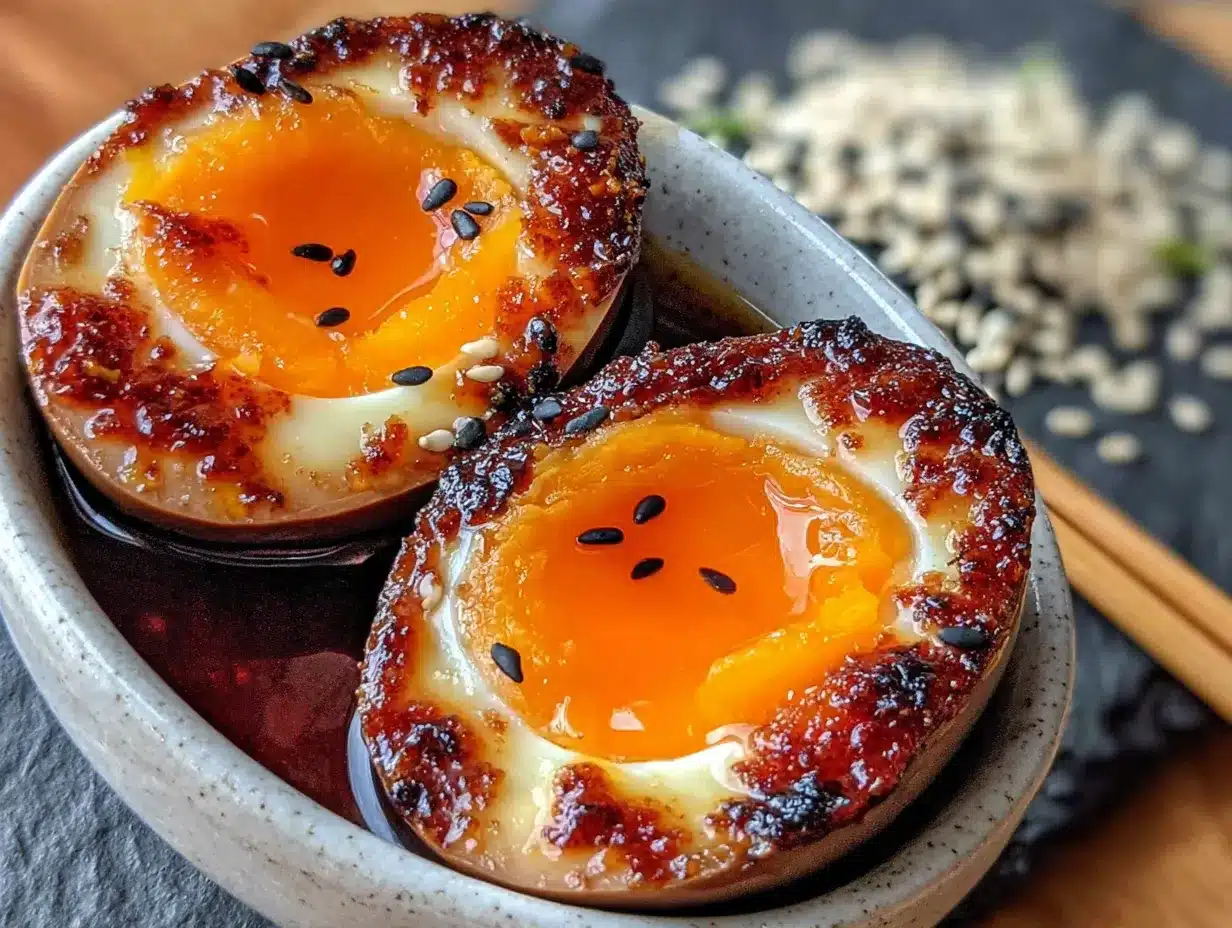
Let’s get into the actual process. It’s straightforward, but a few details make the difference between good eggs and great ones.
- Bring a pot of water to a rolling boil. Fill your saucepan with enough water to cover the eggs by about an inch. Add a pinch of salt—this helps the whites set faster if any eggs crack. Get the water boiling hard, not just simmering.
- Gently lower the eggs into the water. Use your slotted spoon for this. Don’t drop them in from above, or they might crack. Lower them in one at a time, gently. Set a timer for 6 minutes and 30 seconds if you want jammy yolks, or 7 minutes for firmer but still slightly soft yolks. For fully hard-boiled (like I accidentally made), go 9-10 minutes.
- Prepare an ice bath while the eggs cook. Fill a large bowl with cold water and a generous amount of ice. You want it really cold—this stops the cooking instantly and prevents that gray ring from forming around the yolk.
- Transfer eggs to the ice bath immediately. When the timer goes off, use your slotted spoon to move the eggs to the ice water. Let them sit for at least 5 minutes. I usually leave them for 10 while I make the marinade.
- Make the marinade. In your small bowl or jar, combine the soy sauce, mirin, honey, rice vinegar, smashed garlic, and ginger slices. Whisk or shake until the honey is dissolved. If you’re using sesame oil or chilies, add them now. Give it a taste—it should be savory with a hint of sweetness and a little tang. Adjust if needed.
- Peel the eggs. This is the most annoying part, but it gets easier with practice. Gently crack the shell all over by tapping the egg on the counter. Start peeling from the wider end (there’s an air pocket there that helps you get under the membrane). Rinse the peeled eggs under cold water to remove any tiny shell fragments. Pat them dry with paper towels—this is important because excess water will dilute the marinade.
- Submerge the eggs in the marinade. Place the peeled eggs in your container and pour the marinade over them. They should be completely covered. If they’re not, you can either add a bit more soy sauce and mirin (equal parts) or use a smaller container. Put the lid on and give it a gentle shake to make sure everything’s coated.
- Refrigerate for 8 hours. This is the hard part—waiting. Put the container in the fridge and try to forget about it for at least 8 hours. I’ve found that 8-12 hours is the sweet spot. After 24 hours, the eggs start getting noticeably saltier, so I wouldn’t go longer than that unless you really love salt.
- Remove and enjoy. After 8 hours, take the eggs out of the marinade. You can serve them immediately or store them in a clean container in the fridge for up to 5 days. The marinade can be strained and reused once—just boil it first and add a splash of fresh soy sauce to revive it.
A few things to watch for. If you see the whites looking a bit dimpled or wrinkled after marinating, that’s normal—it’s just the marinade doing its thing. If they smell off or feel slimy at any point, toss them. But honestly, I’ve never had that happen with this recipe.
Cooking Tips & Techniques
I’ve made these eggs probably fifty times by now, and I’ve learned a few things the hard way. Here are the tips that actually matter:
Watch your boil time like a hawk. I cannot stress this enough. 30 seconds can be the difference between a jammy yolk and a hard one. Set two timers if you have to—one for the water boiling, one for the eggs cooking. I once got distracted by a phone call and ended up with eggs that were basically rubber balls. Not my finest moment.
Don’t skip the ice bath. I know it’s tempting to just run them under cold water, but that doesn’t stop the cooking fast enough. The residual heat will keep cooking the yolk, and you’ll end up with that chalky, gray-green ring. The ice bath is non-negotiable if you want beautiful, bright yolks.
Peel under running water. This was a game-changer for me. Hold the egg under a thin stream of cold water while you peel. The water gets under the membrane and helps the shell slide off in bigger pieces. It’s messier, but it saves so much frustration.
Use a wide, shallow container for marinating. A tall, narrow jar might seem efficient, but the eggs at the bottom get more marinade exposure than the ones at the top. A wide, shallow dish lets the marinade reach all the eggs evenly. If you do use a jar, just rotate it gently every couple of hours.
Save the leftover marinade. After you take the eggs out, strain the marinade and store it in the fridge. You can use it to marinate tofu, drizzle over rice bowls, or even as a quick sauce for stir-fried vegetables. It’s liquid gold, honestly.
Variations & Adaptations
Once you’ve mastered the basic recipe, there are so many ways to play with it. Here are some of my favorites:
Spicy Soy Sauce Eggs: Add 1-2 dried chilies (I like Thai bird chilies) or a teaspoon of gochugaru (Korean red pepper flakes) to the marinade. The heat builds as the eggs sit, so you get this lovely warmth that doesn’t overwhelm the other flavors.
Tea-Marinated Eggs: This is a Chinese-style variation that’s incredible. Add 2 black tea bags (Earl Grey or Assam work great) and a cinnamon stick to the marinade. The tea adds this subtle, earthy bitterness that balances the soy sauce beautifully. Let the eggs marinate for 12 hours for a deeper flavor.
Vegan “Egg” Version: I’ve tested this with silken tofu, and it’s surprisingly good. Freeze the tofu, thaw it, press out the water, and then marinate it in the same mixture. The texture is different—more custard-like—but the flavor is spot on. Marinate for at least 4 hours.
Herb-Infused Eggs: Throw in a few sprigs of fresh thyme, a bay leaf, or some dill fronds. The herbs infuse subtly, giving the eggs a more complex, almost floral note. This is great if you’re serving the eggs on a salad or avocado toast.
Smoky Soy Sauce Eggs: Add a drop of liquid smoke to the marinade. It sounds weird, but it gives the eggs this incredible, almost bacon-like depth. I discovered this by accident when I ran out of sesame oil and grabbed the wrong bottle. Best mistake ever.
Serving & Storage Suggestions
These eggs are incredibly versatile. Here’s how I like to serve them:
On top of ramen or udon noodles: This is the classic move, and for good reason. Slice the egg in half lengthwise and place it right on top of the hot broth. The yolk (if you went jammy) mixes with the broth to create this luxurious, silky sauce. It’s pure comfort.
Smashed on toast: Take a slice of good sourdough, toast it, spread on some butter or avocado, and smash a soy sauce egg on top. Sprinkle with a little furikake or sesame seeds. Best breakfast of your life, I swear.
In a rice bowl: Make a quick bowl with steamed rice, some sautéed greens, a protein (tofu, chicken, or just the eggs), and a drizzle of the leftover marinade. It’s a complete meal in about 10 minutes.
As a snack: Honestly, I eat these straight from the container all the time. They’re the perfect high-protein snack that actually satisfies. Just grab one, slice it in half, and eat it with a little sprinkle of salt or chili flakes.
Storage: Keep the eggs in a clean, airtight container in the fridge for up to 5 days. I don’t recommend freezing them—the texture gets weird and watery when thawed. If you’re meal-prepping, you can make the marinade up to a week in advance and just boil fresh eggs when you’re ready.
Reheating: These are best served cold or at room temperature. If you want them warm, just let them sit out for 15 minutes before serving, or drop them into hot broth for 30 seconds. Don’t microwave them—the whites get rubbery and the yolk (if jammy) can explode. Trust me on this one.
Nutritional Information & Benefits
Per serving (1 egg with about 1 tablespoon of marinade):
- Calories: 85
- Protein: 7g
- Fat: 5g
- Carbohydrates: 3g
- Sodium: 520mg (varies based on soy sauce)
Eggs are a nutritional powerhouse, honestly. They’re one of the few natural sources of vitamin D, and they’re packed with choline, which is great for brain health. The soy sauce marinade adds some sodium, sure, but it’s not like you’re drinking the stuff—a little goes a long way flavor-wise.
If you’re watching your sodium, use low-sodium soy sauce and cut the marinating time to 6 hours. The flavor won’t be as deep, but it’ll still be good. For a lower-carb option, skip the honey or use a sugar-free sweetener—I’ve tried it with monk fruit sweetener and it worked fine.
These eggs are naturally gluten-free if you use tamari instead of soy sauce, and they’re keto-friendly as long as you watch the honey. They’re also a great option for anyone doing a high-protein diet or just trying to eat more whole foods.
Conclusion
These soy sauce marinated eggs have become a non-negotiable in my kitchen. They’re the kind of recipe that makes you feel like a genius for almost no effort—just a little patience and a simple marinade. Whether you’re topping a bowl of noodles, smashing one on toast, or eating them straight from the jar (no judgment here), they deliver that deep, savory satisfaction that store-bought versions just can’t match.
What I love most is how forgiving they are. You can mess up the boil time, forget to set a timer, or use the wrong container, and they’ll still turn out delicious. That’s the beauty of a recipe that’s been tested through real-life chaos. So go ahead—make a batch. Customize it with your favorite aromatics, adjust the sweetness, add some heat if that’s your thing. And when you take that first bite and realize you’ll never go back to plain eggs again, come back and tell me about it.
Have you tried these soy sauce eggs? What’s your favorite way to serve them? Drop a comment below—I’d love to hear how they turned out for you. And if you’re feeling generous, share this recipe with a friend who needs a little more umami in their life.
Frequently Asked Questions
Can I use brown eggs instead of white?
Yes, absolutely. The color of the shell doesn’t affect the flavor or texture at all. Brown eggs might look slightly different after marinating (the color can be a bit deeper), but they taste exactly the same. Use whatever you have on hand.
Do I have to use mirin? Can I substitute it?
Mirin adds a specific sweetness and depth that’s hard to replicate, but you can substitute it with ¼ cup dry sherry plus 1 tablespoon of sugar. It won’t be quite the same, but it’ll still be good. I’ve also used sake with a pinch of sugar in a pinch—worked fine.
How long can I keep the marinade?
You can store the marinade in an airtight container in the fridge for up to 2 weeks. After that, the flavors start to fade and it can get a bit funky. If you’re reusing it, boil it first to kill any bacteria, then add a splash of fresh soy sauce to bring back the flavor.
Why are my eggs rubbery after marinating?
This usually happens if you marinate them too long (over 24 hours) or if your soy sauce is too high in sodium. Stick to the 8-12 hour window, and use low-sodium soy sauce if you’re worried. Also, make sure you’re not overcooking the eggs in the first place—rubbery whites start with overcooked eggs.
Can I make these eggs with duck eggs?
Yes, duck eggs work beautifully. They have a richer, creamier yolk and a slightly firmer white. Just adjust the boiling time—duck eggs are bigger, so add an extra minute to your boil time. They’ll need about 7-8 minutes for a jammy yolk.
Pin This Recipe!
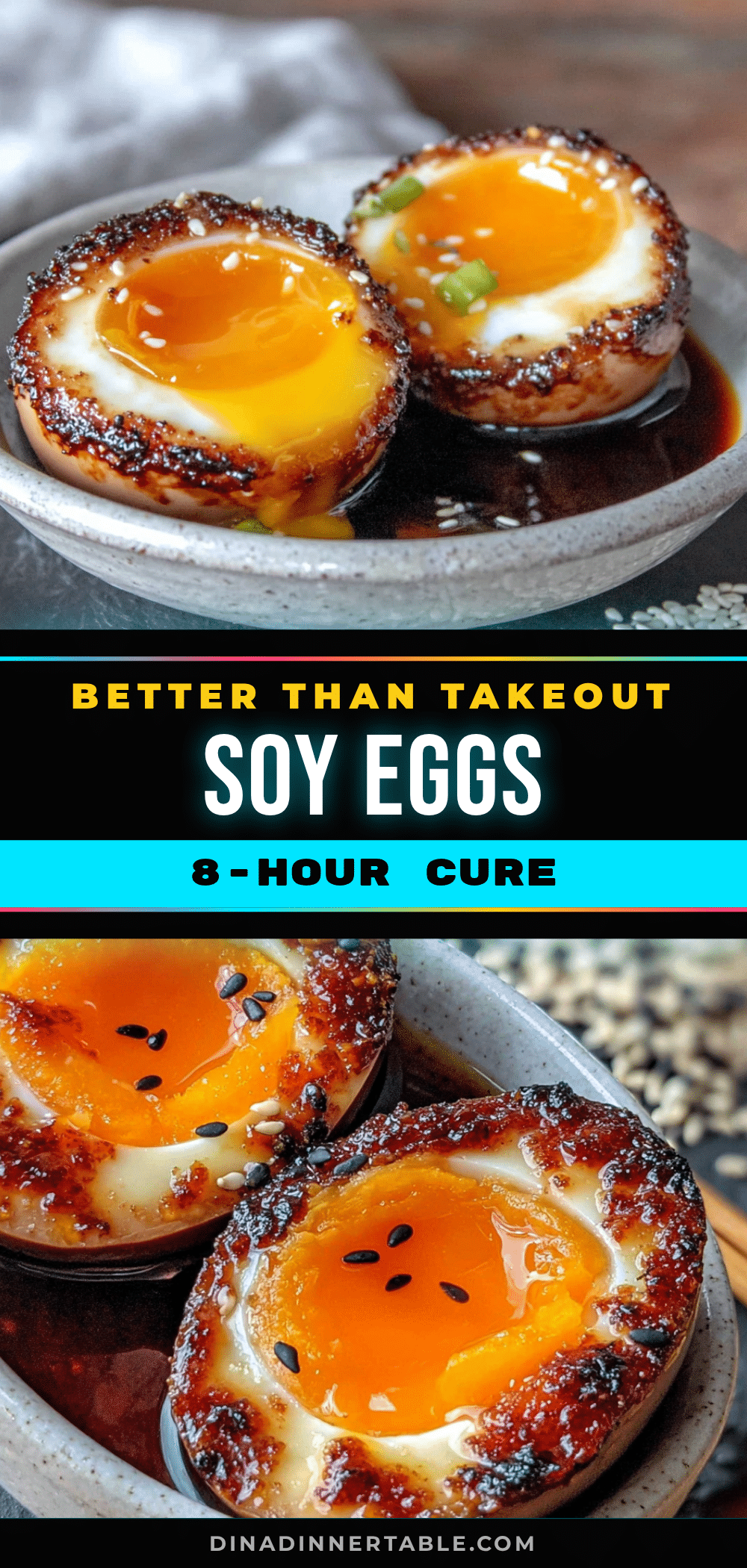
Better-Than-Takeout Soy Sauce Eggs | Easy 8-Hour Recipe
These soy sauce marinated eggs are incredibly easy to make with simple ingredients and deliver deep, savory umami flavor. Perfect for ramen, toast, rice bowls, or a high-protein snack.
- Prep Time: 15 minutes
- Cook Time: 7 minutes
- Total Time: 8 hours 22 minutes
- Yield: 6 servings 1x
- Category: Appetizer
- Cuisine: Japanese
Ingredients
- 6 large eggs, room temperature
- ½ cup low-sodium soy sauce (Kikkoman or San-J recommended)
- ¼ cup mirin
- 2 tablespoons honey
- 2 cloves garlic, smashed
- 1-inch piece ginger, sliced into rounds
- 1 tablespoon rice vinegar
- Optional: 1 teaspoon sesame oil
- Optional: 1-2 dried chilies or a pinch of red pepper flakes
Instructions
- Bring a pot of water to a rolling boil. Add a pinch of salt.
- Gently lower the eggs into the water using a slotted spoon. Boil for 6 minutes 30 seconds for jammy yolks, 7 minutes for firmer soft yolks, or 9-10 minutes for hard-boiled.
- Prepare an ice bath while eggs cook. Transfer eggs to ice bath immediately after boiling and let sit for at least 5 minutes.
- In a small bowl or jar, combine soy sauce, mirin, honey, rice vinegar, smashed garlic, and ginger slices. Whisk or shake until honey dissolves. Add optional sesame oil or chilies if using.
- Peel the eggs under cold running water. Pat dry with paper towels.
- Place peeled eggs in a container with a tight-fitting lid. Pour marinade over eggs, ensuring they are fully submerged. Cover and refrigerate for 8 hours (8-12 hours is ideal).
- Remove eggs from marinade after 8 hours. Serve immediately or store in a clean container in the fridge for up to 5 days.
Notes
For best results, use eggs that are about a week old for easier peeling. Do not marinate longer than 24 hours to avoid overly salty or rubbery eggs. The marinade can be strained and reused once; boil it first and add a splash of fresh soy sauce. For a vegan version, use silken tofu instead of eggs.
Nutrition
- Serving Size: 1 egg with about 1 t
- Calories: 85
- Sugar: 2
- Sodium: 520
- Fat: 5
- Saturated Fat: 1.5
- Carbohydrates: 3
- Protein: 7
Keywords: soy sauce eggs, marinated eggs, ramen eggs, Japanese eggs, easy egg recipe, umami eggs, meal prep eggs