I was standing in the dairy aisle of my local grocery store last December, staring at a shelf of tiny, overpriced jars of pre-made horseradish sauce. The cold air from the open refrigerator case was hitting my face, and then it hit me — that sharp, nasal-clearing sting of fresh horseradish. Suddenly I was eight years old, standing on a step stool in my Aunt Carol’s cramped kitchen in Pittsburgh. She was grating a fresh horseradish root over a bowl, tears streaming down her face, laughing so hard she could barely breathe. “That’s the good stuff,” she’d wheeze, wiping her eyes with her apron. I didn’t get it back then. Why would anyone want to eat something that made you cry? But that night, when she served her prime rib with that pale, creamy sauce on the side, I understood. The heat wasn’t aggressive — it was a slow, warm burn that made the beef taste even richer. I grabbed a jar off the shelf, put it back, and walked to the produce section for a fresh horseradish root. I was going to make it myself. Maybe you’ve been there too — standing in an aisle, remembering something your brain had packed away, and realizing you need to recreate it. I burned my hand on the oven rack that afternoon, and I forgot to buy heavy cream so I had to run back to the store. But honestly? That sauce was the closest I’ve gotten to Aunt Carol’s kitchen in twenty years. And that’s why I keep making it.
Why You’ll Love This Recipe
This isn’t just another condiment recipe. After testing this sauce at least a dozen times — with different ratios, different cream brands, different resting times — I can tell you this version is the one. It’s the one that makes people stop mid-chew and look at the bowl. Let me tell you why this creamy horseradish sauce for prime rib is different.
- Quick & Easy: Comes together in under 10 minutes. No cooking, no complicated techniques. Just mix and chill.
- Simple Ingredients: You likely have most of these in your fridge right now. No fancy grocery trips required.
- Perfect for Holiday Dinners: Great for Christmas, Easter, New Year’s, or any Sunday roast that deserves something special.
- Crowd-Pleaser: Even people who swear they don’t like horseradish end up reaching for seconds.
- Unbelievably Delicious: The balance between the sharp, sinus-clearing horseradish and the cool, velvety cream is pure magic. It’s not just a sauce — it’s the reason people fight over the last slice of prime rib.
What makes this recipe different from the rest? It’s the resting time. Most recipes tell you to serve it immediately, but I’ve found that letting it sit in the fridge for at least 30 minutes — ideally an hour — lets the flavors marry and the heat mellow into something complex rather than just sharp. It’s comfort food reimagined — a classic sauce that tastes like it took hours, but comes together in minutes. Perfect for impressing guests without stress.
What Ingredients You Will Need
This recipe uses simple, wholesome ingredients to deliver bold flavor and satisfying texture without the fuss. Each component plays a specific role in creating that perfect balance of heat, creaminess, and tang.
For the Sauce Base
- 1 cup heavy cream (35% fat content, for the best texture — I prefer Organic Valley or local creamery brands)
- 1/2 cup prepared horseradish (drained well — look for brands like Bubbies or Gold’s that have a clean, sharp flavor without too much vinegar)
- 2 tablespoons sour cream (adds tang and helps stabilize the sauce)
- 1 tablespoon white wine vinegar (or apple cider vinegar in a pinch — adds brightness)
- 1 teaspoon Dijon mustard (I recommend Grey Poupon for that subtle warmth)
- 1/2 teaspoon salt (fine sea salt works best)
- 1/4 teaspoon white pepper (black pepper will leave dark specks, so white pepper keeps it pretty)
- 1 tablespoon fresh chives (finely chopped, optional but lovely for color and mild onion flavor)
Ingredient Selection Tips
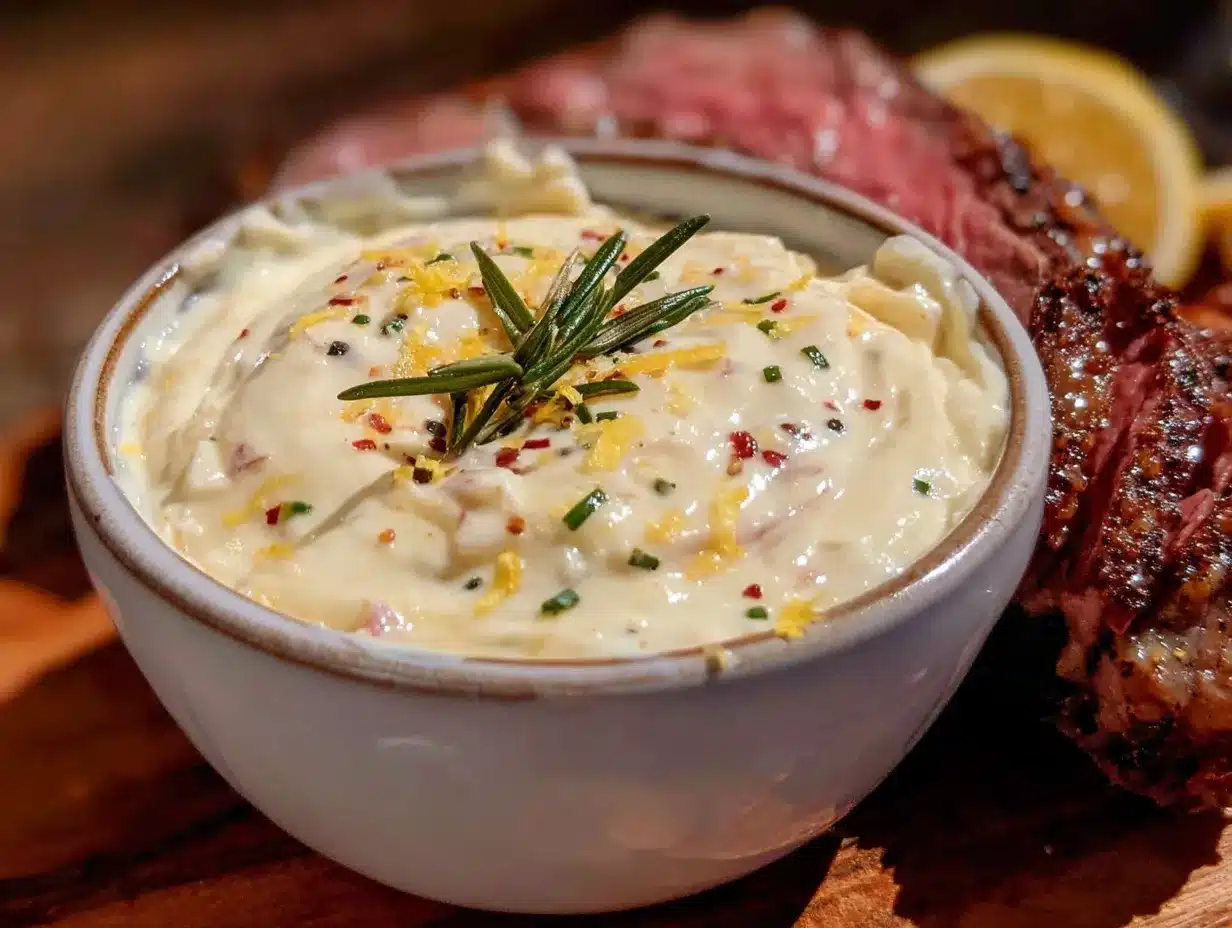
For the best creamy horseradish sauce for prime rib, ingredient quality matters. Fresh horseradish root is amazing if you can find it, but high-quality prepared horseradish works beautifully and saves time. When choosing heavy cream, look for one without added stabilizers or gums if possible — it whips up lighter and tastes cleaner. If you’re using fresh horseradish root, you’ll need about a 3-inch piece, peeled and grated finely. Just be prepared for that eye-watering moment — it’s part of the experience!
Substitution Guidance
Need a lighter version? Swap the heavy cream with full-fat Greek yogurt for a tangier, lower-calorie sauce. For a dairy-free option, use coconut cream (the thick part from a can of full-fat coconut milk) and dairy-free sour cream. The texture will be slightly different but still delicious. If you don’t have white wine vinegar, lemon juice works wonderfully — it adds a similar brightness.
Equipment Needed
- Medium mixing bowl (glass or stainless steel works best — plastic can retain odors)
- Whisk (a balloon whisk for incorporating air, or a hand mixer for quicker results)
- Fine-mesh strainer (for draining the prepared horseradish if it’s watery)
- Rubber spatula (to get every last bit of sauce out of the bowl)
- Measuring cups and spoons
- Serving bowl (something pretty — you’ll want to show this off)
If you don’t have a whisk, a fork works in a pinch — just be prepared for a bit more arm work. I’ve made this sauce with a handheld milk frother before, and honestly, it worked surprisingly well. For the best texture, though, a good old-fashioned whisk is your friend. I got mine at a thrift store for two dollars, and it’s been with me through countless holiday dinners.
Preparation Method
- Drain the horseradish: Place the prepared horseradish in a fine-mesh strainer and press gently with the back of a spoon to remove excess liquid. This is important — too much liquid will make your sauce thin. Let it sit for a minute or two while you prepare the other ingredients.
- Whip the cream: In your medium mixing bowl, pour the heavy cream. Using your whisk or hand mixer, whip the cream until it forms soft peaks. You’re looking for that stage where the cream holds its shape but still looks silky and luscious — not stiff or buttery. This usually takes about 2-3 minutes by hand, or 1 minute with a mixer. Don’t over-whip! I’ve done that before, and you end up with sweet butter floating in liquid, which is not what we want.
- Combine the flavor base: In a separate small bowl, mix together the drained horseradish, sour cream, white wine vinegar, Dijon mustard, salt, and white pepper. Stir until everything is well combined. Taste it at this point — it should be sharp and punchy. That’s good. The cream will mellow it out.
- Fold it together: Add the horseradish mixture to the whipped cream. Using a rubber spatula, gently fold everything together. Fold, don’t stir — you want to keep as much air in the cream as possible. Start from the bottom of the bowl and bring the mixture up and over. Repeat until you don’t see any white streaks. The sauce should look fluffy and pale, with tiny specks of horseradish throughout.
- Add the chives: If you’re using chives, fold them in gently at the end. They add a lovely pop of green and a mild onion flavor that complements the horseradish beautifully.
- Rest and chill: Transfer the sauce to your serving bowl, cover with plastic wrap, and refrigerate for at least 30 minutes. This is the step most people skip, but it’s crucial. The flavors need time to settle and blend. The sauce will thicken slightly as it chills, and the heat from the horseradish will become more rounded and complex. I usually make this a few hours before serving — it only gets better.
- Final taste and adjust: Before serving, give the sauce a taste. Need more heat? Fold in a teaspoon of fresh horseradish. Too sharp? A tiny pinch of sugar can balance it out. More salt? Go for it. Trust your palate here.
Sensory cue: When it’s ready, the sauce should be thick enough to dollop onto a slice of prime rib without running off. It should look fluffy and inviting, with a pale cream color. The aroma should be clean and sharp — that unmistakable horseradish kick that makes your nose tingle before you even take a bite.
Cooking Tips & Techniques
Let me share some things I wish I’d known the first time I made this. My first attempt was a disaster — I used pre-whipped cream from a can (don’t laugh, I was in a hurry) and the sauce came out watery and sad. Lesson learned.
Temperature matters: Make sure your heavy cream is cold — straight from the fridge. Warm cream won’t whip properly and will give you a flat, heavy sauce. If your kitchen is warm, you can even chill your bowl and whisk for 10 minutes before starting.
Don’t skip the draining: That step where you drain the horseradish? It’s not optional. Prepared horseradish has a lot of liquid, and if you don’t remove it, your sauce will be thin and runny. I once skipped this step because I was rushing, and I ended up with something that looked more like horseradish soup. Not ideal for prime rib.
Balance the heat: Different brands of prepared horseradish have different levels of heat. Some are mild, some will clear your sinuses for a week. Start with the amount I’ve suggested, taste, and adjust. You can always add more heat, but you can’t take it away.
Make it ahead: This sauce actually improves over time. I often make it the day before a big dinner. The flavors meld and deepen, and the heat becomes more integrated. Just give it a gentle stir before serving, and add a splash of cream if it’s thickened too much.
Variations & Adaptations
This creamy horseradish sauce for prime rib is wonderfully adaptable. Here are some variations I’ve tried and loved:
- Smoky Horseradish Sauce: Add 1/2 teaspoon of smoked paprika and a dash of liquid smoke. This gives the sauce a subtle campfire quality that pairs beautifully with grilled prime rib or smoked brisket. I made this for a Fourth of July barbecue, and people were putting it on everything — burgers, hot dogs, even potato chips.
- Herb-Infused Version: Swap the chives for a mix of fresh dill, parsley, and tarragon. The tarragon adds a slight anise note that’s fantastic with beef. This version is particularly good with cold roast beef sandwiches the next day.
- Spicy Southwest Twist: Add 1 tablespoon of finely chopped pickled jalapeños and a pinch of cumin. The acidity from the pickled jalapeños cuts through the richness of the prime rib beautifully. My brother-in-law, who claims to hate horseradish, devoured this version.
- Lighter Option: Replace the heavy cream with equal parts Greek yogurt and light sour cream. The sauce will be tangier and less rich, but still delicious. It’s what I make when I’m trying to be good but still want that horseradish kick.
- Vegan Adaptation: Use full-fat coconut cream (chilled overnight and scooped from the top of the can) instead of heavy cream, and vegan sour cream. The coconut flavor is subtle enough that it doesn’t overpower the horseradish. I tested this for a friend with dairy allergies, and she asked for the recipe.
Serving & Storage Suggestions
This sauce is best served chilled or at cool room temperature — never warm. The contrast between the hot, juicy prime rib and the cold, creamy sauce is part of the magic. Serve it in a small bowl alongside the meat, or dollop it directly onto each slice as you plate it.
What to serve with it: Obviously, prime rib is the star, but this sauce is incredibly versatile. Try it with roasted potatoes, grilled steak, roast chicken, or even as a dip for roasted vegetables. I’ve been known to eat it with raw carrot sticks as a snack. It’s also fantastic on sandwiches — think leftover prime rib on a crusty roll with arugula and this sauce.
Storage: Store any leftover sauce in an airtight container in the refrigerator for up to 3 days. The flavor will continue to develop, but the texture may thicken slightly. If it gets too thick, stir in a teaspoon of milk or cream before serving.
Freezing: I don’t recommend freezing this sauce. The cream will separate when thawed, and the texture will be grainy and unpleasant. Make it fresh — it’s so quick that there’s really no need to freeze it.
Flavor development: Interestingly, the horseradish heat actually fades slightly over time, while the other flavors become more pronounced. So if you want a milder sauce, make it a day ahead. If you want that fresh, punchy kick, make it within an hour of serving.
Nutritional Information & Benefits
Per serving (approximately 2 tablespoons):
- Calories: 85
- Fat: 8g
- Carbohydrates: 2g
- Protein: 1g
- Sugar: 1g
While this is an indulgent sauce, horseradish itself has some surprising health benefits. It’s part of the brassica family (along with broccoli and cabbage) and contains compounds called glucosinolates, which have been studied for their potential anti-inflammatory and antioxidant properties. The heat from horseradish can also help clear nasal congestion — which is why it’s so satisfying when you have a cold.
This sauce is naturally gluten-free and low-carb, making it suitable for keto and paleo diets (if you use a dairy-free cream alternative for paleo). It contains dairy, so it’s not suitable for vegan diets unless you use the coconut cream adaptation I mentioned earlier.
I don’t pretend this is health food — it’s a special occasion sauce. But knowing that the main ingredient has some benefits makes me feel slightly better about going back for that third dollop.
Conclusion
This creamy horseradish sauce for prime rib is more than just a condiment — it’s the finishing touch that turns a great roast into an unforgettable meal. It’s sharp and creamy, bold and gentle, simple and impressive all at once. Every time I make it, I think of Aunt Carol standing over that grater, crying and laughing at the same time. She’d be thrilled to know her sauce is still being made, still being loved, still making people close their eyes after that first bite.
I hope you’ll try this recipe and make it your own. Add more horseradish if you like things spicy. Dial it back if you prefer a milder kick. Throw in some fresh herbs or a pinch of smoked paprika. The beauty of this sauce is that it’s forgiving and flexible — it wants to be customized.
When you make it — and I hope you do — come back and tell me how it turned out. Did you serve it with prime rib or something unexpected? Did you add your own twist? I’d love to hear about it. Drop a comment below, share a photo, or tag me on social media. Until then, happy cooking, and don’t forget to taste as you go. That’s the secret to everything.
Frequently Asked Questions
Can I use fresh horseradish root instead of prepared?
Absolutely! Peel and finely grate a 3-inch piece of fresh horseradish root. Be prepared for strong fumes — open a window or run your exhaust fan. Fresh horseradish is much hotter than prepared, so start with less and adjust to taste. You’ll need to add a splash of white vinegar and a pinch of salt to mimic the prepared version.
How long does homemade horseradish sauce last?
Stored in an airtight container in the refrigerator, this sauce will stay fresh for 3-4 days. The texture may thicken slightly over time, and the heat will mellow. Give it a gentle stir before serving, and add a tiny splash of cream if needed to loosen it up.
Why did my sauce turn out runny?
Most likely, the horseradish wasn’t drained well enough, or the cream was over-whipped. Next time, make sure to press out as much liquid as possible from the prepared horseradish, and whip the cream only until soft peaks form. If your sauce is already runny, try folding in a tablespoon of sour cream to thicken it.
Can I make this sauce ahead of time for a party?
Yes, and I actually recommend it! Make the sauce 1-2 days in advance and store it in the refrigerator. The flavors will meld and deepen beautifully. Just give it a good stir before serving, and adjust the seasoning if needed. The texture might be slightly thicker, which is actually perfect for dolloping.
What else can I serve this sauce with besides prime rib?
This sauce is incredibly versatile! Try it with roasted potatoes, grilled steak, roast chicken, pork tenderloin, or even as a dip for roasted vegetables and raw crudités. It’s also fantastic on sandwiches, especially with leftover roast beef and arugula on a crusty roll.
Pin This Recipe!
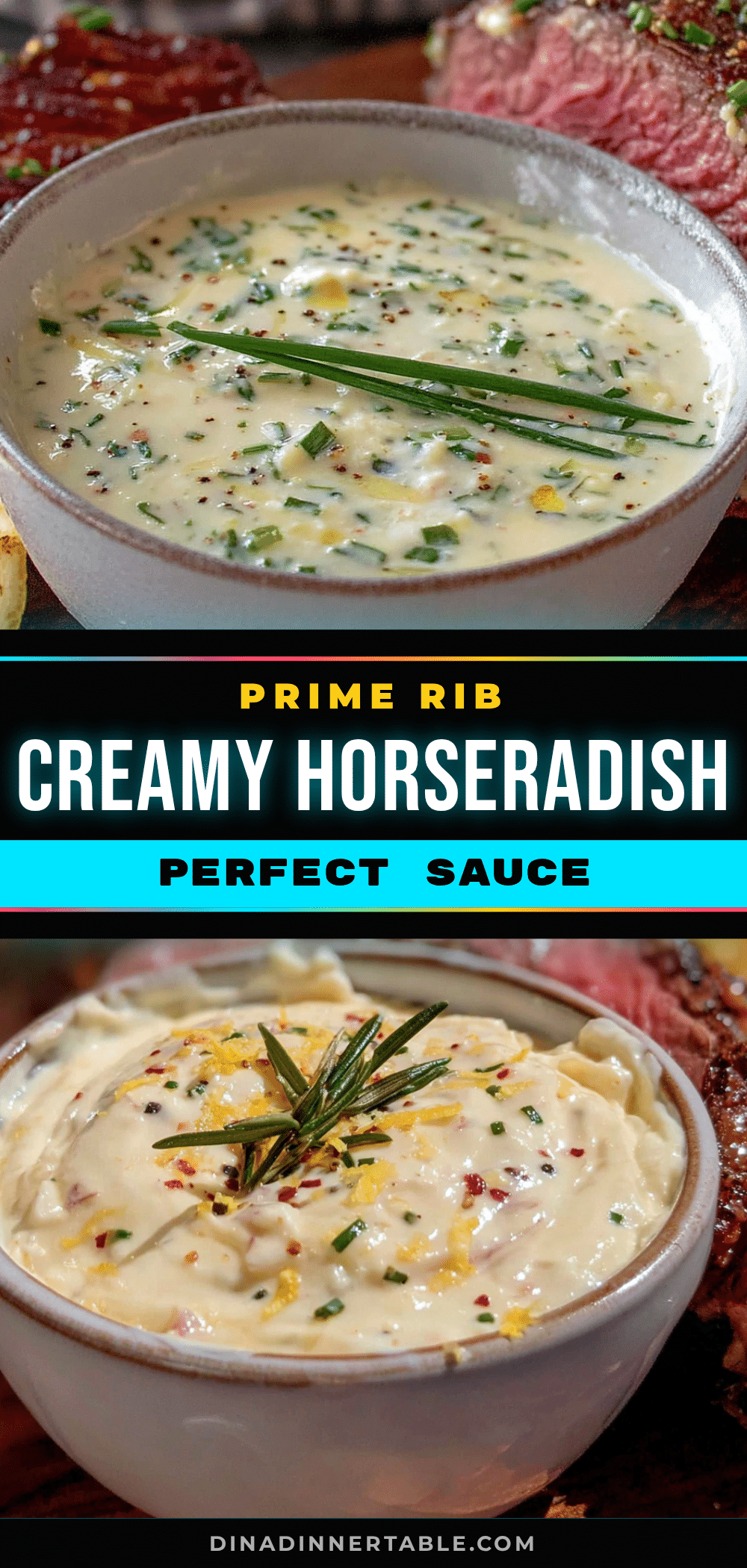
Perfect Creamy Horseradish Sauce Recipe for Prime Rib

This creamy horseradish sauce for prime rib is sharp and creamy, bold and gentle, simple and impressive all at once. It’s the finishing touch that turns a great roast into an unforgettable meal.
- Prep Time: 10 minutes
- Cook Time: 0 minutes
- Total Time: 40 minutes (includes 30 minutes chilling)
- Yield: 8 servings 1x
- Category: Condiment
- Cuisine: American
Ingredients
- 1 cup heavy cream (35% fat content)
- 1/2 cup prepared horseradish (drained well)
- 2 tablespoons sour cream
- 1 tablespoon white wine vinegar
- 1 teaspoon Dijon mustard
- 1/2 teaspoon fine sea salt
- 1/4 teaspoon white pepper
- 1 tablespoon fresh chives (finely chopped, optional)
Instructions
- Drain the horseradish: Place the prepared horseradish in a fine-mesh strainer and press gently with the back of a spoon to remove excess liquid. Let it sit for a minute or two.
- Whip the cream: In a medium mixing bowl, pour the heavy cream. Using a whisk or hand mixer, whip the cream until it forms soft peaks (about 2-3 minutes by hand, or 1 minute with a mixer). Do not over-whip.
- Combine the flavor base: In a separate small bowl, mix together the drained horseradish, sour cream, white wine vinegar, Dijon mustard, salt, and white pepper until well combined.
- Fold it together: Add the horseradish mixture to the whipped cream. Using a rubber spatula, gently fold together until no white streaks remain. The sauce should look fluffy and pale.
- Add the chives: If using, fold in the chopped chives gently at the end.
- Rest and chill: Transfer the sauce to a serving bowl, cover with plastic wrap, and refrigerate for at least 30 minutes (ideally 1 hour) to let the flavors meld.
- Final taste and adjust: Before serving, taste and adjust seasoning if needed. Add more horseradish for heat or a pinch of sugar to balance sharpness.
Notes
For best results, use cold heavy cream straight from the fridge. Do not skip draining the horseradish to avoid a runny sauce. The sauce improves with time; make it 1-2 days ahead for deeper flavor. If sauce thickens too much, stir in a teaspoon of milk or cream before serving.
Nutrition
- Serving Size: 2 tablespoons
- Calories: 85
- Sugar: 1
- Sodium: 150
- Fat: 8
- Saturated Fat: 5
- Carbohydrates: 2
- Protein: 1
Keywords: creamy horseradish sauce, prime rib sauce, horseradish cream sauce, easy horseradish sauce, holiday sauce, beef sauce