My neighbor across the hall, a quiet retired librarian named Eleanor, asked me last Thursday why I couldn’t just throw the beef in the pot without browning it first. I was mid-sentence explaining the Maillard reaction and how searing locks in flavor when I stopped. She had a point, honestly.
I mean, I’d been making beef stew for years—my way, the “right” way. But Eleanor, who I’d never seen cook anything more complicated than toast, suggested we skip the browning altogether for her version. She wanted the meat to be “melty, not chewy.” I started to explain why that wouldn’t work—then stopped. I handed her the tongs instead.
Let me tell you, watching her dump raw beef, un-sautéed onions, and a whole bottle of cheap red wine into the Dutch oven felt like a small betrayal of everything my grandmother taught me. I actually winced when she poured the broth over the top without deglazing the pan first. But two hours later, that apartment hallway smelled like a French bistro in November. The meat was so tender it fell apart when I looked at it wrong. The broth was deep, rich, and somehow silkier than my usual version. I had to admit it—I was wrong. Completely, humblingly wrong.
That night, I rewrote my entire stew recipe. And honestly? This cozy red wine beef stew with root vegetables has been my go-to ever since. If you’ve ever felt like you’re doing too much work for a pot of stew, maybe you’ve been there too. Sometimes the simplest way really is the best way.
Why You’ll Love This Recipe
This cozy red wine beef stew with root vegetables isn’t just another winter meal—it’s the one you’ll actually look forward to making on a lazy Sunday afternoon. After testing this recipe at least a dozen times (and learning from Eleanor’s shortcut), I can confidently say this version beats anything I’ve tried before.
- Incredibly Tender Meat: By skipping the browning step, the beef cooks low and slow in the wine and broth, resulting in meat that’s almost fork-tender. No chewing required.
- Simple, Everyday Ingredients: You probably already have onions, carrots, potatoes, and garlic in your kitchen. The red wine is the only “special” item, and honestly, any decent bottle will do.
- Perfect for Busy Weeknights: This stew comes together in about 15 minutes of active prep time. The oven does the rest. It’s perfect for those days when you want a hearty meal without standing over the stove.
- Crowd-Pleaser for Sure: My picky-eating nephew actually asked for seconds. My dad, who claims he doesn’t like stew, ate three bowls. It’s that good.
- Unbelievably Comforting: The combination of tender beef, sweet carrots, earthy potatoes, and that rich, wine-infused broth is pure soul food. It’s the kind of meal that makes you close your eyes after the first bite.
What makes this recipe different? It’s the technique—or lack thereof. Most stew recipes have you sear the meat, sauté the aromatics, deglaze the pan, and then simmer. This one skips all that fuss and delivers a deeper, more cohesive flavor. The wine and vegetables do the work for you. It’s comfort food reimagined—simpler, richer, and with the same soul-soothing satisfaction.
What Ingredients You Will Need
This recipe uses simple, wholesome ingredients to deliver bold flavor and satisfying texture without the fuss. Most of these are pantry staples or easy to find at any grocery store. Here’s what you’ll need:
For the Stew Base
- 2 pounds beef chuck, cut into 1.5-inch cubes (look for well-marbled pieces—it makes the meat more tender)
- 1 large yellow onion, diced (about 1.5 cups)
- 4 cloves garlic, minced (fresh is best, but jarred works in a pinch)
- 1.5 cups dry red wine (I recommend a Cabernet Sauvignon or Merlot—nothing too fancy, just something you’d drink)
- 4 cups beef broth, low-sodium (Swanson’s is my go-to, but any brand works)
- 2 tablespoons tomato paste (adds richness and depth)
- 2 tablespoons Worcestershire sauce (a little umami boost)
- 2 bay leaves
- 1 teaspoon dried thyme
- 1 teaspoon salt, plus more to taste
- ½ teaspoon black pepper
For the Root Vegetables
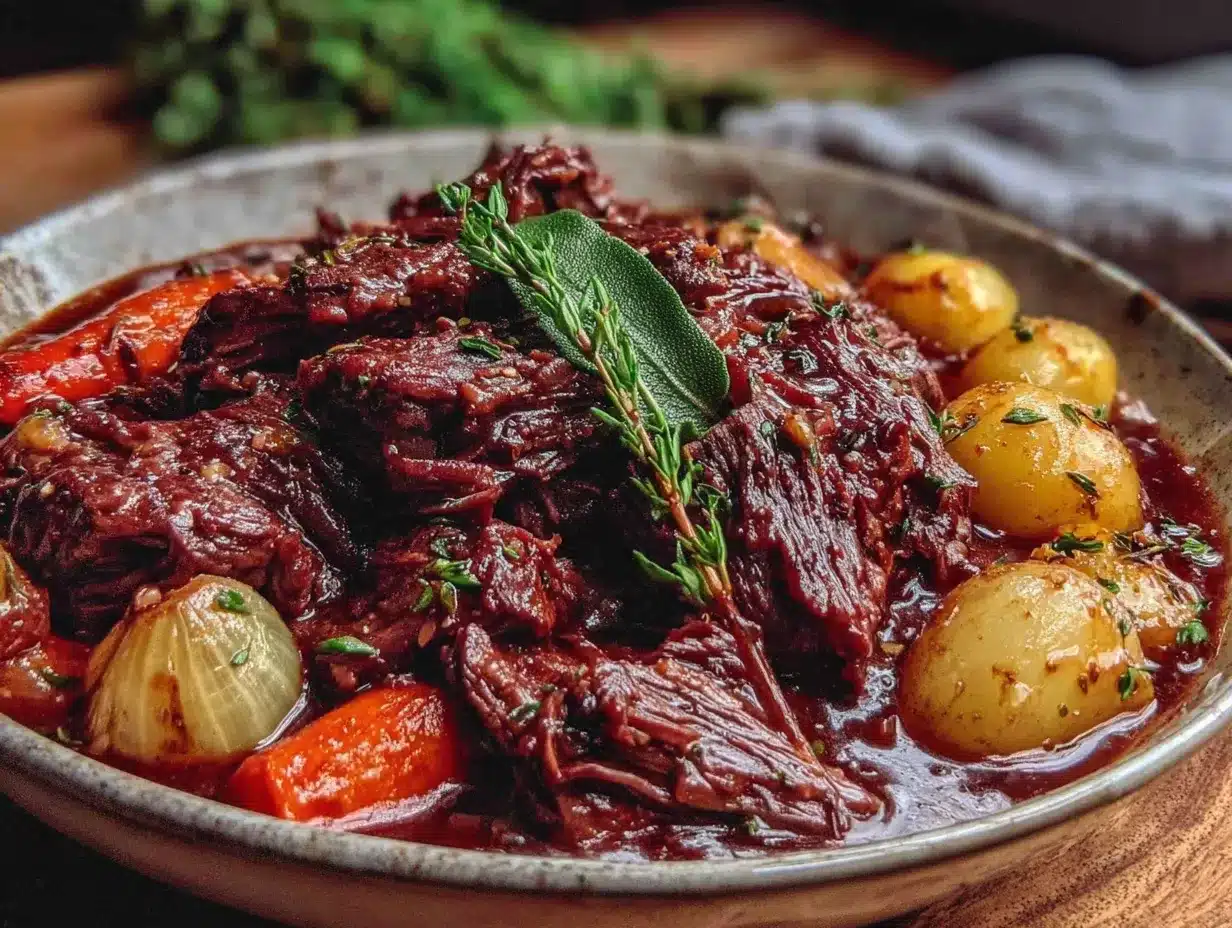
- 4 medium carrots, peeled and cut into 1-inch chunks (about 2 cups)
- 3 medium Yukon Gold potatoes, peeled and cubed (about 2 cups—they hold their shape better than russets)
- 2 parsnips, peeled and sliced (optional, but they add a lovely sweetness)
- 1 cup frozen peas (added at the end for a pop of color and freshness)
For Thickening (Optional)
- 2 tablespoons all-purpose flour (or cornstarch for gluten-free)
- 2 tablespoons butter, softened
Ingredient Selection Tips: For the best texture, look for beef chuck with good marbling—it breaks down beautifully during the long simmer. If you can’t find parsnips, just add an extra carrot or potato. For a deeper flavor, try using a full-bodied red wine like a Zinfandel or Syrah. I’ve tested this with a $8 bottle of Cabernet and a $20 bottle, and honestly, both worked great. Don’t overthink the wine choice!
Equipment Needed
You don’t need a lot of fancy equipment for this stew, which is part of its charm. Here’s what you’ll need:
- A large Dutch oven (5 to 6 quarts is ideal—I use my trusty Le Creuset, but any heavy-bottomed pot with a tight-fitting lid works)
- A sharp chef’s knife (for cutting the beef and vegetables—a dull knife makes everything harder)
- A cutting board
- Measuring cups and spoons
- A wooden spoon (for stirring)
- A ladle (for serving)
Budget-Friendly Alternatives: If you don’t have a Dutch oven, use a large heavy-bottomed pot or even a slow cooker. For the slow cooker version, just add everything to the pot and cook on low for 8 hours. No browning needed—see, Eleanor was onto something!
Maintenance Tip: If you’re using a cast-iron Dutch oven, avoid using metal utensils that could scratch the enamel. Stick with wooden or silicone tools.
Preparation Method
- Preheat your oven to 325°F (163°C). Yes, we’re using the oven, not the stovetop. This ensures even, gentle heat that makes the beef incredibly tender.
- Prepare the beef: Pat the beef cubes dry with paper towels. Season generously with salt and pepper. Don’t skip this step—it’s the only seasoning the meat gets before cooking.
- Layer the ingredients: Place the diced onion and minced garlic in the bottom of your Dutch oven. Add the seasoned beef cubes on top. Pour the red wine and beef broth over everything. Add the tomato paste, Worcestershire sauce, bay leaves, and dried thyme. Give it a gentle stir to combine, but don’t worry if everything isn’t perfectly mixed—it will come together as it cooks.
- Bring to a simmer: Place the Dutch oven on the stovetop over medium-high heat. Bring the liquid to a gentle simmer (you should see small bubbles breaking the surface). This takes about 5-7 minutes. Don’t let it boil vigorously—that can make the meat tough.
- Cover and transfer to the oven: Once simmering, cover the pot with the lid and carefully transfer it to the preheated oven. Let it cook for 1.5 hours. The house will start smelling amazing at this point.
- Add the root vegetables: After 1.5 hours, carefully remove the pot from the oven. Add the carrots, potatoes, and parsnips (if using). Stir gently to submerge them in the liquid. Cover and return to the oven for another 45 minutes to 1 hour, or until the vegetables are tender when pierced with a fork.
- Check the meat: By now, the beef should be fall-apart tender. If it’s still a bit chewy, give it another 30 minutes in the oven. Patience is key here.
- Thicken the stew (optional): If you prefer a thicker broth, make a beurre manié by mashing together the softened butter and flour into a paste. Stir this into the hot stew and let it simmer on the stovetop for 2-3 minutes until thickened. Alternatively, you can mash a few of the potatoes against the side of the pot to naturally thicken the broth.
- Add the peas and finish: Stir in the frozen peas and let them warm through for about 2 minutes. Remove the bay leaves. Taste and adjust seasoning with more salt and pepper if needed.
- Rest and serve: Let the stew sit off the heat for 5-10 minutes before serving. This allows the flavors to meld and the stew to settle. Serve hot with crusty bread or over mashed potatoes.
Sensory Cues: At step 5, you should see the liquid gently bubbling around the edges. At step 6, the vegetables should offer some resistance when pierced but not be hard. The broth should look rich and dark, almost like a deep burgundy color.
Personal Tip: I always make this stew a day ahead if I can. The flavors deepen overnight, and it tastes even better reheated. Just store it in the fridge and reheat gently on the stovetop.
Cooking Tips & Techniques
I’ve made this stew more times than I can count, and I’ve learned a few things along the way. Here are the tips that make the biggest difference:
- Don’t skip the wine: I know it might seem like a lot, but the wine is what gives this stew its incredible depth. The alcohol cooks off, leaving behind a rich, complex flavor that you just can’t get from broth alone.
- Cut the beef into uniform pieces: This ensures everything cooks evenly. I aim for 1.5-inch cubes—big enough to stay tender, small enough to cook through in the time.
- Use low-sodium broth: You can always add more salt later, but you can’t take it out. Low-sodium broth gives you control over the final seasoning.
- Don’t rush the cooking time: The magic happens in the last 30 minutes. If you pull the stew out too early, the meat will be tough. Trust the process and let it go the full time.
- Skim the fat if you want: After the stew has cooked, you might see a layer of fat on the surface. You can skim it off with a spoon if you prefer a leaner broth. I usually leave it because it adds richness.
Common Mistake to Avoid: I once added the vegetables at the very beginning, thinking it would save time. Big mistake. They turned into mush. The vegetables need to be added later so they hold their shape and texture.
Multitasking Strategy: While the stew is in the oven, use that time to make a quick salad or bake some bread. The stew doesn’t need any attention, so you’re free to do other things.
Variations & Adaptations
This stew is incredibly flexible. Here are some variations I’ve tried and loved:
- Slow Cooker Version: Add all ingredients (except the peas and thickening) to a slow cooker. Cook on low for 8 hours or high for 4-5 hours. Add the peas in the last 30 minutes. No need to thicken—the slow cooker creates its own silky broth.
- Gluten-Free Option: Skip the flour and use cornstarch to thicken. Mix 1 tablespoon cornstarch with 2 tablespoons cold water to make a slurry, then stir it into the hot stew. Or just leave it as is—the broth is delicious without thickening.
- Vegetarian Version: Swap the beef for 2 cups of hearty mushrooms (cremini or portobello) and use vegetable broth instead of beef broth. Add a can of drained chickpeas for protein. Cook for 45 minutes instead of 2 hours.
- Herb Variations: Try adding a sprig of fresh rosemary or a few sprigs of fresh thyme along with the bay leaves. Remove before serving. The fresh herbs add a lovely aromatic quality.
- Seasonal Vegetable Swap: In the summer, try adding zucchini and bell peppers in the last 20 minutes of cooking. In the fall, swap the potatoes for sweet potatoes or butternut squash.
Personal Variation: I once added a cinnamon stick and a pinch of nutmeg to the pot, thinking it would be a fun experiment. It actually worked! The warm spices complemented the wine beautifully. Just make sure to remove the cinnamon stick before serving.
Serving & Storage Suggestions
This stew is incredibly versatile when it comes to serving. Here’s how I like to enjoy it:
- Serving Temperature: Serve hot, straight from the pot. The stew should be steaming when it hits the bowl.
- Presentation: Ladle the stew into deep bowls. Garnish with a sprinkle of fresh parsley or a few cracks of black pepper. Serve with a slice of crusty bread for dipping.
- Complementary Sides: This stew is hearty enough to be a meal on its own, but it pairs beautifully with mashed potatoes, egg noodles, or a simple green salad. A glass of the same red wine you used in the stew is a perfect accompaniment.
- Storage Instructions: Store leftover stew in an airtight container in the refrigerator for up to 4 days. The flavors actually improve over time, so don’t be afraid to make it ahead.
- Freezing Instructions: This stew freezes beautifully. Let it cool completely, then transfer to freezer-safe containers or zip-top bags. Freeze for up to 3 months. Thaw overnight in the refrigerator before reheating.
- Reheating Methods: Reheat gently on the stovetop over medium-low heat, stirring occasionally. Add a splash of beef broth or water if the stew has thickened too much. You can also reheat individual portions in the microwave for 2-3 minutes, stirring halfway through.
- Flavor Development: I’ve noticed that this stew tastes even better on day two. The flavors have more time to meld and deepen. It’s one of those rare dishes that improves with age.
Nutritional Information & Benefits
While this stew is definitely comfort food, it also has some nutritional perks. Here’s a rough estimate per serving (based on 8 servings):
- Calories: Approximately 420 per serving
- Protein: 32g (from the beef)
- Carbohydrates: 28g (from the vegetables)
- Fat: 18g (mostly from the beef)
- Fiber: 5g (from the root vegetables)
- Iron: 25% of the daily value (beef is a great source)
- Vitamin A: 120% of the daily value (carrots are packed with it)
Health Benefits: The beef provides high-quality protein and iron, which is essential for energy and healthy blood. The root vegetables are rich in fiber, vitamins, and antioxidants. The red wine, in moderation, contains resveratrol, which has been linked to heart health. Plus, this stew is naturally low in added sugars and can easily be made gluten-free.
Dietary Considerations: This recipe is dairy-free (if you skip the butter) and can be made gluten-free with a simple substitution. It’s also nut-free and egg-free, making it suitable for many dietary needs.
Personal Wellness Perspective: I love that this stew feels indulgent but is actually quite balanced. It’s the kind of meal that fills you up without weighing you down. Perfect for those days when you want something comforting but still want to feel good about what you’re eating.
Conclusion
This cozy red wine beef stew with root vegetables has become a staple in my kitchen for good reason. It’s simple, forgiving, and delivers incredible flavor with minimal effort. Whether you’re cooking for a crowd or just meal-prepping for the week, this stew is a winner.
I’d love to hear how it turned out for you. Did you try any variations? Did you add your own twist? Drop a comment below and let me know. And if you loved it, share it with a friend who needs a little comfort in their life. Honestly, this stew has a way of making everything feel a little warmer, a little cozier.
Happy cooking, friend. Your kitchen is about to smell amazing.
Frequently Asked Questions
Can I use a different cut of beef?
Absolutely. Beef chuck is ideal because it has good marbling that breaks down during cooking. But you can also use brisket, bottom round, or even stew meat from the grocery store. Just avoid lean cuts like sirloin—they can become tough and dry.
Do I have to use red wine?
Not at all. If you prefer not to cook with wine, you can substitute with an equal amount of beef broth plus 2 tablespoons of balsamic vinegar for acidity. The flavor will be slightly different, but still delicious.
Can I make this in a pressure cooker?
Yes! Add all ingredients (except the peas and thickening) to an Instant Pot. Cook on high pressure for 35 minutes, then let the pressure release naturally for 10 minutes. Add the peas and thicken if desired.
How do I prevent the vegetables from getting mushy?
Add them halfway through the cooking process, not at the beginning. This ensures they cook through but still hold their shape. Cutting them into larger chunks (1-inch pieces) also helps them stay intact.
Can I freeze the leftovers?
Yes, this stew freezes beautifully. Let it cool completely, then transfer to freezer-safe containers. It will keep for up to 3 months. Thaw overnight in the fridge and reheat gently on the stovetop.
Pin This Recipe!
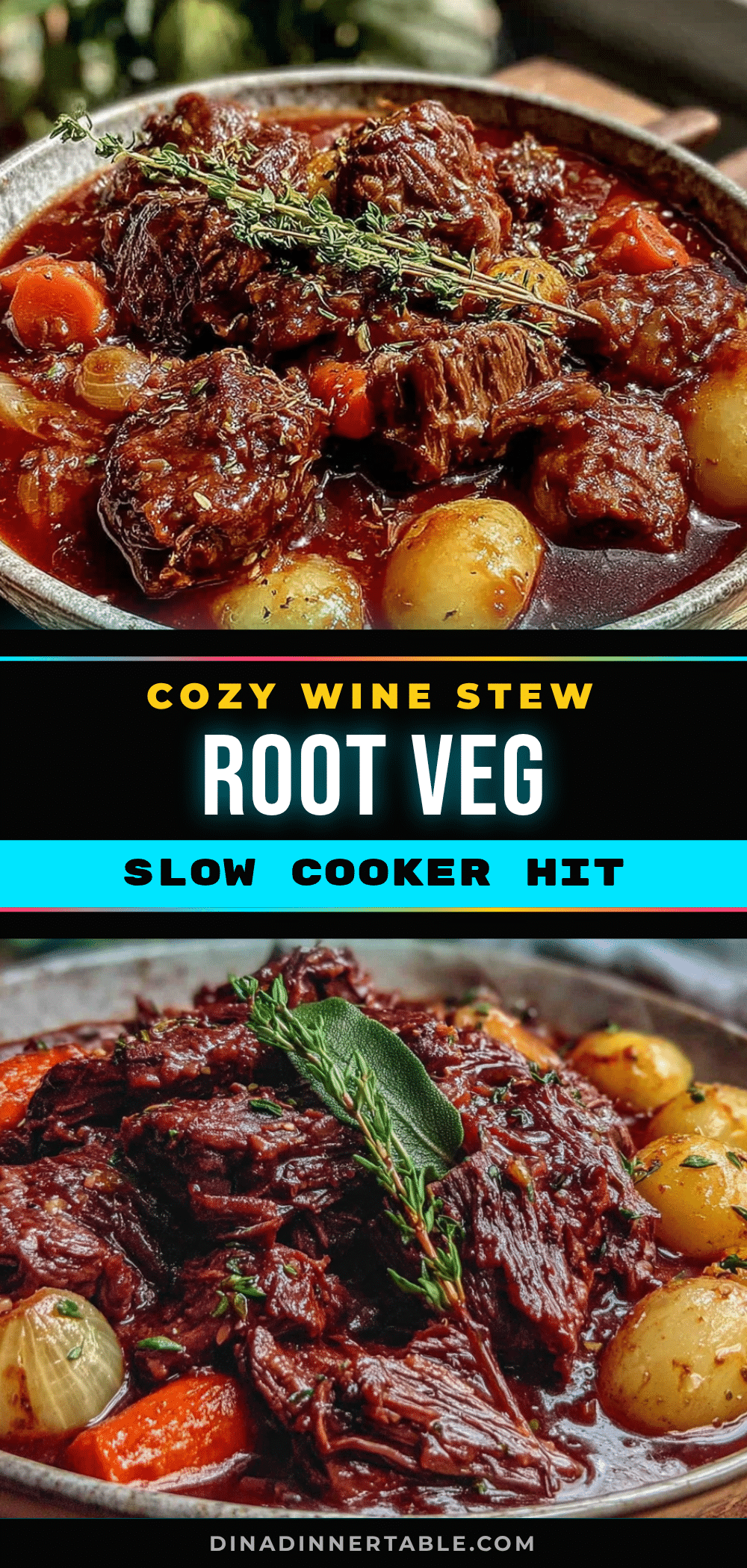
Cozy Red Wine Beef Stew with Root Vegetables
This cozy red wine beef stew with root vegetables is incredibly tender, simple to make, and perfect for busy weeknights. By skipping the browning step, the beef cooks low and slow in wine and broth, resulting in a deep, rich flavor with minimal effort.
- Prep Time: 15 minutes
- Cook Time: 2 hours 30 minutes
- Total Time: 2 hours 45 minutes
- Yield: 8 servings 1x
- Category: Main Course
- Cuisine: French
Ingredients
- 2 pounds beef chuck, cut into 1.5-inch cubes
- 1 large yellow onion, diced (about 1.5 cups)
- 4 cloves garlic, minced
- 1.5 cups dry red wine (Cabernet Sauvignon or Merlot recommended)
- 4 cups low-sodium beef broth
- 2 tablespoons tomato paste
- 2 tablespoons Worcestershire sauce
- 2 bay leaves
- 1 teaspoon dried thyme
- 1 teaspoon salt, plus more to taste
- ½ teaspoon black pepper
- 4 medium carrots, peeled and cut into 1-inch chunks (about 2 cups)
- 3 medium Yukon Gold potatoes, peeled and cubed (about 2 cups)
- 2 parsnips, peeled and sliced (optional)
- 1 cup frozen peas
- 2 tablespoons all-purpose flour (or cornstarch for gluten-free)
- 2 tablespoons butter, softened
Instructions
- Preheat your oven to 325°F (163°C).
- Pat the beef cubes dry with paper towels. Season generously with salt and pepper.
- Place the diced onion and minced garlic in the bottom of your Dutch oven. Add the seasoned beef cubes on top. Pour the red wine and beef broth over everything. Add the tomato paste, Worcestershire sauce, bay leaves, and dried thyme. Give it a gentle stir to combine.
- Place the Dutch oven on the stovetop over medium-high heat. Bring the liquid to a gentle simmer (small bubbles breaking the surface), about 5-7 minutes. Do not let it boil vigorously.
- Once simmering, cover the pot with the lid and carefully transfer it to the preheated oven. Let it cook for 1.5 hours.
- After 1.5 hours, carefully remove the pot from the oven. Add the carrots, potatoes, and parsnips (if using). Stir gently to submerge them in the liquid. Cover and return to the oven for another 45 minutes to 1 hour, or until the vegetables are tender when pierced with a fork.
- Check the meat: it should be fall-apart tender. If still chewy, give it another 30 minutes in the oven.
- If you prefer a thicker broth, make a beurre manié by mashing together the softened butter and flour into a paste. Stir this into the hot stew and let it simmer on the stovetop for 2-3 minutes until thickened. Alternatively, mash a few potatoes against the side of the pot to naturally thicken the broth.
- Stir in the frozen peas and let them warm through for about 2 minutes. Remove the bay leaves. Taste and adjust seasoning with more salt and pepper if needed.
- Let the stew sit off the heat for 5-10 minutes before serving. Serve hot with crusty bread or over mashed potatoes.
Notes
For best results, make this stew a day ahead; flavors deepen overnight. If using a slow cooker, add all ingredients (except peas and thickening) and cook on low for 8 hours or high for 4-5 hours. For a vegetarian version, swap beef for 2 cups of hearty mushrooms and use vegetable broth.
Nutrition
- Serving Size: 1 serving (about 1.5
- Calories: 420
- Sugar: 8
- Sodium: 680
- Fat: 18
- Saturated Fat: 6
- Carbohydrates: 28
- Fiber: 5
- Protein: 32
Keywords: beef stew, red wine stew, root vegetables, comfort food, winter recipe, easy stew, Dutch oven recipe