My sister had claimed to hate shortbread for fifteen years. Fifteen years! Every holiday season, every tea time, every time I pulled out a baking sheet, she’d make that little face—the one that says “I’m being polite but I’d rather eat a cardboard box.” Then last Valentine’s Day, I caught her. I was testing these Raspberry Rose Heart Shortbread Cookies for a blog post, just minding my own business in the kitchen, when I walked back from answering the door and found her standing over the cooling rack. She had a cookie in each hand and powdered sugar on her chin. “These aren’t shortbread,” she said, crumbs falling everywhere. “These are… different.” That, right there, is the magic of this particular recipe. It takes everything you think you know about shortbread—the dry crumble, the buttery one-note—and turns it into something tender, floral, and just a little bit fancy. I mean, honestly, I wasn’t even trying to convert her. I was just baking for myself. But that’s how the best recipe conversions happen, isn’t it? When you’re not trying to prove anything, and the food just does the talking.
The first time I made these for a dinner party, I hid them behind a stack of napkins because I was nervous. My friend Marco, who is a pastry chef and never compliments anyone’s baking, literally stopped mid-sentence when he bit into one. “What is that?” he asked, holding it up to the light like it was a rare gem. “Raspberry and rose,” I said, trying to play it cool. He took another bite, then another, and then he asked for the recipe. That was three years ago, and I’ve been making them ever since. The secret, I learned after about six failed batches, is in the freeze time and the quality of your freeze-dried raspberries. Don’t even think about using fresh ones—they’ll turn your dough into a sad, wet mess. Trust me, I learned that the hard way on a Tuesday afternoon when I was supposed to be photographing for a client. The kitchen smelled amazing, but the cookies? They spread into sad little puddles. Not cute. Not for Valentine’s Day. Not for anything.
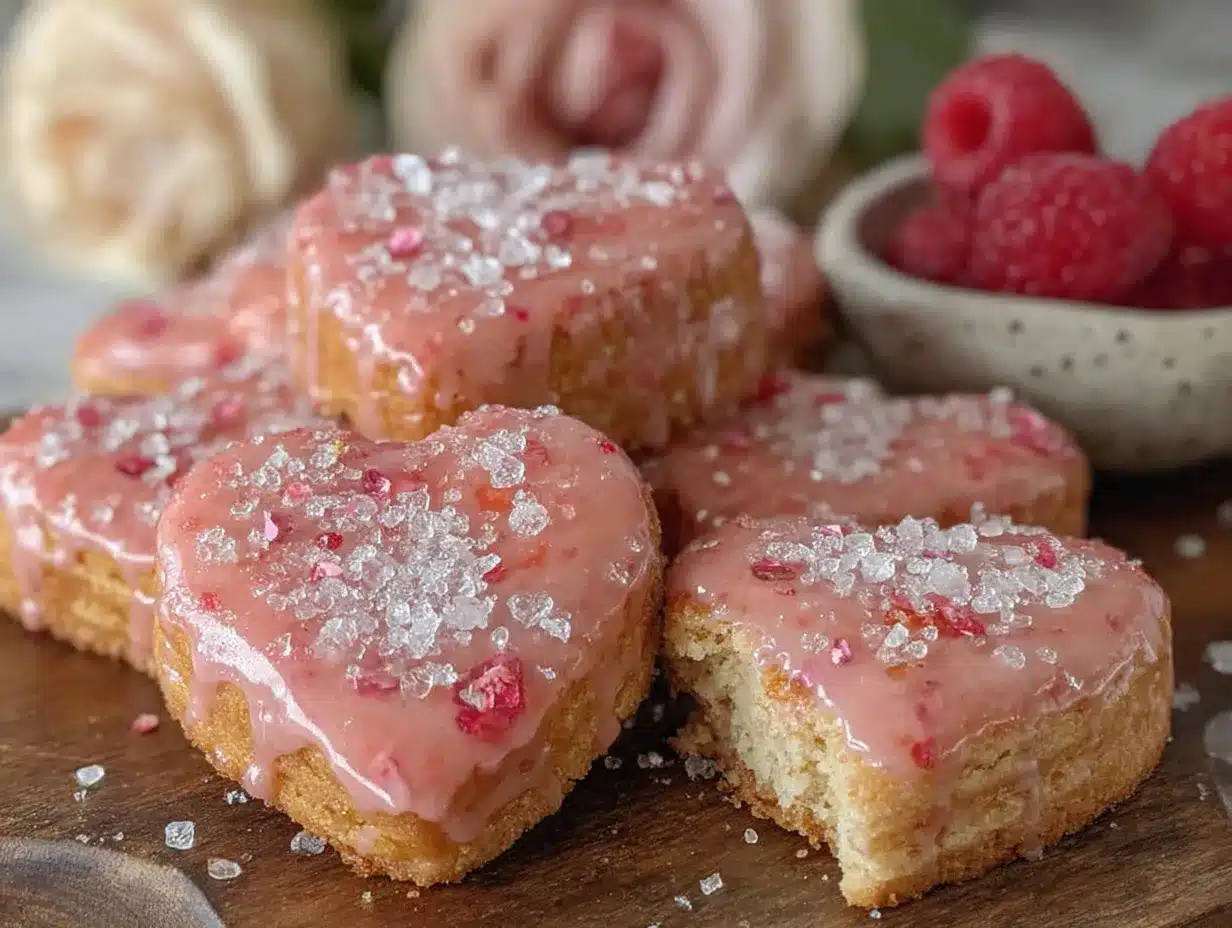
So here we are. These are the cookies I bring to every potluck, every Galentine’s Day brunch, every “I need to impress someone but pretend I’m not trying” situation. They look like you spent hours piping and decorating, but honestly? The pink glaze does all the heavy lifting. You just bake, dip, and sprinkle. The rose flavor is subtle—like a whisper, not a shout—and the raspberry gives it that tiny tangy pop that keeps people reaching for “just one more.” Maybe you’ve been there, standing in the baking aisle, wondering if you should just buy the store-bought stuff. Don’t. Make these. Your sister, your Marco, your dinner party guests will thank you. And you’ll get to pretend you weren’t trying to impress anyone.
Why You’ll Love This Recipe
These Raspberry Rose Heart Shortbread Cookies aren’t just another pretty face on the dessert table. They’ve been tested in my tiny apartment kitchen, approved by a professional pastry chef, and devoured by crowds ranging from toddler birthday parties to very serious wine-and-cheese nights. Here’s why they work:
- Deceptively Simple : The dough comes together in one bowl with no electric mixer needed. Your hands are the best tool here—literally. The warmth of your palms brings the butter and flour together in about two minutes flat.
- Make-Ahead Magic : You can freeze the shaped dough hearts for up to three months. That means you can prep these weeks before your dinner party and just bake them fresh the morning of. No last-minute panic.
- Naturally Pretty : No artificial colors needed. The pink glaze gets its blush from actual raspberry powder (which you’ll make from freeze-dried berries). It looks like a sunset, not a highlighter.
- Crowd-Pleasing Flavor : The rose is elegant but not perfumey, and the raspberry cuts through the butter richness perfectly. Even people who “don’t like floral desserts” (like my sister) fall for these.
- Perfect for Gifting : Stack them in a little box with a ribbon, and you’ve got a hostess gift that looks like it came from a fancy bakery. But you made it. In your kitchen. While wearing sweatpants.
What makes this recipe different from all the other heart-shaped cookies out there? It’s the freeze-dried raspberry technique. Most recipes use jam, which makes the dough sticky and the cookies spread. Here, we grind the berries into a powder that infuses the dough with intense raspberry flavor without adding moisture. The result is a cookie that holds its shape perfectly—sharp edges, clean hearts—while tasting like a handful of fresh berries. Plus, the rose water is optional but highly recommended. It adds this ethereal, almost nostalgic quality that makes people close their eyes when they eat them. I’ve seen it happen. It’s very satisfying.
What Ingredients You Will Need
This recipe uses simple, pantry-friendly ingredients, but a few specialty items make all the difference. Don’t skip the freeze-dried raspberries—they’re the secret weapon here. You can find them in the dried fruit aisle or online, and one bag will last you for multiple batches.
For the Shortbread Dough:
- 1 cup (226g) unsalted butter, cold and cut into small cubes (I prefer Kerrygold for its European-style richness, but any good unsalted butter works)
- 2 cups (250g) all-purpose flour, spooned and leveled (do not scoop directly from the bag—you’ll pack in too much flour)
- 1/2 cup (60g) powdered sugar (also called confectioners’ sugar; it dissolves more easily than granulated, giving a tender crumb)
- 1/4 cup (15g) freeze-dried raspberries, ground into a fine powder (about 1.5 ounces by weight before grinding)
- 1/2 teaspoon fine sea salt (table salt works too, but reduce to 1/4 teaspoon if using salted butter)
- 1 teaspoon rose water (optional but highly recommended; look for food-grade rose water in the international aisle or Middle Eastern grocery)
- 1 teaspoon vanilla extract (pure, not imitation, for the best flavor)
For the Pink Glaze:
- 1 cup (120g) powdered sugar, sifted (sifting prevents lumps—trust me on this one)
- 2 tablespoons (30ml) heavy cream (or full-fat coconut milk for a dairy-free option)
- 1 tablespoon (15ml) reserved raspberry powder (from the dough ingredient; set aside 1 tablespoon before adding the rest to the dough)
- 1/2 teaspoon rose water (optional, for extra floral notes)
- Pinch of salt (to balance the sweetness)
For Decoration (Optional but Pretty):
- Dried rose petals, crushed (food-grade, from a spice shop or online)
- Extra freeze-dried raspberry pieces, crushed into small bits
- Edible glitter or luster dust (for that “fancy bakery” look)
Ingredient Tips from My Kitchen: If you cannot find rose water, you can substitute 1/2 teaspoon of almond extract for a different floral-adjacent flavor. For the freeze-dried raspberries, avoid buying “freeze-dried raspberry powder” pre-made—it often contains added sugar and anti-caking agents. Grinding your own from whole berries is cheaper and purer. I use a cheap coffee grinder I keep just for spices, and it works perfectly. Also, if you are making these for a crowd with dietary restrictions, the cookies are naturally egg-free and can be made dairy-free by using vegan butter (I like Miyoko’s) and coconut cream in the glaze.
Equipment Needed
You don’t need a fancy bakery setup for these cookies, but a few specific tools will make your life much easier. Here’s what I use every single time:
- Heart-shaped cookie cutters (I use a set of three sizes—2-inch, 1.5-inch, and 1-inch—for variety; the 2-inch size is perfect for gifting)
- Food processor or spice grinder (for grinding the freeze-dried raspberries into powder; a clean coffee grinder works beautifully)
- Fine-mesh sieve (for sifting the raspberry powder and powdered sugar; lumps are the enemy of smooth dough and glaze)
- Baking sheets (light-colored aluminum sheets work best; dark sheets can cause over-browning on the bottoms)
- Parchment paper (non-negotiable for easy cleanup and preventing sticking)
- Rolling pin (I prefer a French-style tapered pin for better control, but any rolling pin works)
- Cooling rack (wire racks allow air circulation so cookies don’t get soggy)
- Small offset spatula (for transferring delicate cut-out shapes without breaking them)
- Shallow bowl or pie plate (for dipping the cookies in the glaze)
Budget-Friendly Alternatives: No heart-shaped cutter? Freeze the dough as a log, slice it into rounds, and press a heart shape into the center with a smaller cutter. No food processor? Place the freeze-dried raspberries in a zip-top bag and crush them with a rolling pin—it takes a little elbow grease but works fine. No offset spatula? A thin metal spatula or even a butter knife will do the job; just be gentle.
Preparation Method
This method has been refined over at least a dozen batches. I’ve made every mistake possible so you don’t have to. Follow these steps exactly, and you’ll get perfect hearts every time.
Step 1: Make the Raspberry Powder
Place the freeze-dried raspberries in a food processor or spice grinder. Pulse until you have a fine, fluffy powder—about 20 seconds. Sift the powder through a fine-mesh sieve into a small bowl. You should have about 3 tablespoons total. Set aside 1 tablespoon for the glaze. The remaining 2 tablespoons go into the dough. Pro tip: Do not over-process, or the seeds will break down and turn the powder into a paste. You want a dry powder, not a sticky mess.
Step 2: Mix the Dry Ingredients
In a large mixing bowl, whisk together the all-purpose flour, powdered sugar, 2 tablespoons of the raspberry powder, and the fine sea salt. Make sure there are no lumps—the powdered sugar tends to clump. If you see any, press them through the sieve. This takes 30 seconds and saves you from biting into a pocket of raw sugar later.
Step 3: Cut in the Butter
Add the cold, cubed butter to the flour mixture. Using your fingertips (or a pastry cutter, if you prefer), rub the butter into the flour until the mixture resembles coarse sand with some pea-sized butter pieces remaining. This should take about 2-3 minutes. The key here is cold butter. If the butter gets too warm, the cookies will spread. If your hands are hot, run them under cold water first. I learned this after a batch of sad, flat hearts on a particularly humid July afternoon.
Step 4: Add the Wet Ingredients
Drizzle the rose water and vanilla extract over the flour-butter mixture. Use your hands to bring the dough together into a ball. It will look crumbly at first—that’s normal. Keep pressing and kneading gently until it just holds together. Do not overwork the dough, or the cookies will be tough. If the dough feels too dry, add 1 teaspoon of ice water. If it feels too sticky, add 1 tablespoon of flour.
Step 5: Chill the Dough
Flatten the dough into a disc about 1-inch thick, wrap it tightly in plastic wrap, and refrigerate for at least 30 minutes. This is non-negotiable. Chilling solidifies the butter and relaxes the gluten, which means your cookies will hold their shape perfectly. I usually chill mine for an hour while I clean up the kitchen. Make-ahead tip: You can refrigerate the dough disc for up to 3 days, or freeze it for up to 3 months (thaw overnight in the fridge before rolling).
Step 6: Roll and Cut
Preheat your oven to 350°F (175°C) and line two baking sheets with parchment paper. On a lightly floured surface, roll the chilled dough to 1/4-inch thickness. Use your heart-shaped cutters to cut out as many hearts as possible. Re-roll the scraps once—any more, and the cookies will get tough. Place the hearts on the prepared baking sheets, spacing them about 1 inch apart. They don’t spread much, so you can fit quite a few per sheet. Chill the cut-out cookies on the baking sheet for 10 minutes before baking. This is the step most people skip, and it’s the difference between sharp hearts and blob hearts.
Step 7: Bake
Bake for 10-12 minutes, rotating the pans halfway through. The cookies are done when the edges are just barely golden—the centers should still look pale. They will continue to set as they cool. Let them cool on the baking sheet for 5 minutes, then transfer to a wire rack to cool completely. Do not glaze warm cookies, or the glaze will melt into a puddle. I speak from experience—it’s not cute.
Step 8: Make the Pink Glaze
In a small bowl, whisk together the sifted powdered sugar, heavy cream, reserved 1 tablespoon of raspberry powder, rose water (if using), and a pinch of salt. Whisk until smooth and glossy. The glaze should be thick but pourable—like honey. If it’s too thick, add more cream one teaspoon at a time. If it’s too thin, add more powdered sugar. Color check: The glaze should be a soft, dusty pink. If you want a brighter pink, add a tiny drop of natural pink food coloring (like from beet powder).
Step 9: Glaze and Decorate
Hold each cooled cookie by the edges and dip the top into the glaze. Let the excess drip off for a second, then place the cookie back on the cooling rack. While the glaze is still wet, sprinkle with crushed rose petals, extra raspberry pieces, or edible glitter. Work quickly—the glaze sets in about 5 minutes. Let the glazed cookies sit at room temperature for 30 minutes until the glaze is firm to the touch.
Cooking Tips & Techniques
After making these cookies more times than I care to count, I’ve collected a few hard-won lessons. Here’s what I wish someone had told me before my first attempt:
The Freeze-Dried Raspberry Rule: Do not substitute with fresh or frozen berries. They contain too much water, which will make your dough sticky and your cookies spread into unrecognizable blobs. I learned this the hard way when I tried to be “creative” with a bag of frozen raspberries. The result was a purple puddle that tasted good but looked like a crime scene. Stick with freeze-dried. They’re worth the trip to the specialty aisle.
Temperature Is Everything: Shortbread is a butter-forward cookie, which means temperature control is critical. If your kitchen is warm (above 75°F/24°C), chill your dough more frequently. I keep a second batch of cut-out cookies in the fridge while the first batch bakes. This ensures every batch goes into the oven cold. Warm dough = flat cookies. Cold dough = perfect hearts.
The “One Re-Roll” Rule: When you re-roll the dough scraps, you’re working the gluten and warming the butter. After one re-roll, the cookies will be noticeably less tender. After two, they’ll be downright tough. So cut as many hearts as you can in the first go, then accept that the scraps will yield slightly less perfect cookies. Bake them anyway—they’re still delicious, and you can hide them in the back of the tin.
Glazing Strategy: Dip the cookies, don’t brush them. Dipping gives a clean, even layer that looks professional. If you brush, you’ll leave streaks. Also, let the glaze set completely before stacking the cookies—about 30 minutes at room temperature, or 10 minutes in the fridge. Stacking too early will smudge your beautiful hearts.
Multitasking for Parties: When I’m making these for a gathering, I break the process into three days. Day one: make the dough and freeze the cut-out hearts. Day two: bake and cool completely, then store in an airtight container. Day three: glaze and decorate the morning of the party. This spreads the work out and keeps me from feeling overwhelmed. Plus, freshly glazed cookies look their best.
Variations & Adaptations
One of the best things about this recipe is how adaptable it is. Here are a few variations I’ve tried—and loved:
Lemon-Raspberry Hearts: Replace the rose water with 1 tablespoon of fresh lemon zest and 1 teaspoon of lemon juice. The citrus brightens the raspberry flavor beautifully. For the glaze, swap the rose water for lemon juice and add a pinch of turmeric for a sunny yellow color. I made these for a spring brunch, and they disappeared faster than the rose version.
Chocolate-Dipped Version: Skip the pink glaze entirely and dip half of each cooled cookie in melted dark chocolate (about 70% cocoa). Sprinkle with flaky sea salt before the chocolate sets. The combination of buttery shortbread, tart raspberry, and rich chocolate is absolutely addictive. This is my go-to for holiday cookie exchanges.
Vegan Adaptation: Use vegan butter (I recommend Miyoko’s or Country Crock Plant Butter) in place of dairy butter. For the glaze, use full-fat coconut cream instead of heavy cream. The cookies will be slightly less tender but still delicious. I’ve tested this for a vegan friend’s birthday, and no one could tell the difference.
Gluten-Free Option: Substitute the all-purpose flour with a 1:1 gluten-free baking flour blend that contains xanthan gum (I like King Arthur Measure for Measure). The dough will be a bit more fragile, so handle it gently. Chill the cut-out cookies for 15 minutes instead of 10 to help them hold their shape. The texture is slightly crumblier but still very satisfying.
Spiced Winter Version: Add 1/2 teaspoon of ground cardamom and 1/4 teaspoon of cinnamon to the dry ingredients. The warm spices pair beautifully with the raspberry and rose. For the glaze, add a pinch of cinnamon on top. These are perfect for holiday cookie platters or a cozy winter tea party.
Serving & Storage Suggestions
These cookies are at their absolute best within 24 hours of glazing, but they still taste wonderful for days afterward. Here’s how to serve and store them like a pro:
Serving Temperature: Serve at room temperature. If you’ve stored them in the fridge, let them sit out for 15 minutes before serving. The butter flavor is more pronounced when the cookies aren’t cold. For a dinner party, arrange them on a pretty cake stand or a wooden board with fresh berries and a few rose petals scattered around. It makes for a stunning presentation with zero extra effort.
What to Serve Alongside: These cookies pair beautifully with a cup of Earl Grey tea, a glass of sparkling rosé, or a creamy latte. For a dessert board, arrange them alongside dark chocolate truffles, fresh strawberries, and a small dish of honey. They also make a lovely finish to a fancy brunch—serve them with mini quiches and fruit salad for a sweet-salty balance.
Storage Instructions: Store unglazed cookies in an airtight container at room temperature for up to 2 weeks. Glazed cookies should be stored in a single layer (or between layers of parchment paper) in an airtight container at room temperature for up to 5 days. Do not refrigerate glazed cookies—the moisture in the fridge can make the glaze sticky and dull.
Freezing Instructions: You can freeze the baked, unglazed cookies for up to 3 months. Place them in a freezer-safe container with parchment between layers. When ready to serve, thaw at room temperature, then glaze and decorate. I do this all the time for holiday baking—it’s a lifesaver. You can also freeze the glazed cookies, but the glaze may lose its shine. If you must freeze glazed cookies, do so in a single layer and thaw in the fridge overnight.
Flavor Development Note: The rose flavor becomes more pronounced after a day or two. If you’re serving these at a party, I actually prefer to make the dough and bake the cookies a day ahead, then glaze them the morning of. The flavors meld together beautifully, and the glaze stays fresh and glossy.
Nutritional Information & Benefits
These are cookies, so let’s not pretend they’re health food. But they do have a few redeeming qualities worth mentioning:
Estimated Nutrition (per cookie, based on 24 cookies using 2-inch cutter):
- Calories: 145
- Fat: 9g
- Carbohydrates: 16g
- Sugar: 8g
- Protein: 1.5g
- Fiber: 0.5g
Health Highlights: Freeze-dried raspberries retain most of their antioxidants and vitamin C, so you’re getting a small dose of goodness with each bite. The rose water has been used in traditional medicine for its calming properties—not that a cookie will replace your meditation practice, but every little bit helps, right? These cookies are also naturally egg-free, which makes them suitable for those with egg allergies or vegan diets (with the substitutions mentioned above).
Dietary Considerations: As written, this recipe contains dairy (butter, heavy cream) and gluten (all-purpose flour). For a dairy-free version, use vegan butter and coconut cream. For a gluten-free version, use a 1:1 gluten-free flour blend. The cookies are naturally nut-free, but check your rose water and freeze-dried raspberry brands for cross-contamination warnings if allergies are a concern.
My Personal Take: I believe in balance. These cookies are a treat, not a daily snack. But when I do indulge, I want it to be worth it—and these absolutely are. The quality ingredients (real butter, real raspberries, real rose) mean you’re getting a more satisfying, more flavorful experience than anything from a box. One or two of these with a cup of tea feels like a genuine moment of joy, not empty calories.
Conclusion
So there you have it—the Raspberry Rose Heart Shortbread Cookies that converted my shortbread-hating sister and impressed a professional pastry chef. These cookies are proof that a little patience (chill the dough, don’t skip the freeze time) and a few special ingredients (freeze-dried raspberries, rose water) can turn a simple shortbread into something truly memorable. They’re perfect for Valentine’s Day, Galentine’s Day, anniversaries, or just a Tuesday when you want to feel fancy.
I love this recipe because it’s forgiving enough for beginners but impressive enough for experienced bakers. The dough comes together in minutes, the hearts are adorable, and that pink glaze? It’s the kind of pretty that makes people gasp a little. Plus, you can customize it a hundred ways—lemon, chocolate, spice—and it’ll still be delicious.
Now it’s your turn. Make these cookies for your next gathering, your next date night, or just for yourself. Tag me in your photos—I want to see your beautiful hearts! And if you come up with a variation I haven’t tried, drop it in the comments. I’m always looking for new ideas. Happy baking, friend. You’ve got this.
Frequently Asked Questions
Can I use fresh raspberries instead of freeze-dried?
No, I really don’t recommend it. Fresh raspberries contain too much water, which will make your dough sticky and cause the cookies to spread into shapeless blobs. Freeze-dried raspberries are essential for achieving that intense raspberry flavor without adding moisture. They’re available at most grocery stores in the dried fruit aisle or online.
My dough is too crumbly and won’t come together. What went wrong?
This usually happens when the butter is too cold or the flour measurement is off. First, make sure you’re spooning and leveling your flour—scooping directly from the bag packs in too much. If the dough still won’t hold together, try adding 1 teaspoon of ice water at a time until it just comes together. Also, make sure your butter is cold but not rock-hard; it should give slightly when pressed with a finger.
Can I make these cookies without a heart-shaped cutter?
Absolutely! You can use any shape you like—round, star, or even a simple square. The dough works beautifully with any cutter. If you don’t have any cookie cutters at all, you can roll the dough into a log, chill it, and slice it into rounds. They won’t be hearts, but they’ll still taste amazing. You can also press a smaller heart shape into the center of each round for a subtle nod to the original recipe.
How do I get the glaze to be perfectly smooth and pink?
The key is sifting your powdered sugar and raspberry powder before mixing. Lumps are the enemy of smooth glaze. Also, make sure your cream is at room temperature—cold cream can cause the sugar to seize. For the perfect shade of pink, use exactly 1 tablespoon of raspberry powder. If you want a deeper color, add a tiny drop of natural pink food coloring (beet powder works great) rather than more raspberry powder, which can make the glaze grainy.
Can I freeze the baked and glazed cookies?
You can, but the glaze may lose its shine and become slightly sticky after thawing. For best results, freeze the baked, unglazed cookies for up to 3 months. When you’re ready to serve, thaw them at room temperature, then make the glaze and decorate. This way, the glaze stays perfectly glossy and fresh. If you must freeze glazed cookies, place them in a single layer in an airtight container and thaw in the fridge overnight.
Pin This Recipe!
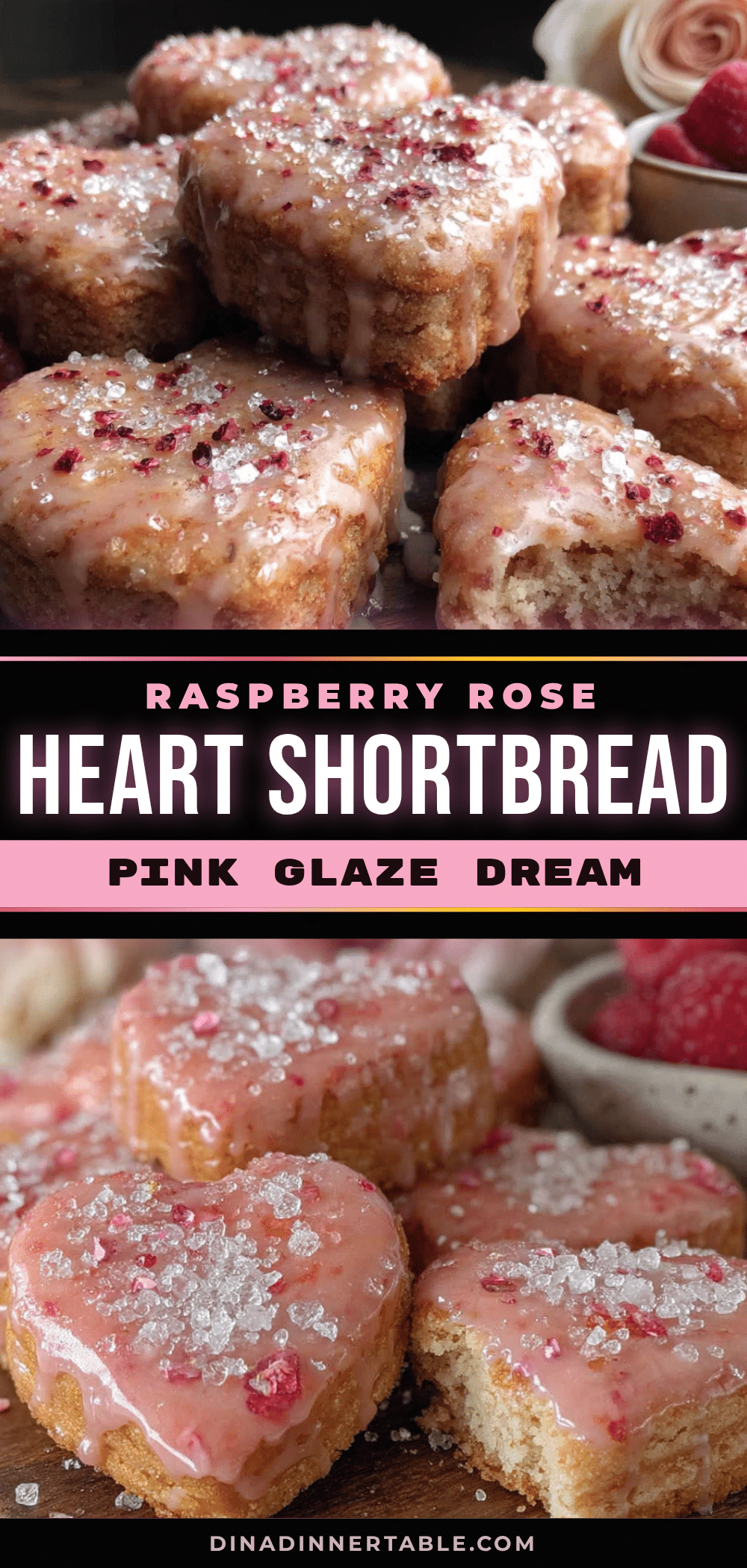
Best Raspberry Rose Heart Shortbread Cookies

These tender, buttery shortbread cookies are infused with raspberry and rose, then dipped in a pretty pink glaze. They’re deceptively simple to make but look like they came from a fancy bakery, perfect for Valentine’s Day, gifting, or any occasion where you want to impress.
- Prep Time: 30 minutes
- Cook Time: 12 minutes
- Total Time: 1 hour 12 minutes (includes chilling and cooling)
- Yield: 24 cookies (using 2-inch cutter) 1x
- Category: Dessert
- Cuisine: American
Ingredients
- 1 cup (226g) unsalted butter, cold and cut into small cubes
- 2 cups (250g) all-purpose flour, spooned and leveled
- 1/2 cup (60g) powdered sugar
- 1/4 cup (15g) freeze-dried raspberries, ground into a fine powder (about 1.5 ounces by weight before grinding)
- 1/2 teaspoon fine sea salt
- 1 teaspoon rose water (optional but highly recommended)
- 1 teaspoon vanilla extract
- 1 cup (120g) powdered sugar, sifted (for glaze)
- 2 tablespoons (30ml) heavy cream (for glaze)
- 1 tablespoon (15ml) reserved raspberry powder (for glaze)
- 1/2 teaspoon rose water (optional, for glaze)
- Pinch of salt (for glaze)
- Dried rose petals, crushed (for decoration, optional)
- Extra freeze-dried raspberry pieces, crushed (for decoration, optional)
- Edible glitter or luster dust (for decoration, optional)
Instructions
- Make the Raspberry Powder: Place the freeze-dried raspberries in a food processor or spice grinder. Pulse until you have a fine, fluffy powder—about 20 seconds. Sift the powder through a fine-mesh sieve into a small bowl. You should have about 3 tablespoons total. Set aside 1 tablespoon for the glaze. The remaining 2 tablespoons go into the dough.
- Mix the Dry Ingredients: In a large mixing bowl, whisk together the all-purpose flour, powdered sugar, 2 tablespoons of the raspberry powder, and the fine sea salt. Make sure there are no lumps.
- Cut in the Butter: Add the cold, cubed butter to the flour mixture. Using your fingertips (or a pastry cutter), rub the butter into the flour until the mixture resembles coarse sand with some pea-sized butter pieces remaining. This should take about 2-3 minutes.
- Add the Wet Ingredients: Drizzle the rose water and vanilla extract over the flour-butter mixture. Use your hands to bring the dough together into a ball. It will look crumbly at first—that’s normal. Keep pressing and kneading gently until it just holds together. Do not overwork the dough.
- Chill the Dough: Flatten the dough into a disc about 1-inch thick, wrap it tightly in plastic wrap, and refrigerate for at least 30 minutes.
- Roll and Cut: Preheat your oven to 350°F (175°C) and line two baking sheets with parchment paper. On a lightly floured surface, roll the chilled dough to 1/4-inch thickness. Use heart-shaped cookie cutters to cut out as many hearts as possible. Re-roll the scraps once. Place the hearts on the prepared baking sheets, spacing them about 1 inch apart. Chill the cut-out cookies on the baking sheet for 10 minutes before baking.
- Bake: Bake for 10-12 minutes, rotating the pans halfway through. The cookies are done when the edges are just barely golden—the centers should still look pale. Let them cool on the baking sheet for 5 minutes, then transfer to a wire rack to cool completely.
- Make the Pink Glaze: In a small bowl, whisk together the sifted powdered sugar, heavy cream, reserved 1 tablespoon of raspberry powder, rose water (if using), and a pinch of salt. Whisk until smooth and glossy. The glaze should be thick but pourable—like honey.
- Glaze and Decorate: Hold each cooled cookie by the edges and dip the top into the glaze. Let the excess drip off for a second, then place the cookie back on the cooling rack. While the glaze is still wet, sprinkle with crushed rose petals, extra raspberry pieces, or edible glitter. Let the glazed cookies sit at room temperature for 30 minutes until the glaze is firm to the touch.
Notes
Do not substitute fresh or frozen raspberries for freeze-dried; they contain too much water and will cause the cookies to spread. Chill the cut-out cookies for 10 minutes before baking to ensure sharp edges. The rose flavor becomes more pronounced after a day or two. For best results, bake the cookies a day ahead and glaze them the morning of serving. The dough can be frozen for up to 3 months.
Nutrition
- Serving Size: 1 cookie
- Calories: 145
- Sugar: 8
- Sodium: 55
- Fat: 9
- Saturated Fat: 5.5
- Carbohydrates: 16
- Fiber: 0.5
- Protein: 1.5
Keywords: shortbread cookies, raspberry rose, heart cookies, Valentine's Day cookies, pink glaze, raspberry shortbread, rose water cookies, heart-shaped cookies, easy shortbread, egg-free cookies