My neighbor, Mrs. Gable, wasn’t trying to impress anyone. I’d stopped by to return her measuring cup—the one I’d borrowed three weeks prior and kept forgetting to give back—and this smell hit me before I even got to her screen door. It was rich, savory, a little sweet, and honestly, it stopped me cold. I stood there on her porch for a second, just inhaling, trying to place it. It smelled like Sunday dinner at a diner you’ve never been to but somehow feel homesick for.
She swung the door open with a flour-dusted apron tied around her waist and waved me in like it was nothing. “Oh, just meatloaf,” she said when I asked what that incredible smell was. Just meatloaf. Like it was the most ordinary thing in the world. But let me tell you, that moment changed how I thought about the dish forever. I watched her pull this golden-brown loaf out of the oven, glistening with a sticky, dark glaze that looked like it belonged on a magazine cover. She didn’t fuss over it or act like she’d done anything special. She just plopped it on the counter, gave it a little tap, and said, “Give it ten minutes to rest.”
Maybe you’ve been there—that moment when you realize the best food comes from people who don’t think they’re doing anything remarkable. That meatloaf was tender, juicy, and had this sweet-savory crust that I still dream about. The brown sugar glaze wasn’t just a topping; it was the whole point. It caramelized into this sticky, tangy-sweet shell that made every bite feel like the first one. I asked for the recipe, and she shrugged and scribbled it on a napkin. That napkin is now stained and crumpled, tucked into my favorite cookbook. And this recipe—this crowd-pleasing classic meatloaf with brown sugar glaze—has been my secret weapon for every family dinner and potluck since.
Why You’ll Love This Recipe
Look, I’ve tested a lot of meatloaf recipes over the years. Some are too dry, some are too dense, and some just taste like a sad brick of ground beef. This one? It’s different. I’ve made it for holiday gatherings, casual Tuesday dinners, and even a backyard barbecue where someone asked for thirds. It’s the kind of recipe that makes you look like you spent hours in the kitchen when really, the oven does all the heavy lifting.
- Quick & Easy: Comes together in about 15 minutes of active prep time. The oven does the rest. Perfect for those days when you want something hearty without standing over the stove.
- Simple Ingredients: No fancy grocery trips needed. Ground beef, breadcrumbs, eggs, ketchup, and brown sugar—you probably have most of this in your pantry right now.
- Perfect for Hosting: This is the dish you bring to a potluck or serve at a dinner party when you want everyone to leave happy. It’s forgiving, it travels well, and it feeds a crowd without breaking the bank.
- Crowd-Pleaser: Kids love it, adults love it, and even picky eaters go back for seconds. I’ve never seen a slice of this meatloaf left on a plate.
- Unbelievably Delicious: The brown sugar glaze is the secret. It bakes into this crackly, caramelized crust that contrasts perfectly with the tender, juicy meat inside. It’s comfort food at its finest.
What makes this version different from the rest? It’s the balance. The glaze isn’t just sweet—it has a tangy kick from the ketchup and a hint of mustard that cuts through the richness. And the meatloaf itself stays moist thanks to a little trick I picked up from Mrs. Gable: soaking the breadcrumbs in milk before mixing. It sounds small, but it makes all the difference. This isn’t just another meatloaf recipe. It’s the one you’ll come back to again and again.
What Ingredients You Will Need
This recipe uses simple, wholesome ingredients that come together to create something truly special. Most of these are pantry staples, which makes this dish perfect for last-minute hosting or a cozy weeknight dinner when you need something satisfying.
For the Meatloaf:
- 2 lbs ground beef (80/20) – I prefer 80/20 for the best balance of flavor and moisture. Too lean, and your meatloaf will be dry. If you want to mix it up, try half ground beef and half ground pork for extra richness.
- 1 cup plain breadcrumbs – Panko works great too. They help bind the meatloaf without making it dense.
- 1/2 cup whole milk – This is the secret to a tender meatloaf. Pour it over the breadcrumbs and let them soak for a few minutes before mixing. It keeps the loaf from drying out.
- 1 medium yellow onion, finely diced – Don’t skip this. Onion adds moisture and sweetness. Sauté it first if you want a milder flavor, but I usually toss it in raw for more texture.
- 2 large eggs, lightly beaten – These act as the binder. Make sure they’re at room temperature so they mix in evenly.
- 3 cloves garlic, minced – Fresh garlic is best. The jarred stuff works in a pinch, but fresh gives you that punch of flavor.
- 1 teaspoon salt – I use kosher salt. Adjust to taste.
- 1/2 teaspoon black pepper – Freshly ground is always better.
- 1 teaspoon dried thyme – This adds a subtle earthy note that pairs beautifully with the beef.
- 1/2 teaspoon smoked paprika – Optional, but I love the smoky depth it brings.
- 2 tablespoons Worcestershire sauce – This is non-negotiable. It adds that savory, umami kick that makes the meatloaf taste like it’s been simmering all day.
- 1/4 cup ketchup – Mixed right into the meat for a hint of sweetness and acidity.
For the Brown Sugar Glaze:
- 1/2 cup ketchup – The base of the glaze. I recommend Heinz for its consistent flavor.
- 1/3 cup packed brown sugar – Light or dark both work. Dark brown sugar gives a deeper, molasses-like flavor.
- 1 tablespoon apple cider vinegar – This cuts through the sweetness and adds a tangy brightness.
- 1 teaspoon mustard powder – Or 1 tablespoon Dijon mustard. Either way, it adds a subtle heat that balances the sugar.
- 1/2 teaspoon garlic powder – Because everything is better with garlic.
Pro tip from my kitchen: If you’re out of breadcrumbs, crush up some saltine crackers or even rolled oats. I’ve done both in a pinch, and they work surprisingly well. For a gluten-free version, use gluten-free breadcrumbs or almond flour—just note that the texture will be slightly different.
Equipment Needed
You don’t need a fancy kitchen to pull this off. Here’s what you’ll need:
- Large mixing bowl – For combining all the meatloaf ingredients. I use a ceramic bowl because it doesn’t slide around as much.
- Loaf pan (9×5 inches) – A standard loaf pan works perfectly. If you don’t have one, you can shape the meatloaf by hand on a lined baking sheet—it’ll cook a bit faster, so keep an eye on it.
- Baking sheet – I always place the loaf pan on a baking sheet to catch any drips. Trust me, you’ll thank me later.
- Measuring cups and spoons – Accuracy matters, especially with the glaze.
- Chef’s knife and cutting board – For dicing the onion and mincing the garlic.
- Small saucepan – For simmering the glaze. A small bowl works if you’re microwaving it, but a saucepan gives you more control.
- Meat thermometer – This is the best investment you can make for meatloaf. It takes the guesswork out of doneness. I use a simple instant-read thermometer, and it’s never let me down.
- Parchment paper – Lining the loaf pan makes cleanup a breeze. Plus, it helps lift the meatloaf out cleanly.
Budget-friendly tip: If you don’t have a meat thermometer, you can test doneness by cutting into the center—but you’ll lose some juices. I’d recommend picking one up; they’re under $10 and worth every penny.
Preparation Method
- Preheat your oven to 350°F (175°C). Position the rack in the center of the oven. While it’s heating, line your loaf pan with parchment paper, leaving some overhang on the sides—this makes lifting the meatloaf out so much easier.
- Soak the breadcrumbs. In a small bowl, combine the breadcrumbs and milk. Stir gently and let it sit for 5 minutes. The breadcrumbs will absorb the milk and turn into a paste-like consistency. This is your secret weapon for a moist meatloaf. Don’t skip this step!
- Make the glaze. In a small saucepan over medium heat, combine the ketchup, brown sugar, apple cider vinegar, mustard powder, and garlic powder. Whisk until the sugar dissolves and the mixture comes to a gentle simmer. Let it bubble for about 2 minutes, then remove from heat. Set aside about 1/4 cup of the glaze for basting later—you’ll use the rest to top the meatloaf before baking.
- Sauté the onion (optional but recommended). If you prefer a milder onion flavor, heat a teaspoon of oil in a small skillet over medium heat and cook the diced onion until translucent, about 3-4 minutes. Let it cool slightly. I usually skip this step because I like the texture of raw onion, but it’s your call.
- Mix the meatloaf. In a large mixing bowl, combine the ground beef, soaked breadcrumbs, beaten eggs, diced onion, minced garlic, salt, pepper, thyme, smoked paprika (if using), Worcestershire sauce, and 1/4 cup ketchup. Use your hands to gently mix everything together. Be careful not to overmix—overworking the meat can make the meatloaf tough. Just mix until everything is evenly distributed.
- Shape the meatloaf. Transfer the mixture to your lined loaf pan. Press it gently into an even shape, making sure there are no air pockets. If you’re using a baking sheet instead, shape the mixture into a loaf shape about 6 inches long and 4 inches wide. Slightly indent the top—this helps the glaze pool up and caramelize beautifully.
- Apply the glaze. Pour the reserved glaze (the one you set aside earlier) over the top of the meatloaf. Use a spoon or pastry brush to spread it evenly, letting some drip down the sides. Don’t be shy with it—the glaze is the star of the show.
- Bake. Place the loaf pan on a baking sheet (to catch any drips) and transfer to the preheated oven. Bake for 55 to 65 minutes, or until the internal temperature reaches 160°F (71°C) when inserted into the center. Halfway through baking, brush on another layer of the remaining glaze for an extra-sticky, caramelized crust.
- Rest. Once the meatloaf is done, remove it from the oven and let it rest in the pan for 10 minutes. This is crucial—it allows the juices to redistribute so your slices stay intact. After 10 minutes, lift the meatloaf out using the parchment paper overhang and transfer it to a cutting board.
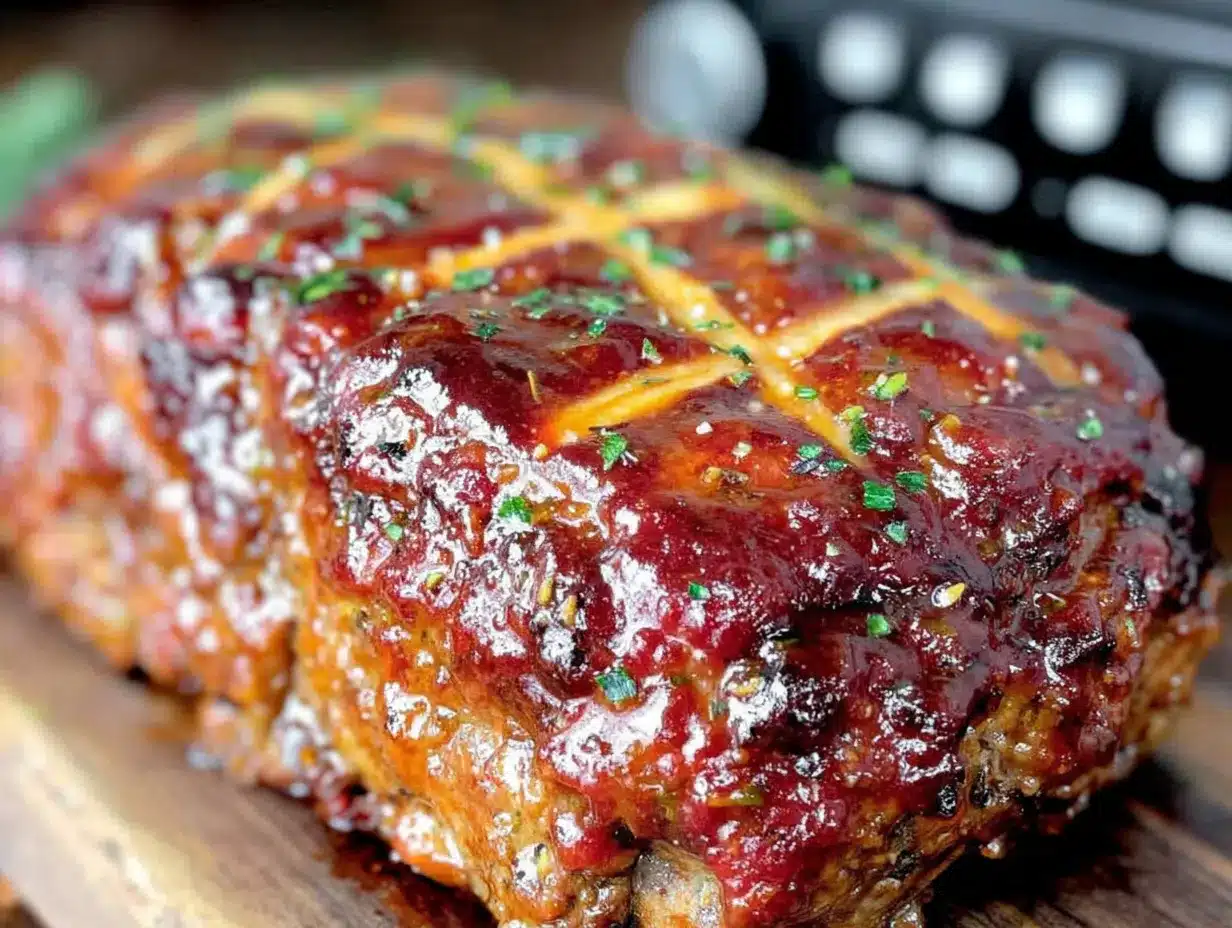
- Slice and serve. Use a sharp knife to cut even slices. The glaze should be sticky and slightly crackly on the outside, while the inside is tender and moist. Serve warm with your favorite sides.
Sensory cue: When the meatloaf is done, the glaze should be dark and glossy, almost like a candy coating. The edges of the meatloaf will pull away slightly from the pan, and the kitchen will smell like sweet, savory heaven. If you tap the top, it should feel firm but give slightly under pressure.
Cooking Tips & Techniques
I’ve made this meatloaf more times than I can count, and I’ve learned a few things along the way—mostly from my own mistakes. Here’s what I wish someone had told me sooner.
Don’t overmix the meat. This is the number one mistake people make. When you overwork ground beef, the proteins tighten up, and you end up with a dense, tough meatloaf. Mix just until the ingredients come together. It’s okay if you see a few streaks of breadcrumb or onion—they’ll blend during baking.
Use a meat thermometer. I cannot stress this enough. Meatloaf is done at 160°F (71°C). If you rely on time alone, you might end up with a dry loaf. I once pulled a meatloaf out at the 55-minute mark, only to find it was still pink in the center. Another time, I left it in too long and it was like a hockey puck. A thermometer takes the guesswork out completely.
Let it rest. I know it’s tempting to slice right into that beautiful loaf, but patience pays off. Resting allows the juices to settle, so your slices stay together instead of crumbling apart. Ten minutes feels like forever, but it’s worth it.
Double the glaze. Seriously, make extra. I always make a double batch of the brown sugar glaze because I love brushing it on during the last 10 minutes of baking. It creates a thicker, more caramelized crust that’s absolutely addictive. Plus, you can serve extra on the side for dipping.
Line your pan. I learned this the hard way after scrubbing a crusted loaf pan for 20 minutes. Parchment paper makes cleanup effortless, and it helps you lift the meatloaf out without breaking it.
Multitasking tip: While the meatloaf is baking, you can prep your sides. Mashed potatoes, roasted vegetables, or a simple green salad all pair beautifully. The meatloaf needs about an hour in the oven, which is plenty of time to get everything else ready.
Variations & Adaptations
One of the best things about this recipe is how adaptable it is. I’ve tweaked it for different occasions, diets, and cravings. Here are a few of my favorite variations:
Turkey Meatloaf: Swap the ground beef for ground turkey (93/7 works best). Since turkey is leaner, add an extra tablespoon of olive oil or an extra egg to keep it moist. The cooking time stays about the same, but check the internal temperature—turkey is done at 165°F (74°C).
Spicy Kick: Add 1-2 tablespoons of sriracha or a diced jalapeño to the meat mixture, and stir a teaspoon of cayenne pepper into the glaze. The sweet-spicy combo is incredible. I made this version for a game day gathering, and it disappeared in minutes.
Cheesy Stuffed Meatloaf: Flatten the meat mixture into a rectangle on a piece of parchment paper, sprinkle shredded cheddar or mozzarella down the center, and then roll it up like a log before placing it in the loaf pan. The cheese melts into the center, creating a gooey surprise in every slice. Just be careful not to overbake—the cheese can leak out if the loaf is too done.
Gluten-Free Option: Use gluten-free breadcrumbs or crushed gluten-free crackers. I’ve also used cooked quinoa (about 1 cup) as a binder, and it works beautifully. The texture is a bit more delicate, so handle the meatloaf gently when slicing.
BBQ Glaze Twist: Replace the ketchup in the glaze with your favorite barbecue sauce. Add an extra tablespoon of brown sugar and a splash of liquid smoke for a smoky, backyard-barbecue flavor. This version is perfect for summer cookouts.
I once tried a variation with chopped bacon mixed into the meatloaf, and honestly, it was incredible. The bacon adds smoky, salty bits throughout. Just reduce the salt in the recipe slightly to balance it out. That version is now my go-to for holiday dinners when I want to impress.
Serving & Storage Suggestions
This meatloaf is a meal in itself, but the right sides can turn it into a feast. Here’s how I like to serve it:
Serving Temperature: Serve warm, straight from the oven. The glaze should be sticky and slightly glossy. If you’re hosting, let the meatloaf rest for 10 minutes, then slice it on a platter so guests can see that beautiful caramelized crust.
What to Serve Alongside: Creamy mashed potatoes are the classic choice—the gravy-like glaze mixes right in. Roasted green beans or a simple arugula salad with lemon vinaigrette cut through the richness. For a potluck, I often bring a side of mac and cheese or cornbread. And don’t forget dinner rolls for sopping up any extra glaze.
Storage Instructions: Leftover meatloaf keeps beautifully. Store slices in an airtight container in the refrigerator for up to 4 days. The flavors actually meld together overnight, so leftovers taste even better the next day. I’ve been known to eat cold meatloaf slices straight from the fridge—don’t judge me.
Freezing: You can freeze the whole cooked meatloaf or individual slices. Wrap tightly in plastic wrap, then aluminum foil, and freeze for up to 3 months. To reheat, thaw in the refrigerator overnight and warm in a 350°F (175°C) oven for about 15 minutes, or until heated through. The glaze might lose a bit of its crackle, but the flavor stays intact.
Reheating Tips: The oven is your best friend here. Microwave reheating can make the meatloaf dry and rubbery. Place slices on a baking sheet, cover loosely with foil, and warm at 350°F (175°C) for 10-12 minutes. If you want to revive the glaze, brush on a little extra before reheating.
Flavor Development: I’ve noticed that the meatloaf tastes even better on day two. The spices have time to meld, and the glaze soaks into the outer edges. If you’re planning ahead, make the meatloaf a day in advance, refrigerate it uncooked, and bake it fresh the day of your gathering. It’s a great time-saver for hosting.
Nutritional Information & Benefits
While this is definitely a comfort food, it’s not without its nutritional perks. Here’s a rough breakdown per serving (based on 8 servings):
| Nutrient | Amount per Serving |
|---|---|
| Calories | 380 |
| Protein | 28g |
| Fat | 18g |
| Carbohydrates | 22g |
| Fiber | 1g |
| Sugar | 14g |
| Sodium | 680mg |
Beef is a great source of iron, zinc, and B vitamins, which support energy and immune function. The onions and garlic add antioxidants and anti-inflammatory compounds. And while the brown sugar glaze does add sugar, it’s balanced by the protein and fat in the meat, which helps slow digestion.
Dietary Considerations: This recipe is not gluten-free in its standard form, but it’s easy to adapt (see variations). It’s also low-carb if you skip the breadcrumbs and use almond flour instead. For a lower-sodium version, use low-sodium ketchup and reduce the added salt.
Potential Allergens: Contains dairy (milk), eggs, and gluten (breadcrumbs). Check your Worcestershire sauce for anchovies if you have a fish allergy.
I personally love that this meatloaf feels indulgent but isn’t over-the-top. It’s the kind of meal that fills you up without weighing you down—perfect for a satisfying family dinner.
Conclusion
This crowd-pleasing classic meatloaf with brown sugar glaze has earned a permanent spot in my recipe rotation. It’s reliable, forgiving, and always gets rave reviews. Whether you’re hosting a dinner party, feeding a hungry family, or just craving something warm and comforting, this recipe delivers every single time.
I love that it’s simple enough for a Tuesday night but impressive enough for a holiday table. The sweet-savory glaze, the tender, juicy interior, and the way it makes your whole kitchen smell like home—it’s everything I want in a comfort food recipe. And honestly, it’s the kind of dish that makes you feel like a good cook, even on days when you’re short on time and energy.
So go ahead—give it a try. Customize it with your favorite add-ins, double the glaze, and serve it with all your favorite sides. And when you take that first bite and the flavors hit you, remember Mrs. Gable and her casual genius. Sometimes the best recipes come from the people who don’t realize they’re doing anything special.
I’d love to hear how yours turns out! Leave a comment below with your favorite twist on this recipe, or share a photo of your meatloaf on social media. Don’t forget to tag me so I can see your creation. Happy cooking!
Frequently Asked Questions
Can I make this meatloaf ahead of time?
Absolutely! You can assemble the meatloaf, cover it, and refrigerate it for up to 24 hours before baking. Just add about 10 minutes to the baking time since you’re starting from cold. You can also bake it fully, then reheat slices as needed.
Why is my meatloaf falling apart?
This usually happens when there aren’t enough binders (eggs and breadcrumbs) or when the meatloaf isn’t rested long enough before slicing. Make sure you’re using the full amount of breadcrumbs and eggs, and let it rest for at least 10 minutes after baking. If it’s still crumbly, try adding an extra egg next time.
Can I use ground pork or turkey instead of beef?
Yes, absolutely! Ground pork adds richness and works beautifully in a 50/50 mix with beef. Ground turkey is leaner, so you’ll need to add a bit of olive oil or an extra egg to keep it moist. Just adjust the cooking time as needed and use a meat thermometer to check doneness.
How do I know when the meatloaf is fully cooked?
The safest way is to use a meat thermometer. Insert it into the center of the meatloaf—it should read 160°F (71°C) for beef. The glaze should be dark and caramelized, and the edges should pull away slightly from the pan. If you don’t have a thermometer, cut into the center to check that it’s no longer pink and the juices run clear.
Can I freeze leftover meatloaf?
Yes, and it freezes beautifully! Let the meatloaf cool completely, then wrap it tightly in plastic wrap and foil. Freeze for up to 3 months. To serve, thaw in the refrigerator overnight and reheat in a 350°F oven until warmed through. Individual slices are great for quick lunches.
Pin This Recipe!
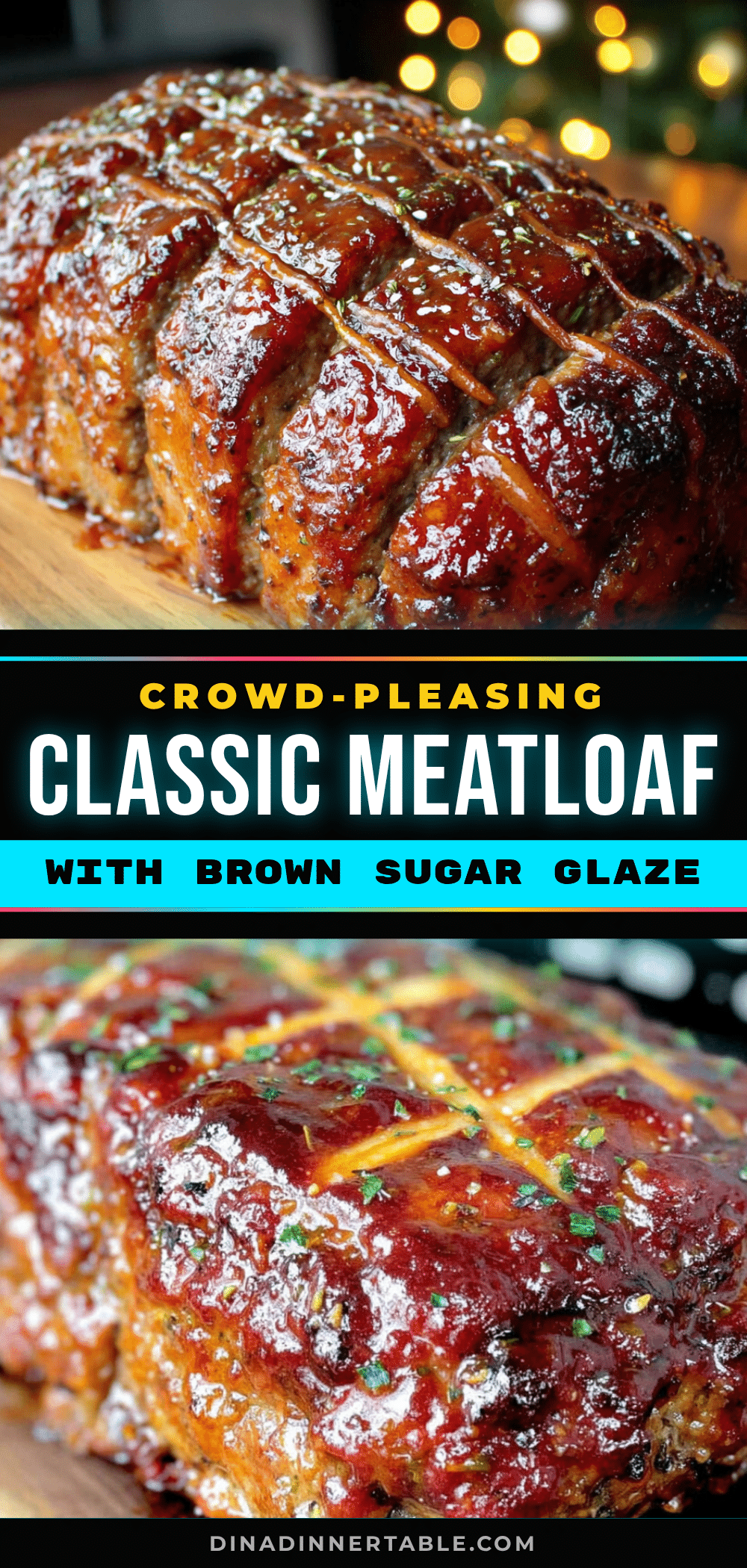
Classic Meatloaf with Brown Sugar Glaze
This crowd-pleasing classic meatloaf features a tender, juicy interior and a sweet-savory brown sugar glaze that caramelizes into a sticky, crackly crust. Perfect for family dinners or potlucks, it’s easy to make with simple ingredients.
- Prep Time: 15 minutes
- Cook Time: 55 minutes
- Total Time: 1 hour 10 minutes
- Yield: 8 servings 1x
- Category: Main Course
- Cuisine: American
Ingredients
- 2 lbs ground beef (80/20)
- 1 cup plain breadcrumbs
- 1/2 cup whole milk
- 1 medium yellow onion, finely diced
- 2 large eggs, lightly beaten
- 3 cloves garlic, minced
- 1 teaspoon salt
- 1/2 teaspoon black pepper
- 1 teaspoon dried thyme
- 1/2 teaspoon smoked paprika (optional)
- 2 tablespoons Worcestershire sauce
- 1/4 cup ketchup
- 1/2 cup ketchup (for glaze)
- 1/3 cup packed brown sugar
- 1 tablespoon apple cider vinegar
- 1 teaspoon mustard powder
- 1/2 teaspoon garlic powder
Instructions
- Preheat your oven to 350°F (175°C). Line a 9×5-inch loaf pan with parchment paper, leaving overhang on the sides.
- In a small bowl, combine the breadcrumbs and milk. Stir and let sit for 5 minutes until the breadcrumbs absorb the milk and form a paste.
- In a small saucepan over medium heat, combine 1/2 cup ketchup, brown sugar, apple cider vinegar, mustard powder, and garlic powder. Whisk until sugar dissolves and mixture simmers gently for about 2 minutes. Remove from heat and set aside 1/4 cup of the glaze for basting later.
- If desired, sauté the diced onion in a teaspoon of oil over medium heat until translucent, about 3-4 minutes. Let cool slightly.
- In a large mixing bowl, combine ground beef, soaked breadcrumbs, beaten eggs, diced onion, minced garlic, salt, pepper, thyme, smoked paprika (if using), Worcestershire sauce, and 1/4 cup ketchup. Mix gently with your hands until just combined; do not overmix.
- Transfer the mixture to the lined loaf pan and press gently into an even shape, eliminating air pockets. Slightly indent the top.
- Pour the reserved glaze over the top of the meatloaf and spread evenly, letting some drip down the sides.
- Place the loaf pan on a baking sheet and bake for 55 to 65 minutes, or until the internal temperature reaches 160°F (71°C). Halfway through baking, brush on another layer of the remaining glaze.
- Remove from oven and let rest in the pan for 10 minutes. Then lift the meatloaf out using the parchment paper and transfer to a cutting board.
- Slice and serve warm.
Notes
Soak breadcrumbs in milk for a moist meatloaf. Use a meat thermometer for perfect doneness. Let the meatloaf rest for 10 minutes before slicing to keep it intact. Double the glaze for extra caramelization.
Nutrition
- Serving Size: 1 slice (1/8 of meat
- Calories: 380
- Sugar: 14
- Sodium: 680
- Fat: 18
- Saturated Fat: 7
- Carbohydrates: 22
- Fiber: 1
- Protein: 28
Keywords: meatloaf, brown sugar glaze, classic meatloaf, family dinner, comfort food, easy meatloaf