There used to be this little French bistro tucked away on a side street in Portland called Le Petit Jardin. It had these mismatched chairs, a chalkboard menu that changed daily, and the most incredible roasted root vegetables I’ve ever tasted. When they closed their doors back in 2019—the landlord raised the rent, typical story—I literally stood outside staring at the “For Lease” sign for a good five minutes feeling genuinely sad. That honey-dijon glaze they used, the way the edges of the carrots got all caramelized and sticky, the fresh thyme that made everything taste like autumn in a single bite. I tried to order it everywhere after that, but nobody came close. After twelve tries—twelve, I’m not kidding—I finally got it. I burned the first batch so badly the smoke alarm went off and my neighbor knocked on the door thinking there was a fire. But this version? This is the one. The honey and dijon balance each other perfectly, the parsnips bring that subtle sweetness, and the thyme ties it all together like it was meant to be. Honestly, I think I actually like these better than what Le Petit Jardin served, and that’s saying something.
What gets me every time is how something so simple can feel so special. You just toss some root vegetables in a honey-dijon glaze, roast them until they’re tender and golden, and suddenly you’ve got a side dish that steals the whole show. Maybe you’ve been there—you spend hours on a main course, and then the humble roasted carrots end up being what everyone raves about. That’s exactly what happened at my friend Sarah’s Thanksgiving last year. I brought these as an afterthought, and her husband asked for the recipe before the turkey was even carved. It’s the kind of dish that makes you look like you tried way harder than you actually did.
These cozy honey dijon roasted carrots and parsnips have become my go-to for pretty much everything. Weeknight dinners when I need something easy but impressive. Holiday tables when I want to bring something that stands out. Even random Tuesday lunches when I’m craving that caramelized, savory-sweet goodness. The parsnips add this subtle nuttiness that carrots alone just can’t match, and the thyme gives it that earthy, almost floral note that makes the whole kitchen smell incredible. I keep making them because they remind me of that little bistro, sure, but also because they’re genuinely perfect. And honestly, isn’t that what we’re all chasing in the kitchen?
Why You’ll Love This Recipe
Let me tell you why these cozy honey dijon roasted carrots and parsnips have earned a permanent spot in my recipe rotation. I’ve tested this recipe more times than I care to admit—burned batches, undercooked batches, batches where I forgot the honey entirely (don’t ask). But through all those kitchen failures, I learned exactly what makes this version work every single time.
- Quick & Easy : These come together in under 40 minutes, most of which is hands-off roasting time. Perfect for those evenings when you need a vegetable side dish that doesn’t demand constant attention.
- Simple Ingredients : You probably already have honey, dijon mustard, and thyme in your kitchen. No fancy grocery trips or specialty stores required—just honest, everyday ingredients that come together beautifully.
- Perfect for Fall and Winter : This is the ultimate seasonal side dish. Root vegetables are at their peak during the cooler months, and the warm honey-thyme glaze feels like comfort food without being heavy.
- Crowd-Pleaser : I’ve served these to picky kids, vegetable-skeptical adults, and serious foodies. Every single person has asked for seconds. The caramelization does something magical to even the most reluctant vegetable eaters.
- Unbelievably Delicious : The combination of sweet honey, tangy dijon, and fragrant thyme creates this flavor profile that’s both familiar and surprising. The edges get all crispy and caramelized while the insides stay tender and buttery.
What makes this recipe different from all the other roasted carrot recipes out there? It’s the balance. Most versions either go too sweet with the honey or too sharp with the dijon. I spent weeks adjusting the ratios until the honey and mustard complemented each other perfectly—neither one overpowering the other. The parsnips add a layer of complexity that carrots alone can’t achieve, and roasting them at just the right temperature ensures they cook evenly without turning mushy.
This isn’t just another roasted vegetable recipe. It’s the kind that makes you close your eyes after the first bite because the flavors hit you in exactly the right way. It’s comfort food reimagined—healthier, faster, but with the same soul-soothing satisfaction. Perfect for impressing guests without stress, or turning a simple weeknight dinner into something memorable. Trust me, once you make these, you’ll understand why I went through twelve batches to get them right.
What Ingredients You Will Need
This recipe uses simple, wholesome ingredients to deliver bold flavor and satisfying texture without any fuss. Most of these are pantry staples or easy to find at any grocery store, especially during fall and winter when root vegetables are at their peak.
For the Vegetables
- 1 pound carrots, peeled and cut into 3-inch sticks (look for medium-sized carrots—not too thin or they’ll burn, not too thick or they won’t cook through)
- 1 pound parsnips, peeled and cut into 3-inch sticks (choose parsnips that are firm and not too woody; smaller ones tend to be sweeter)
- 2 tablespoons olive oil (use a good quality extra virgin olive oil for better flavor, but regular works fine too)
- 1/2 teaspoon salt (I prefer kosher salt for even seasoning)
- 1/4 teaspoon black pepper (freshly ground if possible)
For the Honey Dijon Glaze
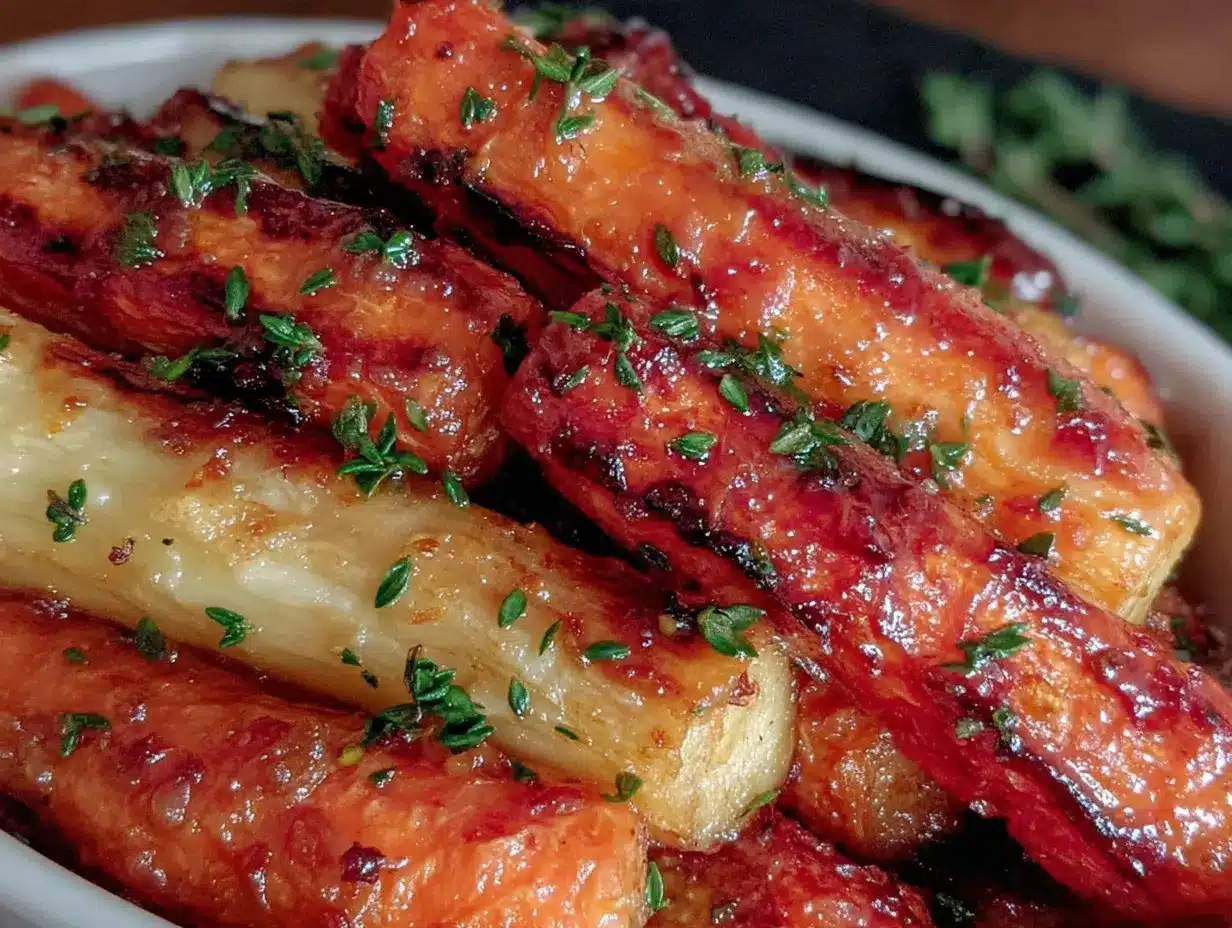
- 3 tablespoons honey (local honey adds a lovely floral note, but any honey works—if your honey is crystallized, warm it slightly to make it easier to mix)
- 2 tablespoons dijon mustard (I recommend Grey Poupon for its smooth texture and balanced tanginess)
- 1 tablespoon unsalted butter, melted (adds richness and helps the glaze stick to the vegetables)
- 1 tablespoon apple cider vinegar (brightens the flavors and cuts through the sweetness)
- 1 teaspoon fresh thyme leaves, plus extra for garnish (fresh thyme is non-negotiable here—dried just doesn’t have the same aroma)
Ingredient Selection Tips
When choosing carrots, look for ones that are bright orange and firm with no soft spots. If the carrots come with their greens attached, the greens should look fresh and perky—that’s a good sign they were recently harvested. For parsnips, smaller is actually better. Large parsnips can have a woody core that’s tough and fibrous. I usually grab parsnips that are about the same size as the carrots so they cook evenly. If you find parsnips with a thick core, just cut it out before roasting.
Substitution Guidance
If you don’t have parsnips, you can swap in an equal amount of carrots or even sweet potatoes. For a completely different flavor profile, try using maple syrup instead of honey—it gives a deeper, more caramel-like sweetness. If you’re avoiding butter, use an additional tablespoon of olive oil. And if fresh thyme isn’t available, use 1/2 teaspoon of dried thyme, though I really recommend seeking out fresh for this recipe. The difference is noticeable.
Equipment Needed
You don’t need fancy equipment for these cozy honey dijon roasted carrots and parsnips, which is part of what makes them so great. Here’s what you’ll need:
- Large baking sheet (a half-sheet pan works perfectly—make sure it’s rimmed to catch any glaze drips)
- Parchment paper or aluminum foil (for easy cleanup; the honey glaze can get sticky)
- Chef’s knife (for cutting the vegetables into uniform sticks)
- Cutting board
- Mixing bowl (medium-sized, for tossing the vegetables with the glaze)
- Small bowl (for whisking together the glaze ingredients)
- Whisk (to ensure the honey and mustard combine smoothly)
- Spatula or tongs (for flipping the vegetables halfway through roasting)
If you don’t have parchment paper, you can grease the baking sheet directly with a little olive oil. Just be prepared for a bit more scrubbing later—that caramelized honey can be stubborn. I learned this the hard way after spending fifteen minutes scraping my baking sheet. Now I always line it with parchment. Also, if you have a convection oven, it works beautifully here. Just reduce the temperature by 25 degrees Fahrenheit and check the vegetables a few minutes earlier than the recipe suggests.
For budget-friendly options, any baking sheet will do. I’ve made these on a cheap dollar-store pan and they turned out just fine. The key is making sure the vegetables have enough space to spread out—crowding the pan leads to steaming instead of roasting, and you lose that beautiful caramelization.
Preparation Method
Let me walk you through making these cozy honey dijon roasted carrots and parsnips step by step. I’ve included all the little details I wish someone had told me when I was first figuring this out.
- Preheat your oven to 400 degrees Fahrenheit (200 degrees Celsius). Getting the oven hot before you start is crucial—you want that immediate blast of heat to start caramelizing the vegetables right away. While the oven heats, line a large baking sheet with parchment paper.
- Prepare the vegetables. Peel the carrots and parsnips, then cut off the tops and bottoms. Cut them into sticks about 3 inches long and roughly 1/2 inch thick. Try to keep them uniform in size so they cook evenly. I usually cut the thicker ends in half lengthwise so everything is roughly the same thickness. This step matters more than you think—I once cut some pieces way thicker than others, and ended up with half the batch perfectly roasted and the other half still crunchy in the middle.
- Make the honey dijon glaze. In a small bowl, whisk together the honey, dijon mustard, melted butter, apple cider vinegar, and fresh thyme leaves. Whisk until the mixture is smooth and well combined. The honey and mustard can be stubborn about mixing, so take your time here. If your honey is thick, warm it in the microwave for about 10 seconds to make it easier to work with.
- Toss the vegetables with the glaze. Place the carrot and parsnip sticks in a medium mixing bowl. Pour the honey dijon glaze over them, then add the salt and pepper. Use your hands or a spatula to toss everything together until every piece is evenly coated. I prefer using my hands—you can feel when everything is coated properly. Just be prepared for sticky fingers afterwards.
- Arrange on the baking sheet. Spread the glazed vegetables in a single layer on the prepared baking sheet. Make sure they’re not touching or overlapping too much. If they’re crowded, they’ll steam instead of roast, and you won’t get those beautiful caramelized edges. If necessary, use two baking sheets. Trust me on this—crowding is the number one mistake people make with roasted vegetables.
- Roast for 20 minutes. Place the baking sheet in the preheated oven and roast for 20 minutes. The kitchen will start smelling incredible at this point—that combination of honey caramelizing and thyme releasing its oils is pure magic.
- Flip and continue roasting. After 20 minutes, remove the baking sheet from the oven and use a spatula or tongs to flip each piece over. This ensures even browning on all sides. Return to the oven and roast for another 15 to 20 minutes, until the vegetables are tender when pierced with a fork and the edges are golden brown and caramelized. The exact time depends on how thick you cut your vegetables, so start checking at the 15-minute mark.
- Garnish and serve. Remove from the oven and transfer to a serving platter. Sprinkle with additional fresh thyme leaves and a pinch of flaky sea salt if you have it. Serve immediately while they’re still warm and the glaze is sticky and beautiful.
A few things to watch for: If you notice the glaze starting to burn before the vegetables are tender, you can tent the baking sheet loosely with foil for the last 5-10 minutes. Also, the parsnips might cook slightly faster than the carrots, so if you see them getting too dark, you can remove them early while the carrots finish. This happened to me my third time making these, and now I always keep an eye on them during the last 10 minutes.
Cooking Tips & Techniques
After making these cozy honey dijon roasted carrots and parsnips more times than I can count, I’ve picked up some tricks that make a real difference. Let me share the ones that matter most.
Don’t skip the parsnips. I know some people are hesitant about parsnips, but they’re absolutely essential here. They have this subtle sweetness and nuttiness that carrots alone can’t replicate. If you’ve never cooked with parsnips before, think of them as carrots’ earthier, more sophisticated cousin. They add depth and complexity to the dish.
Cut everything the same size. I cannot stress this enough. When I first started making these, I got lazy with my knife work and ended up with some pieces that were perfectly caramelized and others that were undercooked. Taking an extra two minutes to cut everything uniformly makes a huge difference. The thicker pieces need more time to cook through, and by then the thinner pieces are starting to burn.
Use room temperature ingredients for the glaze. If your honey is cold and thick, it won’t mix well with the mustard and butter. Let everything come to room temperature before whisking, or warm the honey slightly. I learned this after my first batch where the glaze was clumpy and didn’t coat the vegetables evenly.
Give them space on the baking sheet. This is the most common mistake I see people make with roasted vegetables. If the pieces are crowded together, they release steam and end up soggy instead of caramelized. Use two baking sheets if you need to. The caramelization happens when the vegetables are in direct contact with the hot pan, not when they’re piled on top of each other.
Don’t open the oven too often. Every time you open the oven door, the temperature drops and your cooking time increases. Trust the process and only flip the vegetables once, halfway through. I used to check on them every ten minutes like a nervous parent, and it always took longer to get them properly caramelized.
One mistake I’ll never forget: The time I forgot to line my baking sheet with parchment. The honey glaze caramelized directly onto the pan, and I spent a good twenty minutes scrubbing it off. Now I always, always use parchment paper. It makes cleanup so much easier and prevents the vegetables from sticking.
Variations & Adaptations
One of the things I love most about this recipe is how adaptable it is. Here are some variations I’ve tried and loved.
Maple Dijon Version: Swap the honey for pure maple syrup. The maple flavor is deeper and slightly woodsy, which pairs beautifully with the parsnips. I made this version for a friend’s brunch and it was gone in minutes. Just note that maple syrup is thinner than honey, so the glaze might be slightly less sticky.
Add Some Heat: If you like a little kick, add 1/4 teaspoon of red pepper flakes to the glaze along with the thyme. The heat cuts through the sweetness and adds an unexpected layer of flavor. I tried this on a whim one night when I wanted something different, and now it’s my go-to version when I’m cooking just for myself.
Herb Variations: While thyme is classic, you can experiment with other herbs. Rosemary pairs wonderfully with the honey and dijon—just use finely chopped fresh rosemary instead of thyme. Or try a combination of thyme and sage for an even more autumnal flavor. I made a rosemary version for Easter last year and it was a huge hit.
Add Some Alliums: Toss in some halved shallots or small red onion wedges along with the carrots and parsnips. They caramelize beautifully and add a savory depth that complements the sweetness. Just add them at the same time as the other vegetables since they cook at a similar rate.
Dietary Adaptations: For a vegan version, simply replace the butter with an equal amount of olive oil or coconut oil. For a lower-sugar option, reduce the honey to 2 tablespoons and add an extra tablespoon of dijon mustard. The vegetables will still caramelize nicely from their natural sugars. I’ve tested both versions and they work great.
Different Root Vegetables: This glaze works beautifully on other root vegetables too. Try it with sweet potatoes, turnips, rutabaga, or even celery root. Just cut everything to similar sizes and adjust the roasting time as needed. Sweet potatoes might cook a bit faster, so keep an eye on them.
Serving & Storage Suggestions
These cozy honey dijon roasted carrots and parsnips are best served warm, straight from the oven when the glaze is still sticky and the edges are perfectly caramelized. Transfer them to a warm serving platter and sprinkle with a little extra fresh thyme and a pinch of flaky sea salt right before serving. The contrast between the warm, tender vegetables and the fresh, bright thyme is absolutely lovely.
What to serve with them: These pair beautifully with roasted chicken, grilled pork chops, or a hearty roast beef. They’re also wonderful alongside a simple pan-seared salmon or even a grain bowl with quinoa and roasted chickpeas. For holiday meals, they fit right in alongside mashed potatoes and roasted turkey. I’ve even served them as a warm salad topping over arugula with a simple lemon vinaigrette—the peppery arugula balances the sweetness perfectly.
Storage instructions: If you have leftovers, let them cool completely, then transfer to an airtight container. They’ll keep in the refrigerator for up to 4 days. The texture will soften slightly, but the flavor actually gets better as the vegetables absorb more of the glaze overnight.
Reheating methods: The best way to reheat these is in the oven. Spread them on a baking sheet and warm at 350 degrees Fahrenheit for about 10 minutes, until heated through. This helps restore some of the caramelization. You can also reheat them in a skillet over medium heat for about 5 minutes, stirring occasionally. Avoid the microwave if possible—it makes them soggy and the glaze turns watery. I learned this after a sad leftover lunch that was nothing like the original.
Freezing: These don’t freeze particularly well because the texture changes significantly. The vegetables become mushy upon thawing. I recommend making only what you’ll eat within a few days. If you have a large batch, consider halving the recipe next time.
Flavor development: Interestingly, the flavors meld and deepen overnight. Leftovers the next day have a more complex, mellow sweetness. I actually look forward to leftovers for this reason—they’re different from the fresh version but equally delicious in their own way.
Nutritional Information & Benefits
These cozy honey dijon roasted carrots and parsnips aren’t just delicious—they’re packed with nutrients too. Here’s a rough breakdown per serving (about 1 cup of roasted vegetables):
- Calories: approximately 180-200
- Carbohydrates: 28-32 grams
- Fiber: 6-8 grams
- Protein: 2-3 grams
- Fat: 7-9 grams
- Vitamin A: over 200% of daily value (from the carrots)
- Vitamin C: about 20% of daily value
- Potassium: about 15% of daily value
Health benefits: Carrots are famous for their beta-carotene content, which supports eye health and immune function. Parsnips are rich in fiber, folate, and vitamin C. The olive oil provides healthy monounsaturated fats, and the thyme adds antioxidants and anti-inflammatory compounds. Honey, while still a sugar, contains trace amounts of beneficial compounds and is less processed than refined sugar.
Dietary considerations: This recipe is naturally gluten-free, dairy-free if you swap the butter for olive oil, and can be made vegan with the same substitution. It’s also relatively low in calories for the volume it provides, making it a great option for those watching their weight. The main allergen concern is the mustard, which can be an allergen for some people—simply omit it and increase the honey and vinegar slightly for a different but still delicious glaze.
From a personal perspective, I love that this dish feels indulgent but is actually quite wholesome. The vegetables are the star, and the glaze just enhances what’s already there. It’s comfort food that nourishes rather than weighs you down.
Conclusion
These cozy honey dijon roasted carrots and parsnips have become my most-requested side dish for good reason. They’re simple enough for a Tuesday night but impressive enough for a holiday table. The combination of sweet honey, tangy dijon, and fragrant thyme creates something truly special—a dish that tastes like fall and winter wrapped up in a single bite.
I hope you’ll try them and make them your own. Maybe you’ll add a little extra thyme like I do, or throw in some shallots for extra depth. Maybe you’ll serve them alongside your favorite roast chicken or pile them on top of a salad. However you make them, I promise they’ll become a staple in your kitchen too.
I’d love to hear how yours turn out! Drop a comment below and let me know if you tried any variations or if these became a hit at your dinner table. And if you’re looking for more cozy side dishes, you might enjoy my garlic herb roasted potatoes or my honey balsamic roasted brussels sprouts. Happy cooking, friends!
Frequently Asked Questions
Can I make these ahead of time?
You can prepare the vegetables and the glaze separately up to a day in advance. Store the cut vegetables in a sealed bag in the refrigerator and the glaze in a covered container. When you’re ready to cook, toss everything together and roast as directed. The vegetables might release a little moisture from sitting, but they’ll still turn out beautifully.
Why are my roasted vegetables soggy instead of caramelized?
This usually happens for one of two reasons: either the vegetables are crowded on the baking sheet, or the oven isn’t hot enough. Make sure your oven is fully preheated to 400 degrees Fahrenheit and that the vegetables are spread in a single layer with space between them. If necessary, use two baking sheets.
Can I use dried thyme instead of fresh?
You can, but I really recommend fresh thyme for this recipe. Fresh thyme has a more vibrant, aromatic flavor that stands up to the honey and dijon. If you must use dried, use about 1/2 teaspoon and add it to the glaze. The flavor won’t be quite as bright, but it will still be good.
How do I know when the vegetables are done?
The carrots and parsnips should be tender when pierced with a fork—they should offer some resistance but not be hard or crunchy. The edges should be golden brown and caramelized, with some darker spots from the honey glaze. Start checking at the 35-minute mark and go from there.
Can I add other vegetables to this recipe?
Absolutely! This glaze works beautifully with sweet potatoes, turnips, rutabaga, or even butternut squash. Just cut everything to similar sizes so they cook evenly. Keep in mind that different vegetables have different cooking times—sweet potatoes might cook faster, while turnips might take a bit longer. Check them individually as they roast.
Pin This Recipe!
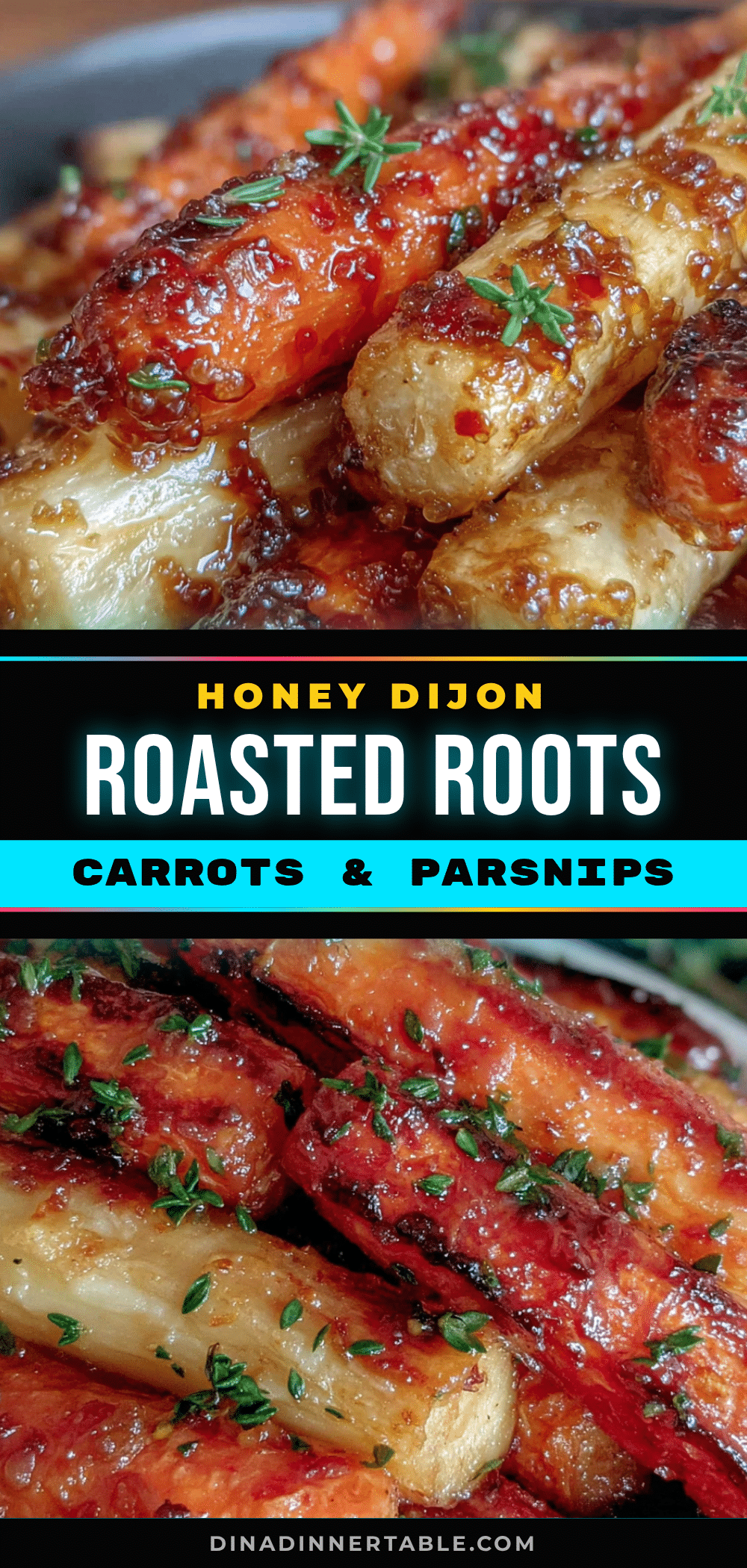
Cozy Honey Dijon Roasted Carrots and Parsnips: Easy Side Dish

These honey dijon roasted carrots and parsnips are caramelized, tender, and perfectly balanced with sweet honey, tangy dijon, and fragrant thyme. An easy, crowd-pleasing side dish for weeknights or holiday tables.
- Prep Time: 15 minutes
- Cook Time: 35 minutes
- Total Time: 50 minutes
- Yield: 4 servings 1x
- Category: Side Dish
- Cuisine: American
Ingredients
- 1 pound carrots, peeled and cut into 3-inch sticks
- 1 pound parsnips, peeled and cut into 3-inch sticks
- 2 tablespoons olive oil
- 1/2 teaspoon salt
- 1/4 teaspoon black pepper
- 3 tablespoons honey
- 2 tablespoons dijon mustard
- 1 tablespoon unsalted butter, melted
- 1 tablespoon apple cider vinegar
- 1 teaspoon fresh thyme leaves, plus extra for garnish
Instructions
- Preheat your oven to 400 degrees Fahrenheit (200 degrees Celsius). Line a large baking sheet with parchment paper.
- Peel the carrots and parsnips, cut off the tops and bottoms, and cut into sticks about 3 inches long and 1/2 inch thick. Try to keep them uniform in size.
- In a small bowl, whisk together the honey, dijon mustard, melted butter, apple cider vinegar, and fresh thyme leaves until smooth.
- Place the carrot and parsnip sticks in a medium mixing bowl. Pour the glaze over them, add salt and pepper, and toss until evenly coated.
- Spread the glazed vegetables in a single layer on the prepared baking sheet, making sure they are not touching or overlapping too much.
- Roast for 20 minutes.
- Remove from the oven, flip each piece over, and return to the oven. Roast for another 15 to 20 minutes, until tender and golden brown with caramelized edges.
- Transfer to a serving platter, garnish with additional fresh thyme leaves and a pinch of flaky sea salt if desired. Serve immediately.
Notes
For even cooking, cut vegetables uniformly. Avoid crowding the baking sheet to ensure caramelization. If glaze starts to burn before vegetables are tender, tent loosely with foil. Parsnips may cook faster than carrots; check during last 10 minutes. For vegan version, replace butter with olive oil. For lower sugar, reduce honey to 2 tablespoons and add extra dijon.
Nutrition
- Serving Size: 1 cup
- Calories: 190
- Sugar: 18
- Sodium: 380
- Fat: 8
- Saturated Fat: 2
- Carbohydrates: 30
- Fiber: 7
- Protein: 2.5
Keywords: roasted carrots, roasted parsnips, honey dijon, side dish, fall vegetables, winter vegetables, easy side dish, holiday side dish