This was supposed to be a simple pan-seared salmon with a basic lemon butter sauce. You know, the kind you see in those fifteen-minute meal videos that make you feel like a kitchen rockstar. I had everything laid out—the fillets patted dry, the butter softening on the counter, the lemon waiting to be juiced. But somewhere between answering a text from my sister and realizing I’d run out of paper towels (again), everything went sideways.
I grabbed what I thought was my go-to stainless steel pan, but it turned out to be the one I’d accidentally put through the dishwasher on the wrong cycle. You know that feeling when you pull out a pan and it’s got that weird, cloudy film? Yeah, that one. I figured I’d just add a little extra butter and power through. But the salmon stuck, the skin tore, and suddenly my beautiful plan was a mess of butter pooling in weird spots and lemon slices sliding around like they were trying to escape.
Honestly, I almost gave up. I mean, I stood there staring at the stovetop, spatula in hand, wondering if I should just order takeout and call it a night. But then I thought, okay, let me just finish this. I scraped the fillets into a baking dish, poured the half-melted butter and lemon slices over the top, and threw it in the oven out of pure stubbornness. I figured it would be dry and forgettable—a meal I’d eat while standing at the counter, scrolling my phone.
What came out of the oven was nothing like the plan. And better.
The butter had melded with the lemon into this silky, almost creamy sauce. The salmon was flaky and tender, not dry at all. That little bit of browning on the edges from the oven gave it a depth that pan-searing never quite achieves. I sat down with that plate and took one bite, and I actually laughed out loud. Maybe you’ve been there—when a kitchen disaster somehow hands you a recipe you’ll make for years. This easy lemon butter baked salmon became that for me. It’s the dinner I make when I want something that feels fancy but takes almost no real effort. And honestly? I’m glad I messed up.
Why You’ll Love This Recipe
Let me tell you why this lemon butter baked salmon has earned a permanent spot in my weekly dinner rotation. After testing this recipe at least a dozen times (yes, even after that first happy accident), I can confidently say it delivers every single time.
- Quick & Easy: This comes together in under 30 minutes, from start to finish. Perfect for those evenings when you’re tired but still want something homemade and satisfying.
- Simple Ingredients: You probably have everything in your kitchen right now. Salmon, butter, lemon, garlic, and a few pantry spices—that’s it. No fancy trips to a specialty store.
- Perfect for Light Dinners: It’s satisfying without being heavy. The butter adds richness, but the lemon keeps it bright and fresh. You’ll feel good after eating it, not stuffed.
- Crowd-Pleaser: I’ve served this to picky eaters, seafood skeptics, and my uncle who swears he doesn’t like salmon. Every single person cleaned their plate.
- Unbelievably Delicious: The texture is what gets me every time. The salmon stays incredibly moist, and the butter-lemon sauce is so good you’ll want to drink it straight from the dish.
What makes this recipe different from the dozens of other salmon recipes out there? It’s the method. Baking the salmon in a pool of melted butter and lemon juice creates this gentle poaching effect that keeps the fish incredibly tender. The oven does all the work, so you don’t have to stand over a hot pan worrying about sticking or overcooking. Plus, the sauce reduces slightly in the oven, concentrating all that flavor into something truly special.
This isn’t just another salmon recipe. It’s the kind of meal that makes you close your eyes after the first bite. It’s comfort food reimagined—lighter, brighter, but with the same soul-soothing satisfaction. Perfect for impressing guests without stress, or turning a simple Tuesday night into something memorable.
What Ingredients You Will Need
This recipe uses simple, wholesome ingredients to deliver bold flavor and satisfying texture without the fuss. Most of these are pantry staples, which makes this dish perfect for last-minute dinner decisions.
For the Salmon
- 4 salmon fillets (6 oz each, about 170g), skin on or off—your choice. I prefer skin-on for extra moisture, but both work beautifully.
- Salt and black pepper, to taste. Don’t be shy here—salmon needs a good seasoning.
- 1/2 teaspoon garlic powder (adds a subtle savory note without burning like fresh garlic can).
- 1/2 teaspoon paprika (smoked or sweet—I use smoked for a deeper flavor).
For the Lemon Butter Sauce
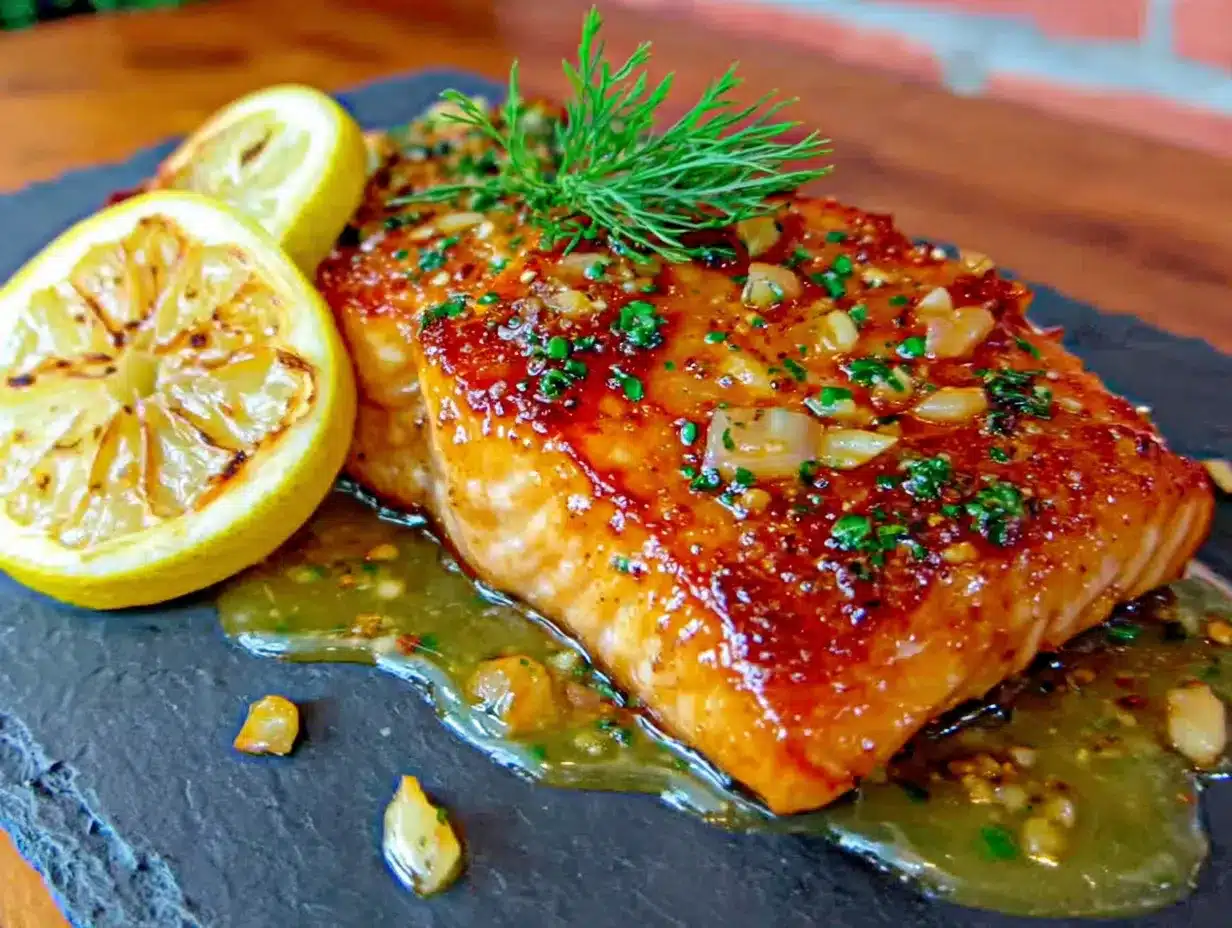
- 4 tablespoons unsalted butter (56g), melted. I recommend Kerrygold or another high-quality butter for the best flavor.
- 3 cloves garlic, minced. Fresh is best here—it makes a difference in the sauce.
- 1 large lemon, juiced (about 3 tablespoons) and zested. Look for lemons that feel heavy for their size—they have more juice.
- 1 tablespoon fresh parsley, chopped (plus more for garnish). Flat-leaf or curly both work.
- Pinch of red pepper flakes (optional, but I love the tiny kick it adds).
Let me talk about the salmon for a second. I’ve tried this with both fresh and frozen (thawed) fillets, and fresh really does give the best texture. If you’re using frozen, make sure it’s fully thawed in the refrigerator overnight and patted very dry with paper towels. Wet salmon leads to watery sauce, and nobody wants that.
For the butter, I’ve tested this with salted butter too, and it works fine—just reduce the added salt slightly. And if you’re dairy-free, a good plant-based butter works surprisingly well here. I’ve used Miyoko’s and it melted into a lovely sauce without separating.
The lemon is non-negotiable, honestly. You need both the juice and the zest. The zest adds that bright, aromatic quality that juice alone can’t provide. If you only have bottled lemon juice in a pinch, it’ll work, but fresh is so much better.
Equipment Needed
You don’t need a professional kitchen to make this recipe work. Here’s what I use, along with some alternatives if you’re working with what you’ve got.
- 9×13-inch baking dish (or any oven-safe dish that fits the fillets in a single layer). A ceramic dish works beautifully because it distributes heat evenly. I use my grandmother’s old Pyrex and it’s perfect.
- Small bowl for mixing the sauce. Nothing fancy—any bowl will do.
- Chef’s knife and cutting board for mincing garlic and chopping parsley. A sharp knife makes this whole process faster and safer.
- Microplane or zester for the lemon zest. If you don’t have one, a vegetable peeler can work—just mince the zest strips finely afterward.
- Citrus juicer or just your hands. I honestly use my hands most of the time because I’m too lazy to dig out the juicer.
- Instant-read thermometer (optional but highly recommended). This takes the guesswork out of doneness. I got mine for under fifteen dollars and it’s saved countless pieces of fish.
- Aluminum foil for tenting the dish if the top browns too quickly. I’ve only needed this once, but it’s good to have handy.
If you don’t have a baking dish, a rimmed baking sheet works too—just make sure the salmon fits in a single layer and the sauce doesn’t spill over the edges. And if you’re missing a microplane, honestly, just skip the zest. The dish will still be delicious.
Preparation Method
Let’s get cooking. I’ve broken this down into clear steps with all the little details I wish someone had told me the first time.
- Preheat your oven to 400°F (200°C). Give it a full 15-20 minutes to come to temperature. A properly preheated oven is key for even cooking.
- Prep the salmon. Remove the fillets from the refrigerator about 10 minutes before cooking. This takes the chill off and helps them cook more evenly. Pat each fillet dry with paper towels—really get in there. Moisture is the enemy of good browning. Season both sides generously with salt, pepper, garlic powder, and paprika. I use about 1/2 teaspoon of salt total for four fillets.
- Make the lemon butter sauce. In a small bowl, combine the melted butter, minced garlic, lemon juice, lemon zest, chopped parsley, and red pepper flakes if using. Whisk it together with a fork. The garlic should be fully submerged in the butter—this helps it infuse without burning.
- Arrange the fillets. Place the salmon fillets skin-side down (if using skin-on) in your baking dish. Leave a little space between each fillet so they cook evenly. If they’re touching, they’ll steam instead of bake.
- Pour the sauce over. Spoon the lemon butter mixture evenly over each fillet. Don’t just dump it all in the middle—make sure every piece gets some love. Use a spoon to spread any garlic pieces that settle at the bottom of the bowl.
- Bake the salmon. Place the dish in the preheated oven and bake for 12-15 minutes, depending on the thickness of your fillets. A good rule of thumb is about 4-5 minutes per 1/2 inch of thickness. The salmon is done when it flakes easily with a fork and the internal temperature reaches 145°F (63°C) at the thickest part.
- Optional broil for color. If you want a little golden-brown color on top, switch your oven to broil for the last 1-2 minutes. Watch it carefully—broilers are aggressive and can burn things in seconds. I only do this when I’m feeling fancy.
- Rest and serve. Remove the dish from the oven and let the salmon rest for 2-3 minutes. This allows the juices to redistribute. Spoon some of the pan sauce over each fillet before serving. Garnish with extra fresh parsley and lemon slices if you want to be extra.
A few things I’ve learned the hard way: Don’t open the oven door every two minutes to check. Each time you open it, the temperature drops and your cooking time gets thrown off. Also, if your fillets are different thicknesses (which happens with wild salmon), check the thinner ones first and remove them early if needed. You can always pop them back in for a minute if they’re underdone.
Cooking Tips & Techniques
After making this easy lemon butter baked salmon more times than I can count, I’ve picked up a few tricks that make a real difference. Let me share them so you don’t have to learn the hard way.
Room temperature salmon is your friend. I know it’s tempting to cook salmon straight from the fridge, but taking the chill off for 10 minutes makes a noticeable difference. Cold salmon cooks unevenly—the outside can be done while the center is still raw. Just don’t leave it out longer than 20 minutes for food safety reasons.
Don’t skip patting the salmon dry. This is probably the most common mistake I see. Wet salmon creates steam, and steam prevents that nice, flaky texture. I use three paper towels per fillet and really press them in. It seems excessive, but it works.
The thickness matters more than the weight. A thick fillet (1.5 inches) will need closer to 15 minutes, while a thin fillet (3/4 inch) might be done in 10. I once cooked a batch where one fillet was twice as thick as the others, and I ended up with one perfect piece and three overcooked ones. Now I always check thickness before I start and group similar-sized fillets together.
Use an instant-read thermometer. I resisted buying one for years because I thought I could just tell by looking. I was wrong. The difference between perfectly cooked salmon at 145°F and overcooked salmon at 150°F is about 30 seconds. A thermometer takes the guesswork out completely. Insert it into the thickest part of the fillet, angling from the side.
Let the sauce do its thing. When you pour the butter mixture over the salmon, don’t be tempted to add extra lemon juice or more butter. The proportions are designed to create just enough sauce to coat the fish without drowning it. Too much liquid and you’ll end up with boiled salmon instead of baked salmon.
One more thing—I once forgot to zest the lemon and just used juice. The sauce was good, but it lacked that bright, aromatic quality that zest brings. Don’t skip it. It’s a small step that makes a big difference.
Variations & Adaptations
One of the things I love about this recipe is how adaptable it is. Here are some variations I’ve tried and loved.
Dietary Adaptations
- Dairy-Free: Swap the butter for a high-quality plant-based butter or extra virgin olive oil. I’ve used both, and olive oil gives the sauce a slightly different but equally delicious flavor.
- Low-Carb/Keto: This recipe is already low-carb and keto-friendly. Serve it with roasted asparagus or a big green salad to keep it light.
- Gluten-Free: Naturally gluten-free! Just make sure any seasonings you add are certified gluten-free if that’s a concern.
Flavor Twists
- Herb Crust: Mix 2 tablespoons of fresh dill or thyme into the butter sauce before pouring. Dill and salmon are a classic pairing for a reason.
- Spicy Version: Add 1/2 teaspoon of cayenne pepper or a chopped serrano pepper to the butter sauce. My husband loves this version—I find it a bit much, but to each their own.
- Maple-Mustard: Whisk 1 tablespoon of Dijon mustard and 1 tablespoon of maple syrup into the butter. It adds a sweet-savory glaze that caramelizes beautifully in the oven.
- Garlic Lovers: Use 5-6 cloves of garlic instead of 3. I did this once when I had a cold and couldn’t taste anything anyway, and it turned out surprisingly great.
Cooking Method Variations
- Air Fryer: Preheat your air fryer to 375°F (190°C). Place the seasoned salmon in the basket and cook for 7-10 minutes. The sauce will pool at the bottom, so be careful when removing the basket.
- Grilled: Place the salmon on a piece of aluminum foil, pour the sauce over, and fold the foil into a packet. Grill over medium heat for 12-15 minutes. The smoky flavor is incredible.
I personally love the herb crust variation with fresh dill. It reminds me of the salmon my aunt used to make when I was a kid, though hers was always a little dry. This version brings back the good memories without the disappointment.
Serving & Storage Suggestions
This lemon butter baked salmon is versatile enough for weeknight dinners or special occasions. Here’s how I like to serve it and keep it fresh.
Serving Suggestions
Serve the salmon warm, right from the oven, with extra sauce spooned over the top. I love pairing it with simple sides that let the salmon shine. Roasted asparagus with a squeeze of lemon, a bed of fluffy rice or quinoa to soak up the sauce, or a crisp green salad with a light vinaigrette all work beautifully. For something heartier, try it with garlic mashed potatoes or crusty bread for dipping into that buttery sauce.
If you’re serving guests, arrange the fillets on a platter with lemon slices and fresh parsley. It looks impressive but took you almost no effort—our little secret.
Storage Instructions
- Refrigerator: Store leftover salmon in an airtight container for up to 3 days. The sauce will solidify slightly when cold, but it will reheat beautifully.
- Freezer: You can freeze cooked salmon for up to 2 months. Wrap each fillet individually in plastic wrap, then place in a freezer-safe bag. Thaw overnight in the refrigerator before reheating.
Reheating Tips
The best way to reheat salmon is in a low oven (300°F or 150°C) for about 10 minutes, covered with foil to prevent drying. You can also use the microwave in 30-second bursts, but be careful—it can overcook quickly. I actually enjoy leftover salmon cold, flaked over a salad with some of the solidified sauce crumbled on top. It’s like a fancy salmon salad without any extra work.
One thing I’ve noticed is that the flavors actually deepen overnight. The lemon mellows, the garlic infuses more deeply, and the butter creates this almost spreadable texture. Day-old salmon is genuinely delicious in a different way than fresh.
Nutritional Information & Benefits
This recipe is not just delicious—it’s also packed with nutrients that make you feel good about eating it.
| Nutrient | Per Serving (1 fillet with sauce) |
|---|---|
| Calories | 385 |
| Protein | 35g |
| Fat | 24g |
| Saturated Fat | 10g |
| Carbohydrates | 3g |
| Fiber | 0g |
| Sugar | 1g |
| Sodium | 420mg |
| Omega-3 Fatty Acids | 2.5g |
| Vitamin D | 15mcg (75% DV) |
Salmon is one of the best sources of omega-3 fatty acids, which support heart health and brain function. It’s also rich in high-quality protein, B vitamins, and selenium. The butter adds vitamin A and healthy fats that help your body absorb the fat-soluble vitamins in the salmon. And lemon provides a good dose of vitamin C, which supports immune health.
This dish fits well into a balanced diet. It’s naturally low in carbohydrates, high in protein, and provides healthy fats that keep you satisfied. If you’re watching your saturated fat intake, you can reduce the butter to 2 tablespoons and add a splash of olive oil instead.
Personally, I love that this recipe lets me enjoy something rich and satisfying without feeling like I’ve derailed my healthy eating. It’s the kind of meal that nourishes both body and soul.
Conclusion
This easy lemon butter baked salmon started as a kitchen disaster, but it’s become one of my most reliable recipes. It’s proof that sometimes the best things come from things going wrong—and that you don’t need a complicated technique or a long ingredient list to make something truly special.
What I love most about this recipe is how forgiving it is. Whether you’re a seasoned cook or someone who’s a little nervous about cooking fish, this method works. The oven does the heavy lifting, the butter and lemon do the flavor work, and you get to sit down to a dinner that feels like it came from a restaurant kitchen.
I’d love to hear how this turns out for you. Did you try one of the variations? Did you discover your own twist? Drop a comment below and let me know. And if you share a photo on Pinterest, tag me—I love seeing your creations. Happy cooking, friend. You’ve got this.
Frequently Asked Questions
Can I use frozen salmon for this recipe?
Yes, you can. Just make sure the salmon is fully thawed in the refrigerator overnight. Pat it very dry with paper towels before seasoning, as frozen salmon tends to release more water during cooking.
How do I know when the salmon is fully cooked?
The easiest way is to use an instant-read thermometer. The salmon is done when it reaches 145°F (63°C) at the thickest part. You can also check by gently pressing the top—it should flake easily with a fork.
Can I make this recipe with other types of fish?
Absolutely. This lemon butter sauce works beautifully with other firm fish like cod, halibut, or sea bass. Just adjust the cooking time based on the thickness of the fillets. Thinner fish like tilapia will cook much faster.
What can I substitute for the butter to make it dairy-free?
A good quality plant-based butter works well, or you can use extra virgin olive oil. Olive oil gives the sauce a slightly different flavor but is still delicious. Just use the same amount called for in the recipe.
How can I prevent the salmon from sticking to the baking dish?
Make sure you use enough butter or oil in the dish. You can also line the dish with parchment paper for easy cleanup. If you’re using a non-stick baking dish, you shouldn’t have any issues at all.
Pin This Recipe!
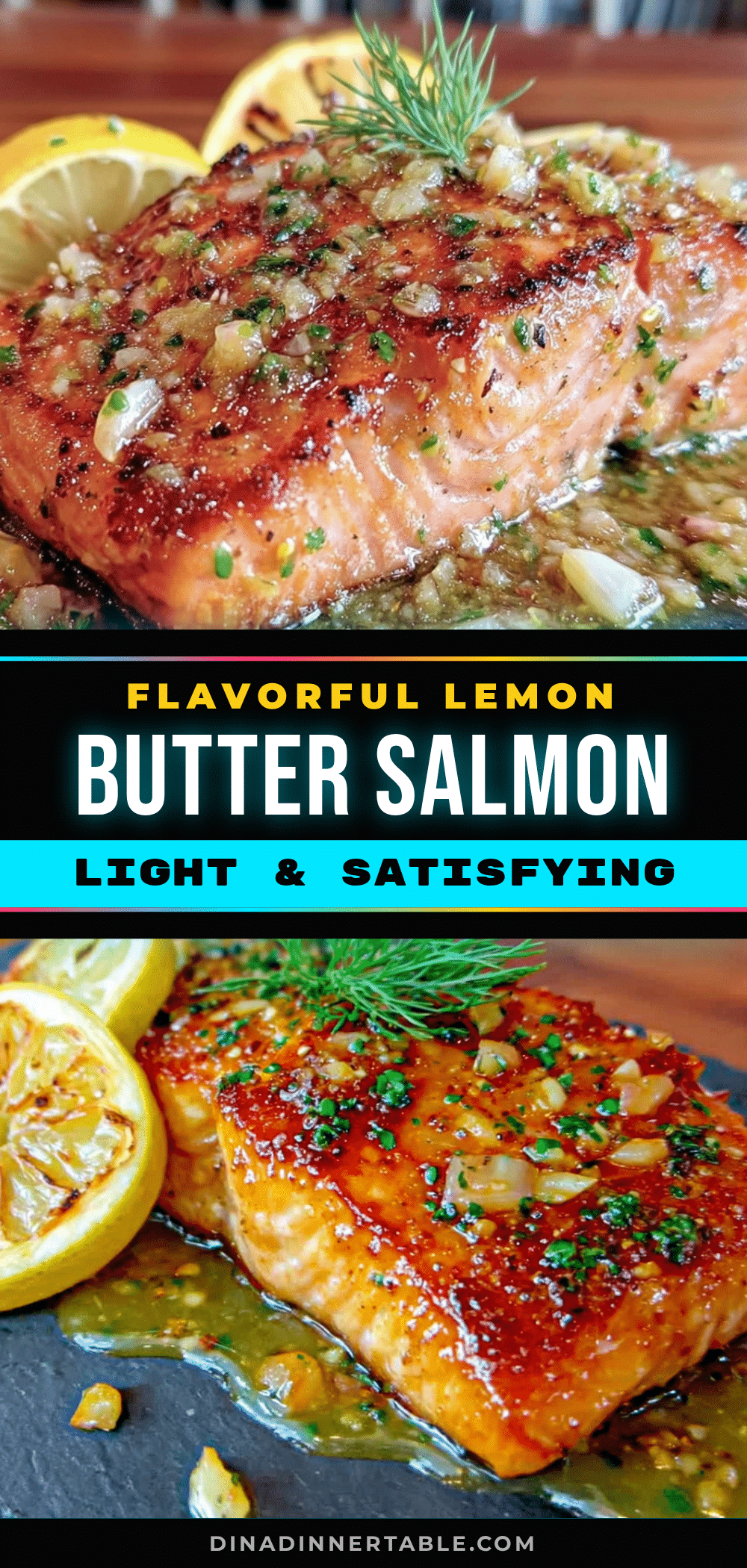
Easy Lemon Butter Baked Salmon – Perfect Light Dinner
This easy lemon butter baked salmon is a quick, delicious dinner that comes together in under 30 minutes. The salmon bakes in a silky lemon butter sauce, resulting in tender, flaky fish that’s perfect for a light yet satisfying meal.
- Prep Time: 10 minutes
- Cook Time: 15 minutes
- Total Time: 25 minutes
- Yield: 4 servings 1x
- Category: Main Course
- Cuisine: American
Ingredients
- 4 salmon fillets (6 oz each, about 170g), skin on or off
- Salt and black pepper, to taste
- 1/2 teaspoon garlic powder
- 1/2 teaspoon paprika (smoked or sweet)
- 4 tablespoons unsalted butter (56g), melted
- 3 cloves garlic, minced
- 1 large lemon, juiced (about 3 tablespoons) and zested
- 1 tablespoon fresh parsley, chopped (plus more for garnish)
- Pinch of red pepper flakes (optional)
Instructions
- Preheat your oven to 400°F (200°C). Give it a full 15-20 minutes to come to temperature.
- Remove the salmon fillets from the refrigerator about 10 minutes before cooking. Pat each fillet dry with paper towels. Season both sides generously with salt, pepper, garlic powder, and paprika.
- In a small bowl, combine the melted butter, minced garlic, lemon juice, lemon zest, chopped parsley, and red pepper flakes if using. Whisk together with a fork.
- Place the salmon fillets skin-side down (if using skin-on) in a 9×13-inch baking dish, leaving a little space between each fillet.
- Spoon the lemon butter mixture evenly over each fillet.
- Bake for 12-15 minutes, depending on thickness, until the salmon flakes easily with a fork and internal temperature reaches 145°F (63°C) at the thickest part.
- Optional: For golden-brown color, switch the oven to broil for the last 1-2 minutes, watching carefully.
- Remove from the oven and let rest for 2-3 minutes. Spoon pan sauce over each fillet before serving. Garnish with extra fresh parsley and lemon slices if desired.
Notes
For best results, use fresh salmon and pat it very dry. Let the salmon sit at room temperature for 10 minutes before cooking. Don’t skip the lemon zest—it adds brightness. If fillets vary in thickness, check thinner ones early and remove if needed. Leftovers can be stored in the refrigerator for up to 3 days or frozen for up to 2 months.
Nutrition
- Serving Size: 1 fillet with sauce
- Calories: 385
- Sugar: 1
- Sodium: 420
- Fat: 24
- Saturated Fat: 10
- Carbohydrates: 3
- Protein: 35
Keywords: lemon butter salmon, baked salmon, easy salmon recipe, quick dinner, healthy salmon, salmon with lemon butter sauce