The Friendsgiving potluck was in four hours and I’d completely forgotten. Everyone else would be bringing their signature dishes—Sarah with her legendary lasagna that takes two days to assemble, Mike with that smoked brisket he babysits for sixteen hours, and Jen with her grandmother’s perfect apple pie. I had a butternut squash sitting on my counter, a half-empty bottle of maple syrup, and a pomegranate I’d bought on a whim because it looked pretty. Honestly, I almost texted saying I was “sick.” But I’d already RSVP’d yes, and let’s face it, I wanted to go.
So I did what any reasonable person under pressure would do. I roasted the squash with maple syrup, threw in some pomegranate seeds, and prayed it looked intentional rather than desperate. I walked in with this dish, feeling like I’d shown up to a black-tie event in jeans. And then something weird happened. People went quiet for a second, then the questions started. “Wait, what’s in this?” “Can I get the recipe?” “How long did this take you?” I mean, I was genuinely confused. It was just roasted squash. But the combination—sweet, caramelized edges, those little pops of tart pomegranate—it hit different. By the end of the night, the dish was empty, and Sarah’s lasagna still had leftovers. That’s when I knew I’d accidentally stumbled onto something worth keeping.
Maybe you’ve been there, showing up with the simple dish while everyone else brings the showstoppers. But here’s the thing: this easy maple roasted butternut squash with pomegranate seeds doesn’t need to compete. It just works. It’s the kind of recipe that makes you look like you planned it all along, even when you absolutely didn’t. And that’s why I keep making it, year after year—because sometimes the best recipes come from a little bit of panic and a whole lot of luck.
Why You’ll Love This Recipe
Let me tell you why this dish has earned a permanent spot in my weeknight rotation and holiday table. I’ve tested this recipe more times than I can count, tweaking the temperature, the cut of the squash, the amount of maple syrup—all so you don’t have to. Here’s what makes it special:
- Quick & Easy: From start to table in about 40 minutes, with only 10 minutes of active prep. Perfect for those nights when you’re exhausted but still want something that feels special.
- Simple Ingredients: You likely have maple syrup and olive oil in your pantry right now. The squash and pomegranate are the only things you might need to pick up—and they’re available at almost any grocery store.
- Perfect for Weeknights and Holidays: This dish straddles both worlds beautifully. It’s simple enough for a Tuesday dinner side but elegant enough for Thanksgiving or Christmas.
- Crowd-Pleaser: I’ve served this to picky kids, skeptical in-laws, and vegan friends—everyone loves it. The sweetness wins over even the most stubborn vegetable avoiders.
- Unbelievably Delicious: The caramelized edges from the maple syrup, the creamy interior of the roasted squash, and the burst of tartness from the pomegranate seeds create a flavor combination that’s genuinely addictive.
What makes this different from other roasted squash recipes? It’s the balance. Most recipes either go too sweet or too savory. This one hits that perfect middle ground where the maple syrup enhances the natural sweetness of the squash without overwhelming it, and the pomegranate seeds cut through with acidity. Plus, the texture contrast—soft, caramelized squash with juicy, crunchy seeds—is next level. It’s comfort food that feels a little fancy, without any of the stress.
What Ingredients You Will Need
This recipe uses simple, wholesome ingredients that work together to create something greater than the sum of their parts. Most of these are pantry staples or easy to find at any grocery store.
For the Roasted Squash
- 1 medium butternut squash (about 2-2.5 pounds), peeled, seeded, and cut into 1-inch cubes (look for a squash with a long neck—it’s easier to work with and gives you more uniform pieces)
- 3 tablespoons olive oil (I prefer extra virgin for flavor, but regular works fine too)
- 3 tablespoons pure maple syrup (not pancake syrup—use the real stuff for best caramelization; I like Grade A Dark Amber for deeper flavor)
- 1 teaspoon salt (kosher salt is best, but table salt works—just use slightly less)
- 1/2 teaspoon black pepper, freshly ground
- 1/2 teaspoon cinnamon (adds warmth without overpowering)
- 1/4 teaspoon nutmeg, freshly grated if possible (it makes a surprising difference)
For the Topping
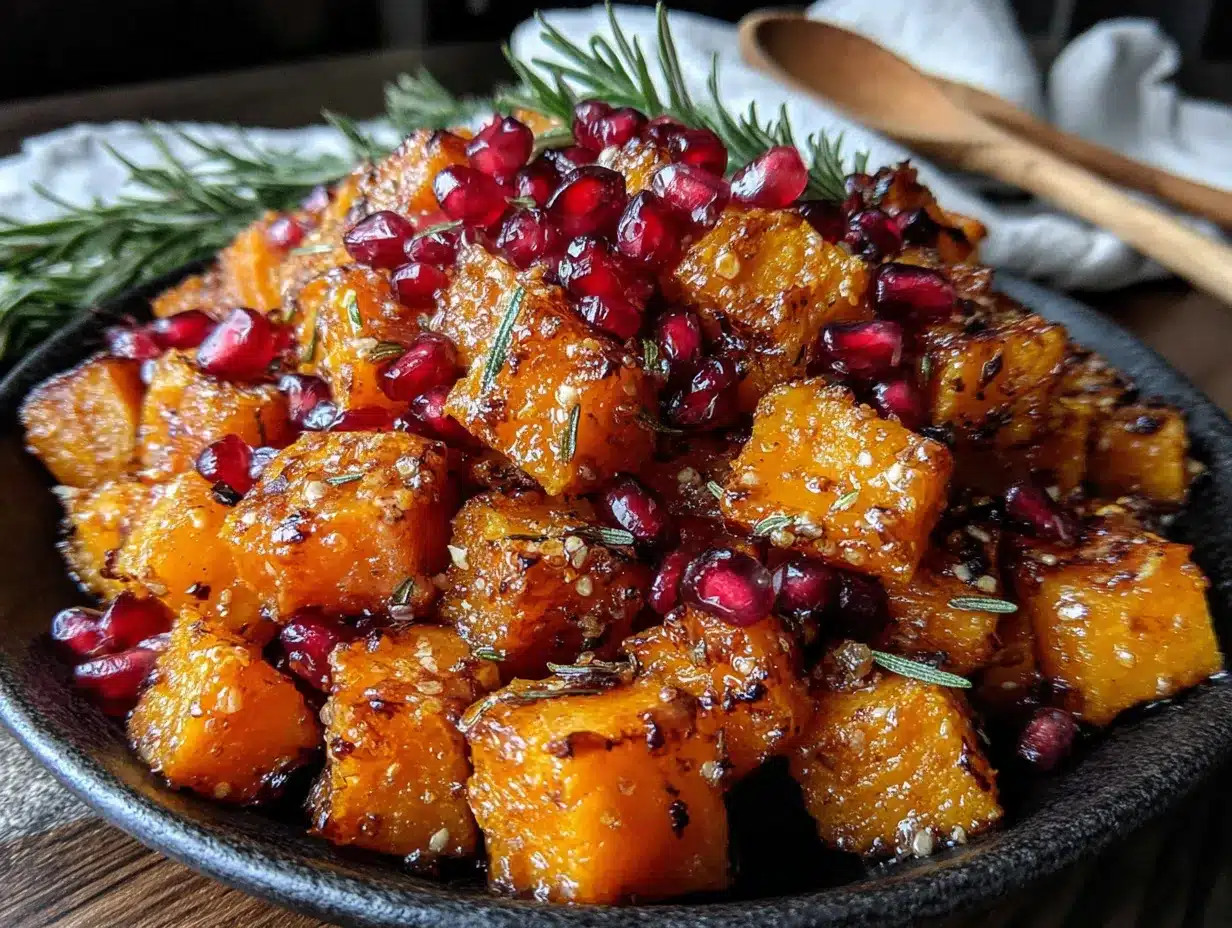
- 1/2 cup pomegranate seeds (from about 1 large pomegranate, or use pre-seeded containers from the produce section)
- 2 tablespoons fresh parsley, chopped (optional, but adds a nice fresh contrast)
- Optional: 1/4 cup crumbled feta cheese (adds saltiness and creaminess—omit for vegan version)
- Optional: 1/4 cup toasted pecans or walnuts (adds crunch and nuttiness)
Ingredient Selection Tips: When choosing a butternut squash, look for one that feels heavy for its size with firm, unblemished skin. Avoid squashes with soft spots or cracks. For the pomegranate, I recommend buying the pre-seeded containers if you’re short on time—they save about 10 minutes of messy work. If you’re seeding a whole pomegranate, do it in a bowl of water to prevent staining your clothes and countertops. The seeds sink, and the pith floats—easy cleanup!
Substitution Guidance: No maple syrup? Use honey or agave nectar instead, though the flavor will be slightly different. For a sugar-free option, try monk fruit sweetener mixed with a little water. Butternut squash can be swapped with acorn squash, delicata squash, or even sweet potatoes—just adjust cooking time slightly. Pomegranate seeds can be replaced with dried cranberries or fresh cherries when pomegranates aren’t in season.
Equipment Needed
You don’t need a fancy kitchen to make this recipe work. Here’s what you’ll actually use:
- Large baking sheet (rimmed, preferably 13×18 inches—this prevents overcrowding, which is crucial for caramelization)
- Chef’s knife (a sharp one makes cutting squash much safer and easier—I learned this the hard way after a close call with a dull knife)
- Vegetable peeler (a Y-peeler works best for butternut squash’s tough skin)
- Large mixing bowl (for tossing the squash with oil and seasonings)
- Parchment paper or silicone baking mat (optional but highly recommended for easy cleanup—trust me on this)
- Serving platter or bowl (something wide and shallow shows off the colors beautifully)
If you don’t have a silicone baking mat, parchment paper is your next best friend. Aluminum foil works too, but the squash might stick slightly more. I’ve used both, and parchment consistently gives me better results with less cleanup. For the knife, a 8-inch chef’s knife is perfect. If you’re using a smaller knife, just take your time and cut carefully—squash is dense and unforgiving.
Preparation Method
Follow these steps carefully, and you’ll have perfectly caramelized squash every time. I’ve included all the little details I wish someone had told me when I first started making this.
- Preheat your oven to 400°F (200°C). This temperature is the sweet spot—hot enough to caramelize the maple syrup without burning it. While the oven heats, line your baking sheet with parchment paper for easy cleanup.
- Prepare the butternut squash. First, cut off both ends of the squash with your chef’s knife—about 1/2 inch from each end. This gives you stable flat surfaces. Stand the squash upright on one cut end and carefully slice down the middle from top to bottom. Scoop out the seeds and stringy bits with a spoon. (Save the seeds! You can roast them just like pumpkin seeds.)
- Peel the squash. Use your vegetable peeler to remove the skin. Butternut squash skin is tough, so be firm and go over any spots you miss. Pro tip: if you’re struggling, microwave the whole squash for 2 minutes first—it softens the skin just enough to make peeling easier.
- Cut the squash into 1-inch cubes. Aim for uniform pieces so they cook evenly. If some pieces are smaller, they’ll cook faster and might burn—so take your time here. I usually cut the neck into rounds first, then cube those. The bulbous bottom section is trickier—just do your best to keep pieces similar in size.
- Toss with seasonings. In your large mixing bowl, combine the cubed squash, olive oil, maple syrup, salt, pepper, cinnamon, and nutmeg. Use your hands or a spatula to toss everything until every piece is evenly coated. Don’t skip this step—coating in a bowl rather than on the baking sheet ensures more even distribution.
- Arrange on the baking sheet. Spread the squash in a single layer with space between each piece. This is crucial—crowded squash steams instead of roasting, and you won’t get those beautiful caramelized edges. If your baking sheet is too small, use two sheets or roast in batches.
- Roast for 25-30 minutes. Place the baking sheet on the middle rack. Halfway through (at about 12-15 minutes), flip each piece with a spatula. This ensures even browning. The squash is done when it’s tender all the way through (a fork should slide in easily) and the edges are golden brown and slightly caramelized.
- Let cool slightly. Remove from the oven and let the squash rest on the baking sheet for 5 minutes. This allows the caramelization to set and makes the pieces easier to handle without falling apart.
- Transfer to serving platter. Gently move the roasted squash to your serving dish. Try not to break the pieces—those caramelized edges are the best part.
- Top with pomegranate seeds. Sprinkle the pomegranate seeds evenly over the warm squash. The heat will slightly warm the seeds, making them release their juices just a bit—it’s a lovely effect. Add chopped parsley and any optional toppings like feta or nuts now.
- Serve immediately or at room temperature. This dish is delicious warm, but it’s also surprisingly good at room temperature—perfect for potlucks or make-ahead meals.
Sensory Cues: When you flip the squash at the halfway point, look for golden-brown spots on the undersides—that’s a sign you’re on track. The kitchen should smell warm and slightly sweet, with hints of cinnamon and maple. When you pierce a piece with a fork, it should offer slight resistance but give way easily—think perfectly cooked sweet potato.
Common Issue Alert: If your squash is browning too quickly but isn’t tender yet, cover the baking sheet loosely with foil for the remaining cooking time. This prevents burning while allowing the inside to cook through. I’ve had to do this when my oven runs hot, and it saves the dish every time.
Cooking Tips & Techniques
After making this recipe more times than I can count, I’ve collected a few tricks that make a real difference. Here’s what I’ve learned—sometimes the hard way.
The biggest mistake I’ve made: Using too much maple syrup. I know, it sounds counterintuitive—more sweetness must be better, right? Wrong. Too much syrup creates a sticky mess that burns before the squash is fully cooked. Stick to the 3 tablespoons. It’s enough to caramelize beautifully without causing problems.
Don’t skip the flipping step. I know it’s tempting to just throw the squash in the oven and walk away, but that halfway flip is non-negotiable. The bottom of each piece sits in the maple syrup mixture and caramelizes differently from the top. Flipping ensures both sides get that gorgeous golden color. Set a timer—I’ve burned more than one batch because I got distracted.
Use room temperature ingredients. If your maple syrup has been sitting in the fridge, it’ll be thick and hard to mix. Let it come to room temperature for about 15 minutes before using. Same goes for the olive oil—cold oil doesn’t coat the squash as evenly.
Multitasking strategy: While the squash roasts, seed your pomegranate and chop your parsley. That way, everything’s ready to go when the timer goes off. If you’re making this for a holiday meal, roast the squash while your turkey or ham rests—it frees up oven space and comes together in the final stretch.
For consistently perfect results: Cut your squash into even cubes. I know it’s tedious, but it’s the single most important factor for even cooking. Spend the extra 2 minutes making sure pieces are similar in size. Your future self will thank you when every bite is perfectly tender rather than half-raw, half-mushy.
Variations & Adaptations
This recipe is wonderfully flexible. Here are some variations I’ve tried and loved—each one brings something different to the table.
Savory Herb Version: Skip the cinnamon and nutmeg, and add 1 teaspoon dried rosemary and 1 teaspoon dried thyme to the maple syrup mixture. Top with fresh sage leaves during the last 5 minutes of roasting. This version pairs beautifully with roasted chicken or pork—I made it for a Sunday dinner and my brother-in-law asked for the recipe immediately.
Spicy Maple Version: Add 1/4 teaspoon cayenne pepper or 1/2 teaspoon red pepper flakes to the seasoning mix. The heat balances the sweetness perfectly. I tried this on a whim one night when I wanted something with a kick, and it’s become my go-to for fall gatherings where people like a little heat.
Vegan-Friendly: This recipe is naturally vegan as written! Just skip the feta cheese topping or use a vegan feta alternative. The maple syrup provides all the sweetness you need without any animal products.
Gluten-Free: This recipe is naturally gluten-free—no modifications needed. Always check your spice blends if you’re serving someone with celiac disease, as some brands add wheat flour as an anti-caking agent.
Low-Sugar Option: Reduce the maple syrup to 1 tablespoon and add 1 tablespoon of water mixed with a pinch of stevia or monk fruit sweetener. The caramelization won’t be as intense, but you’ll still get delicious roasted squash with less sugar.
Air Fryer Adaptation: Cook at 375°F (190°C) for 12-15 minutes, shaking the basket halfway through. You might need to work in batches depending on your air fryer size. The results are actually crispier than oven-roasted—I was pleasantly surprised the first time I tried it.
Serving & Storage Suggestions
This dish is versatile enough to fit into almost any meal. Here’s how I like to serve and store it.
Serving Temperature: Serve warm or at room temperature. It’s delicious straight from the oven, but I actually prefer it after it’s rested for about 10 minutes—the flavors meld together beautifully. For holiday buffets, it holds up well at room temperature for up to 2 hours.
Presentation Tips: Use a wide, shallow white platter to show off the vibrant orange and red colors. Sprinkle the pomegranate seeds just before serving so they stay bright and juicy. If you’re adding feta, crumble it coarsely rather than finely—it looks more rustic and intentional.
Complementary Dishes: This squash pairs beautifully with roasted chicken, grilled pork chops, or a hearty grain bowl. For a complete meal, serve alongside quinoa or farro tossed with a simple lemon vinaigrette. It’s also fantastic as part of a Thanksgiving spread—it adds color and brightness to the table.
Beverage Pairings: A dry Riesling or a light Pinot Noir complements the sweetness of the maple without overwhelming the dish. For non-alcoholic options, sparkling water with a splash of cranberry juice works wonderfully.
Storage Instructions: Store leftovers in an airtight container in the refrigerator for up to 4 days. The pomegranate seeds will soften slightly over time, but the flavor remains excellent. I’ve eaten this cold straight from the fridge as a snack—don’t judge until you try it.
Reheating Methods: For best results, reheat in a 350°F (175°C) oven for 5-7 minutes, or until warmed through. The microwave works in a pinch (about 1 minute), but the squash will be softer. If you’re meal-prepping, reheat in an air fryer at 350°F for 3-4 minutes—it restores some of the original texture.
Freezer Instructions: You can freeze the roasted squash (without pomegranate seeds) for up to 3 months. Spread the cooled squash on a baking sheet and freeze until solid, then transfer to a freezer bag. Thaw in the refrigerator overnight and reheat as directed. Add fresh pomegranate seeds after reheating for best results.
Flavor Development: Interestingly, this dish tastes even better the next day. The maple flavor penetrates the squash more deeply overnight, and the spices have time to meld. If you’re making this for a holiday, consider preparing it a day ahead—just add the pomegranate seeds and fresh herbs before serving.
Nutritional Information & Benefits
This recipe isn’t just delicious—it’s packed with nutrients that make you feel good about eating it. Here’s the breakdown for one serving (about 1 cup, without optional toppings):
| Nutrient | Amount per Serving |
|---|---|
| Calories | 175 |
| Total Fat | 8g |
| Saturated Fat | 1g |
| Carbohydrates | 28g |
| Fiber | 5g |
| Sugar | 14g (naturally occurring) |
| Protein | 2g |
| Vitamin A | 350% DV |
| Vitamin C | 45% DV |
| Potassium | 650mg |
Health Benefits: Butternut squash is loaded with vitamin A (from beta-carotene), which supports eye health and immune function. The fiber content aids digestion and helps you feel full longer. Pomegranate seeds are rich in antioxidants called punicalagins, which have anti-inflammatory properties. The olive oil provides heart-healthy monounsaturated fats. Even the maple syrup offers small amounts of zinc and manganese—though let’s be honest, we’re eating it for the taste!
Dietary Considerations: This recipe is naturally vegetarian, vegan, gluten-free, and dairy-free (if you skip the feta). It’s also relatively low in calories for a side dish with this much flavor. The main allergen concern is the optional nuts—just leave them out if needed.
I personally love that this dish feels indulgent while being genuinely good for you. It’s the kind of recipe where you can have seconds without any guilt—and honestly, that’s exactly how food should feel.
Frequently Asked Questions
Can I use frozen butternut squash for this recipe?
You can, but I don’t recommend it. Frozen squash releases a lot of water as it thaws, which prevents caramelization. You’ll end up with steamed, watery squash instead of those beautiful golden edges. If you’re in a pinch, thaw the frozen squash completely and pat it very dry with paper towels before roasting. Even then, the results won’t be as good as fresh.
How do I seed a pomegranate without making a mess?
Great question! Here’s my foolproof method: Cut the pomegranate in half horizontally. Hold one half cut-side down over a large bowl of water. Hit the back of the pomegranate firmly with a wooden spoon—the seeds will fall into the water while the pith floats. Skim off the pith, drain the seeds, and you’re done. No stains, no mess, and it takes about 2 minutes.
Can I make this recipe ahead of time?
Absolutely! You can roast the squash up to 2 days ahead and store it in the refrigerator. When you’re ready to serve, reheat it in a 350°F oven for 5-7 minutes, then add the pomegranate seeds and fresh toppings. I actually think the flavors are even better the next day. Just don’t add the pomegranate seeds until right before serving, or they’ll get soft and lose their pop.
Why is my roasted squash mushy instead of caramelized?
This usually happens for one of three reasons: overcrowding the baking sheet, not using enough heat, or cutting the pieces too small. Make sure your squash pieces are in a single layer with space between them. Use a 400°F oven—anything lower and the squash will steam before it caramelizes. And aim for 1-inch cubes—smaller pieces cook too quickly and turn to mush before they brown.
Can I double this recipe for a crowd?
Yes, but you’ll need to use two baking sheets. Don’t try to cram everything onto one sheet—it won’t work. Place one sheet on the upper rack and one on the lower rack, and swap their positions halfway through cooking. You might need to add 5-10 minutes to the total cooking time since the oven will be fuller. Keep an eye on both sheets and rotate as needed.
Conclusion
This easy maple roasted butternut squash with pomegranate seeds has become one of those recipes I turn to again and again—not because it’s fancy or complicated, but because it’s genuinely, unpretentiously good. It started as a panic-induced potluck dish and turned into something I actually look forward to making. The caramelized edges, the burst of tart pomegranate, the warmth of cinnamon and nutmeg—it’s comfort food that feels a little special without any of the stress.
I hope you give this recipe a try, whether it’s for a busy weeknight dinner or a holiday gathering. And here’s my favorite part: you can make it your own. Add feta if you want creaminess. Toss in pecans for crunch. Skip the cinnamon and go savory with rosemary. The base recipe is forgiving and flexible, just like the best weeknight cooking should be.
If you make this dish, I’d love to hear about it. Drop a comment below and let me know how it turned out—did you add your own twist? Did it save you on a busy night? Did someone at your table ask for the recipe? That’s my favorite part of sharing food, honestly. The way a simple dish can bring people together and create those little moments of connection. Happy cooking, friends!
Pin This Recipe!
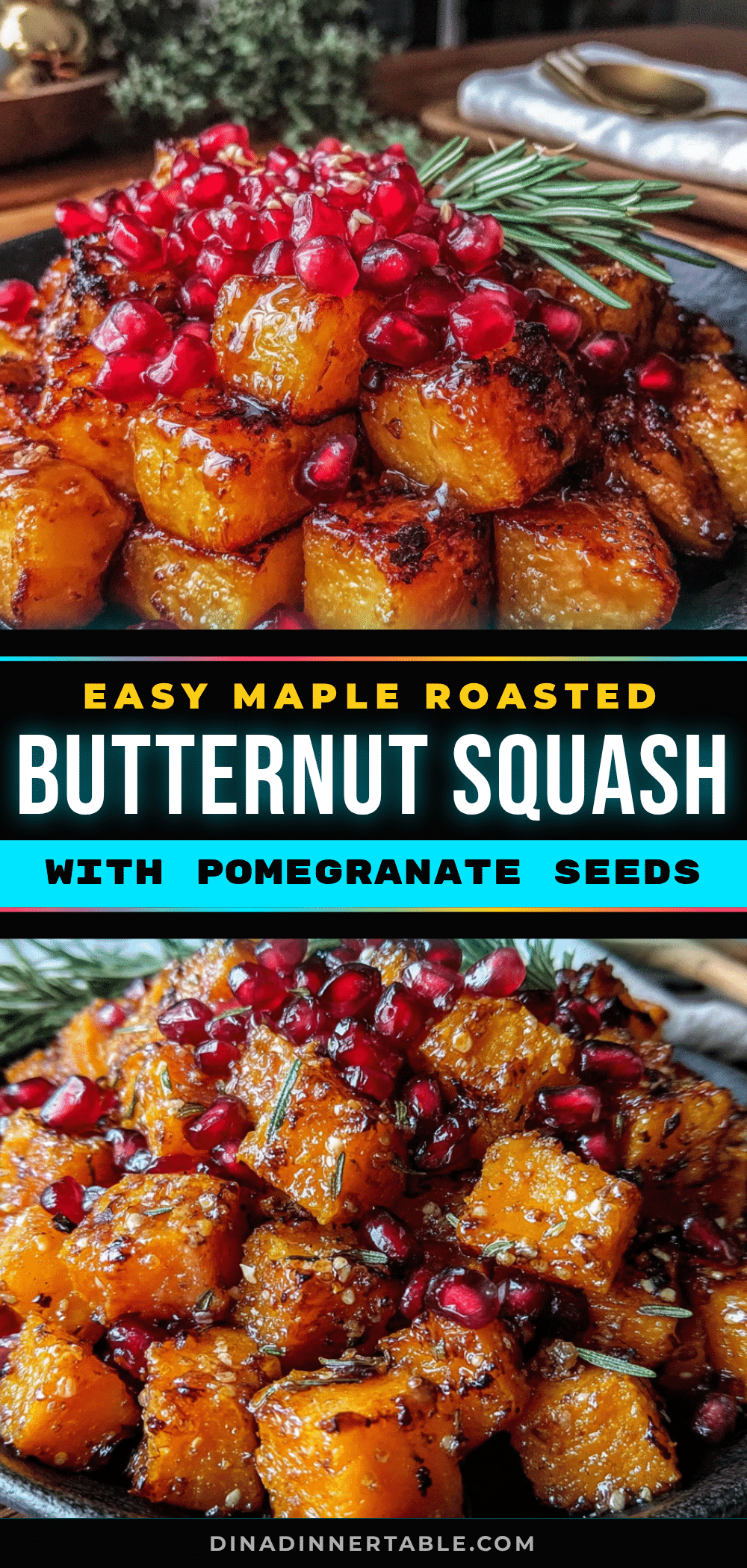
Easy Maple Roasted Butternut Squash Recipe with Pomegranate
This easy maple roasted butternut squash with pomegranate seeds is a perfect side dish for weeknights or holidays. Caramelized edges, creamy squash, and tart pomegranate seeds create an addictive flavor combination that’s simple yet elegant.
- Prep Time: 10 minutes
- Cook Time: 30 minutes
- Total Time: 40 minutes
- Yield: 4 servings 1x
- Category: Side Dish
- Cuisine: American
Ingredients
- 1 medium butternut squash (about 2–2.5 pounds), peeled, seeded, and cut into 1-inch cubes
- 3 tablespoons olive oil
- 3 tablespoons pure maple syrup
- 1 teaspoon kosher salt
- 1/2 teaspoon freshly ground black pepper
- 1/2 teaspoon cinnamon
- 1/4 teaspoon freshly grated nutmeg
- 1/2 cup pomegranate seeds
- 2 tablespoons fresh parsley, chopped (optional)
- 1/4 cup crumbled feta cheese (optional)
- 1/4 cup toasted pecans or walnuts (optional)
Instructions
- Preheat your oven to 400°F (200°C). Line a baking sheet with parchment paper.
- Cut off both ends of the butternut squash, stand it upright, and slice down the middle. Scoop out seeds and stringy bits.
- Peel the squash using a vegetable peeler. If struggling, microwave the whole squash for 2 minutes first to soften the skin.
- Cut the squash into 1-inch cubes, aiming for uniform pieces for even cooking.
- In a large mixing bowl, combine cubed squash, olive oil, maple syrup, salt, pepper, cinnamon, and nutmeg. Toss until evenly coated.
- Spread the squash in a single layer on the prepared baking sheet, leaving space between pieces to avoid steaming.
- Roast for 25-30 minutes, flipping each piece halfway through (at 12-15 minutes), until tender and edges are golden brown and caramelized.
- Remove from oven and let rest on the baking sheet for 5 minutes to set the caramelization.
- Transfer to a serving platter, being careful not to break the pieces.
- Sprinkle pomegranate seeds evenly over the warm squash. Add chopped parsley and any optional toppings like feta or nuts.
- Serve immediately or at room temperature.
Notes
For best caramelization, avoid overcrowding the baking sheet. If squash browns too quickly but isn’t tender, cover loosely with foil. This dish tastes even better the next day as flavors meld. Add pomegranate seeds just before serving to keep them bright and juicy. For a savory version, skip cinnamon and nutmeg and add rosemary and thyme.
Nutrition
- Serving Size: 1 cup (without optio
- Calories: 175
- Sugar: 14
- Sodium: 600
- Fat: 8
- Saturated Fat: 1
- Carbohydrates: 28
- Fiber: 5
- Protein: 2
Keywords: roasted butternut squash, maple roasted squash, pomegranate squash, easy side dish, holiday side dish, vegetarian, gluten-free, vegan