This was supposed to be a simple roast chicken night. I had grand plans for a quick pan sauce and a light salad. But then, as I was rummaging through the freezer, I realized I’d grabbed a prime rib instead of the chicken I’d meant to thaw. The oven was already warming up, the kitchen was a little chaotic (because, honestly, I was halfway distracted by a phone call), and I had no clear game plan for this big, beautiful cut of beef sitting on my counter. I figured, “Well, let’s just make it work.”
I decided to try something I’d heard about but never dared attempt before — the reverse-sear method. The oven was set low, the roast went in, and I watched the clock nervously. The kitchen smelled like a steakhouse by the time I pulled it out, but the real test was still to come: would the crust turn out crisp and flavorful without overcooking the inside?
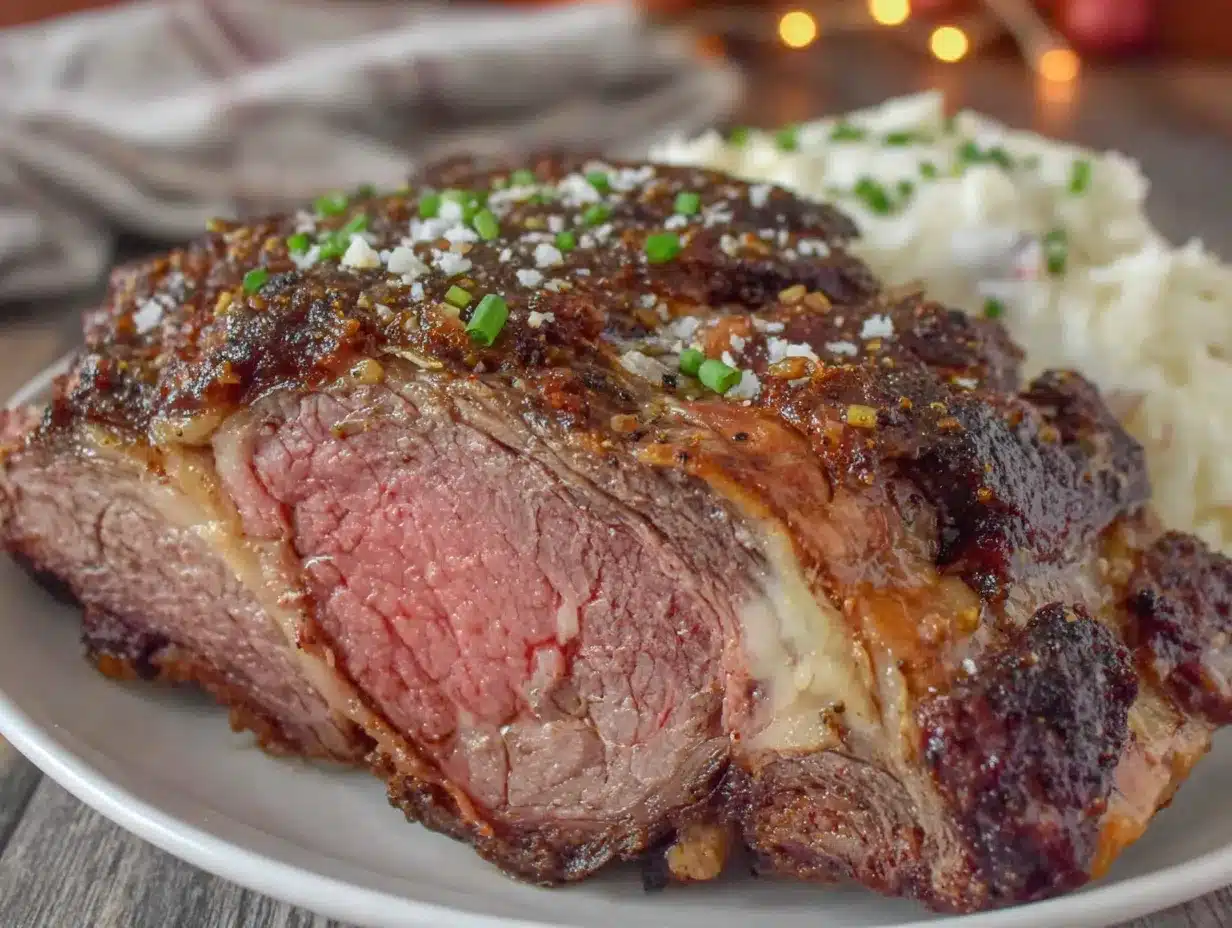
Let me tell you, that crust was unforgettable. The meat was tender, juicy, and the crust so satisfyingly crisp that I couldn’t believe this was the same roast that had thrown me off my original dinner plan. Maybe you’ve been there — a recipe derailed by a small slip but ending up better than you imagined. That night, the Perfect Reverse-Sear Prime Rib Roast with Crispy Crust made me stop panicking about kitchen mishaps and start enjoying the unexpected.
Honestly, this recipe stuck with me because it’s straightforward, indulgent, and just right for those moments when you want to impress without stress. If you love prime rib that’s juicy inside with that golden, crunchy exterior — and you want a method that’s foolproof — you’re going to want to stick around.
Why You’ll Love This Recipe
I’ve tested many prime rib recipes over the years, and this reverse-sear technique tops the list for consistent success. It’s not just a chef’s trick; it’s a game-changer for home cooks who want that perfect crust without sacrificing the tender interior. Here’s why this recipe has earned a permanent spot in my kitchen arsenal:
- Quick & Easy: The hands-on time is minimal — mostly waiting while the oven does the work. It’s perfect for busy weeknights or when you want a no-fuss centerpiece.
- Simple Ingredients: No need for fancy marinades or complicated spice blends. Basic seasonings and quality beef are all you need.
- Perfect for Special Occasions and Everyday Indulgence: Whether it’s a weekend dinner or a holiday meal, this roast shines without the stress.
- Crowd-Pleaser: Friends, family, and even picky eaters love it — the crust’s crunch and juicy center win them over every time.
- Unbelievably Delicious: The slow, low oven time gently cooks the meat, while the final sear locks in juices and creates that crave-worthy crust.
This recipe isn’t just another roast — it’s the version I keep returning to because it balances indulgence with a mindful approach. It’s like comfort food with a little extra finesse, and honestly, I think that’s what makes it so satisfying.
What Ingredients You Will Need
This recipe uses simple, wholesome ingredients to deliver bold flavor and satisfying texture without the fuss. Most are pantry staples, and the prime rib itself is the star. Here’s what you’ll need:
- Prime rib roast: About 4-6 lbs (1.8-2.7 kg), bone-in for better flavor and moisture retention. I prefer USDA Choice grade for the best balance of marbling and price.
- Coarse kosher salt: For seasoning and drawing out moisture to get that crispy crust.
- Freshly ground black pepper: Adds essential bite and complements the beef’s richness.
- Garlic powder: A subtle layer of savory depth without overpowering.
- Fresh rosemary or thyme (optional): If you want a herbal note, I love adding a few sprigs during the searing process.
- Olive oil or avocado oil: For searing — I recommend avocado oil for its high smoke point.
- Butter (optional): For finishing the roast in the pan to add richness and a beautiful sheen.
If you want to experiment, swapping garlic powder for smoked paprika adds a subtle smoky character. For a gluten-free diet, all ingredients here are naturally compliant, which is a nice bonus.
Equipment Needed
- Oven: Reliable and able to maintain a low temperature around 225°F (107°C).
- Cast iron skillet or heavy-bottomed pan: Essential for getting that perfect sear and crispy crust. I use my seasoned Lodge cast iron pan — it heats evenly and retains heat brilliantly.
- Meat thermometer: A must-have for monitoring internal temperature accurately. I recommend a digital instant-read thermometer like ThermoWorks for precision.
- Roasting rack: To elevate the roast in the pan or baking sheet, allowing air circulation and even cooking.
- Kitchen tongs: Helpful for flipping the roast safely during searing.
If you don’t have a cast iron skillet, a heavy stainless steel pan works as well, just watch the heat carefully to avoid sticking. For budget-friendly options, simple meat thermometers are widely available and well worth the investment — trust me, it makes all the difference.
Preparation Method
- Prep the roast: Remove the prime rib from the fridge at least 1 hour before cooking to let it come to room temperature. This step helps the meat cook evenly. Pat it dry thoroughly with paper towels — moisture is the enemy of a crispy crust.
- Season generously: Rub the entire roast with coarse kosher salt, freshly ground black pepper, and garlic powder. Don’t be shy here; the seasoning forms the foundation of that irresistible crust. Let it rest while your oven preheats to 225°F (107°C).
- Slow roast: Place the roast bone-side down on a roasting rack in a baking pan. Insert a meat thermometer probe into the thickest part of the meat, avoiding bone. Roast for about 2 to 3 hours, depending on size, until internal temperature reaches 115°F (46°C) for rare, or 120°F (49°C) for medium-rare. This low and slow cooking gently warms the meat and helps retain juices.
- Rest the roast: Remove from oven and tent loosely with foil. Let it rest for 20-30 minutes. This resting phase lets the juices redistribute and the temperature climb slightly.
- Heat the skillet: While the roast rests, heat your cast iron skillet over high heat until smoking hot. Add a tablespoon of oil with a high smoke point (avocado or grapeseed oil works well).
- Sear the roast: Carefully place the roast in the pan, searing each side for 2-3 minutes until a deep, brown crust forms. Use kitchen tongs to rotate, and if you like, add fresh rosemary or thyme sprigs and a pat of butter to baste for extra flavor.
- Final temperature check: After searing, the internal temperature should be about 130-135°F (54-57°C) for medium-rare. If you prefer it more done, you can finish it off in a 400°F (204°C) oven for 5-10 minutes, but be cautious — the crust is delicate!
- Rest and serve: Let the roast rest again for 10 minutes before slicing. Slice against the grain for maximum tenderness and enjoy the glorious crispy crust with the juicy interior.
Pro tip: If the crust feels a little soft after resting, a quick 30-second re-sear in the hot pan can bring it back to life. Trust me on this — it’s worth the extra step.
Cooking Tips & Techniques
Getting the perfect crust on your prime rib is a balance of temperature control and timing. Here’s what I’ve learned through trial, error, and a few too many overcooked roasts:
- Don’t rush the low-temperature roasting: It’s the secret to juicy, evenly cooked meat. Skipping this or raising the temp will lead to uneven doneness.
- Dry the surface well: Patting the meat dry before seasoning is critical for crispness. Any surface moisture steams the crust instead of crisping it.
- Use a reliable thermometer: I can’t stress this enough — guessing internal temperature is a rookie mistake. Digital instant-read thermometers pay for themselves in perfect results.
- Be patient with the resting periods: This helps the juices redistribute and makes slicing easier.
- Sear last, not first: Some cooks sear before roasting, but reverse sear means the crust stays crisp and the interior juicy — a game-changer.
One time, I got distracted mid-sear and left the roast in the pan too long — it charred a bit but honestly, that extra crunch was a hit at the dinner table. Cooking isn’t about perfection, it’s about enjoying the process and results.
Variations & Adaptations
This prime rib recipe is pretty classic, but there’s room to tailor it to your taste or dietary needs:
- Herb-crusted variation: Mix chopped fresh rosemary, thyme, and garlic into olive oil and rub over the meat before roasting for an aromatic touch.
- Spicy crust: Add smoked paprika, cayenne, and black pepper to the seasoning mix for a subtle heat that pairs beautifully with the beef.
- Gluten-free and paleo-friendly: This recipe is naturally free from gluten and grains, making it perfect for those diets.
- Cooking method adaptation: If you don’t have an oven that stays low, you can do the slow roast on a grill set to indirect heat, then sear over direct flame.
- Personal twist: I once tried a coffee and chili rub for the crust — it added a deep earthy flavor that surprised everyone at the table.
Serving & Storage Suggestions
Serve this roast warm, sliced thick or thin depending on your preference. It pairs beautifully with roasted root vegetables, creamy mashed potatoes, or a crisp green salad for balance. A bold red wine or a dark beer complements the rich beef flavors perfectly.
Leftovers store well in the fridge for up to 4 days. Keep slices in an airtight container to maintain moisture. To reheat, cover with foil and warm gently in a 300°F (149°C) oven until just heated through to avoid drying out.
The crust may soften slightly in storage, but a quick pan reheat over medium-high heat revives the crispiness. Flavors actually deepen after a day, making great sandwiches or steak salads.
Nutritional Information & Benefits
A 4-ounce (113g) serving of prime rib provides roughly 350 calories, 28 grams of protein, and 25 grams of fat, including beneficial monounsaturated fats. The beef is packed with iron, zinc, and B vitamins, essential for energy and immune support.
This recipe is naturally gluten-free and can fit nicely into low-carb or keto meal plans. Because the seasoning is simple and fresh, it avoids excess sodium and additives often found in pre-seasoned roasts.
From a wellness perspective, enjoying a cut like prime rib in moderation is part of balanced eating — it’s satisfying, nutrient-rich, and rewards you with every bite without complicated ingredients.
Conclusion
If you want a roast that feels indulgent but comes together without fuss, the Perfect Reverse-Sear Prime Rib Roast with Crispy Crust is your new go-to. The method gives you juicy, tender beef with a crust that snaps delightfully with each bite.
Don’t hesitate to tweak the seasoning or sides to fit your style — this recipe welcomes your personal touch. I love it because it turned a kitchen slip-up into something memorable and delicious, and I hope it brings you that same joy.
Give it a try, share your results, and let me know how you made it yours!
FAQs
What temperature should I cook prime rib to for medium-rare?
For medium-rare, pull the roast at an internal temperature of about 120°F (49°C) before searing. After searing, it should reach 130-135°F (54-57°C).
Can I use a boneless prime rib for this recipe?
Yes! Boneless prime rib works well. Just adjust cooking time slightly, and monitor internal temperature carefully.
How long can I keep leftover prime rib in the fridge?
Store leftovers in an airtight container for up to 4 days. Reheat gently to maintain tenderness.
Is reverse searing better than traditional searing first?
Reverse searing gives a more evenly cooked interior and a crispier crust because you sear at the end, locking in juices.
What can I serve with prime rib for a balanced meal?
Roasted vegetables, mashed potatoes, or a fresh green salad complement the richness nicely, balancing indulgence with freshness.
Pin This Recipe!
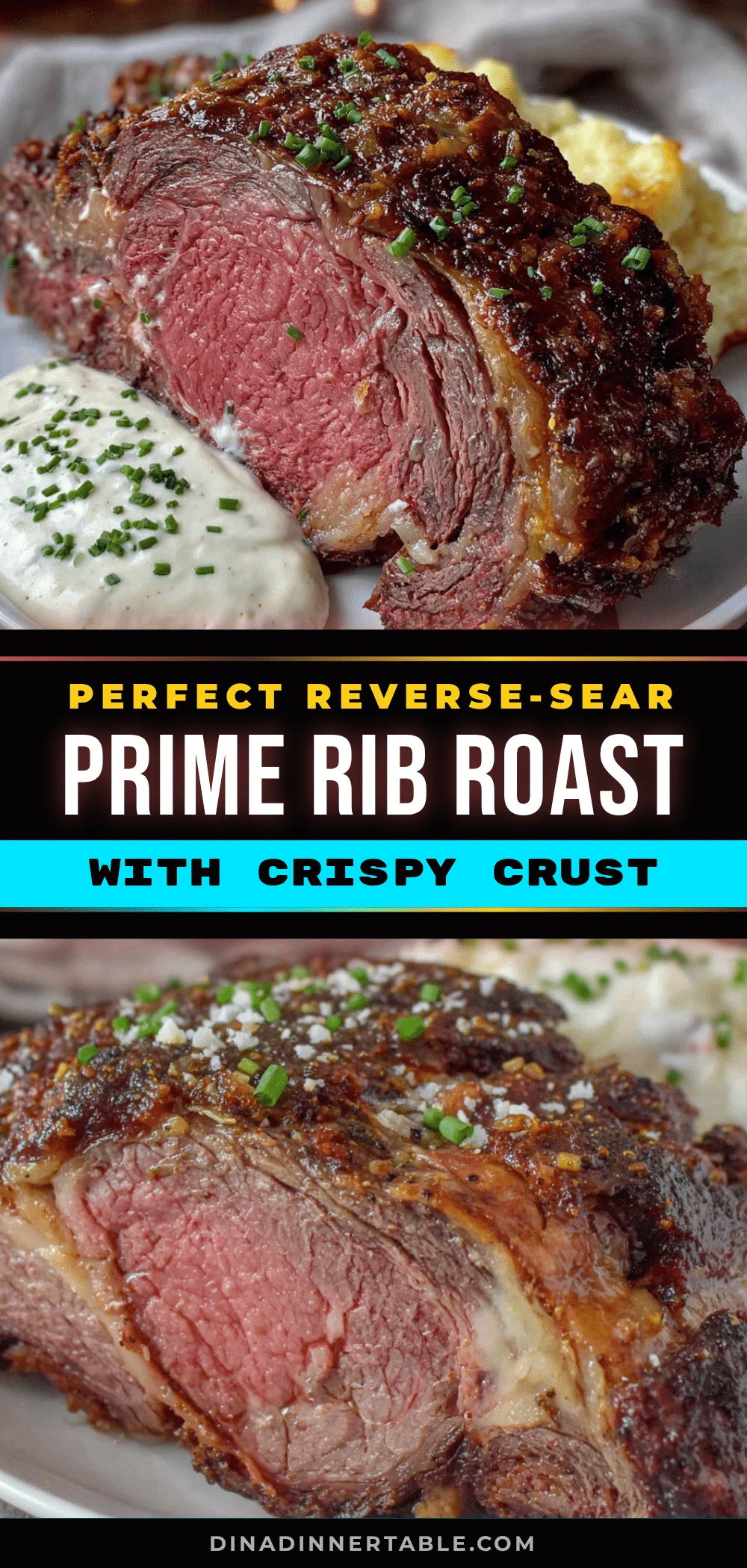
Perfect Reverse-Sear Prime Rib Roast Recipe with Crispy Crust Easy Method
A foolproof reverse-sear method for prime rib that delivers a juicy interior and a crispy, flavorful crust. Perfect for special occasions or an indulgent weeknight meal.
- Prep Time: 15 minutes
- Cook Time: 2 to 3 hours
- Total Time: 2 hours 45 minutes to 3 hours 15 minutes
- Yield: 8-10 servings 1x
- Category: Main Course
- Cuisine: American
Ingredients
- 4–6 lbs bone-in prime rib roast (USDA Choice preferred)
- Coarse kosher salt
- Freshly ground black pepper
- Garlic powder
- Fresh rosemary or thyme (optional)
- Olive oil or avocado oil (for searing)
- Butter (optional, for finishing)
Instructions
- Remove the prime rib from the fridge at least 1 hour before cooking to let it come to room temperature. Pat dry thoroughly with paper towels.
- Rub the entire roast generously with coarse kosher salt, freshly ground black pepper, and garlic powder. Let it rest while preheating the oven to 225°F (107°C).
- Place the roast bone-side down on a roasting rack in a baking pan. Insert a meat thermometer probe into the thickest part of the meat, avoiding bone.
- Roast for about 2 to 3 hours until internal temperature reaches 115°F (46°C) for rare or 120°F (49°C) for medium-rare.
- Remove from oven and tent loosely with foil. Let rest for 20-30 minutes.
- Heat a cast iron skillet over high heat until smoking hot. Add a tablespoon of oil with a high smoke point (avocado or grapeseed oil).
- Sear the roast on all sides for 2-3 minutes each until a deep brown crust forms. Optionally add fresh rosemary or thyme and a pat of butter to baste.
- Check internal temperature; it should be about 130-135°F (54-57°C) for medium-rare. If desired, finish in a 400°F (204°C) oven for 5-10 minutes.
- Let the roast rest again for 10 minutes before slicing against the grain and serving.
Notes
Pat the meat dry thoroughly before seasoning to ensure a crispy crust. Use a reliable meat thermometer to monitor internal temperature accurately. Resting the meat after roasting and searing is crucial for juicy results. If the crust softens after resting, a quick 30-second re-sear can revive it. For a smoky flavor, substitute garlic powder with smoked paprika.
Nutrition
- Serving Size: 4 ounces (113 grams)
- Calories: 350
- Fat: 25
- Protein: 28
Keywords: prime rib, reverse sear, roast beef, crispy crust, holiday roast, easy prime rib, beef roast, special occasion