My neighbor Marcus watched me struggling with a giant bag of dried black-eyed peas on New Year’s Eve, my kitchen looking like a small explosion had gone off in a pantry. He didn’t say anything at first. Then he came back ten minutes later with a plastic container of this soup, still warm, and said “Try this instead. Canned beans work just fine.” I remember staring at that container feeling equal parts relieved and skeptical—I mean, how good could a soup made with canned beans really be? Turns out, pretty incredible. That first spoonful had this unexpected smoky depth that made me forget all about my complicated plans. Marcus had learned it from his grandmother who had learned it from someone before her, and here it was, saving my New Year’s dinner without any of the fuss I was creating for myself.
The thing about this soup is it doesn’t ask much from you. Honestly, you don’t need to soak beans overnight or spend hours watching a pot simmer. It’s the kind of recipe that understands you have things to do—maybe you’ve been there, standing in the kitchen at 5 PM wondering how dinner is going to happen. I’ve made this on a Tuesday when the day got away from me, and let me tell you, it felt almost too easy. The collards wilt down into something silky, the black-eyed peas get all creamy, and that broth—oh, that broth picks up so much flavor from just a few ingredients working together. I made a mess of my stovetop that first time, splashing broth everywhere because I was too impatient to use a ladle. Marcus just laughed and said that’s how you know it’s homemade.
This soup stayed with me because it proved something I’d been overthinking for years: good food doesn’t have to be complicated. It can come together in the time it takes to catch up on a podcast, using ingredients you probably already have. Every time I make it now, I think about that kitchen exchange, how a neighbor’s simple gesture changed the way I approach weeknight cooking. It’s become my good luck tradition, not just for New Year’s but for any night that needs a little warmth and a whole lot of flavor.
Why You’ll Love This Recipe
Let’s be real for a second—most soups that claim to be quick aren’t actually quick. They still want you to chop things for twenty minutes or brown meat in batches. This one is different. I’ve tested it on exhausted weeknights, rushed Sunday meal prep sessions, and even that one time I had fifteen minutes before guests arrived. It delivers every single time without making you work for it.
- Quick & Easy: This soup comes together in under 30 minutes using mostly pantry staples. No soaking, no long simmering, no complicated techniques. You can have dinner on the table faster than takeout delivery.
- Simple Ingredients: Canned black-eyed peas, bagged collard greens, onion, garlic, and a few seasonings. Nothing fancy here—just honest ingredients that do exactly what they’re supposed to do.
- Perfect for Weeknights: This is the definition of a Tuesday night dinner. It’s forgiving, flexible, and doesn’t demand your full attention while it cooks.
- Crowd-Pleaser: I’ve served this to picky kids, skeptical in-laws, and friends who “don’t really like beans.” Everyone goes back for seconds. There’s something about that smoky broth that wins people over.
- Unbelievably Delicious: The texture here is what gets me every time—tender black-eyed peas, silky collard greens, and a broth that tastes like it simmered all day. You won’t believe it came together in half an hour.
What makes this version different from the other black-eyed pea soups out there is the technique. Instead of cooking everything separately, you build flavor right in the pot by sautéing the aromatics first, then letting the collards wilt down before adding the broth and beans. It’s a small thing, but it makes a huge difference in the final flavor. The collards get tender without turning mushy, and the black-eyed peas stay intact but creamy.
This is the kind of soup that makes you close your eyes after the first bite. It’s comfort food at its most practical—warming, satisfying, and completely doable on a night when you have nothing left to give. Perfect for those evenings when you need dinner to take care of you instead of the other way around.
What Ingredients You Will Need
This recipe uses simple, everyday ingredients to create a broth that tastes surprisingly complex. Most of these are probably already in your pantry or fridge, which is exactly the point. Here’s what you’ll need and why each ingredient matters.
- 2 tablespoons olive oil (or any neutral cooking oil) — This is your base for sautéing the aromatics. I use olive oil because it adds a subtle fruitiness, but avocado oil works great too.
- 1 medium yellow onion, diced — Onion provides the savory foundation. Yellow onions are my go-to here because they’re mellow and sweet when cooked down.
- 3 cloves garlic, minced — Garlic adds that aromatic punch that makes the whole kitchen smell amazing. Fresh is best, but jarred minced garlic works in a pinch.
- 1 teaspoon smoked paprika — This is the secret weapon. Smoked paprika gives the soup that deep, almost bacon-like flavor without any meat. I prefer Sweet Smoked Spanish Paprika for the best balance.
- 1/2 teaspoon dried thyme — Thyme adds an earthy, slightly floral note that pairs beautifully with the collards.
- 1/4 teaspoon cayenne pepper (optional) — Just a pinch for warmth, not heat. Leave it out if you’re sensitive to spice.
- 6 cups low-sodium vegetable broth — Using low-sodium broth lets you control the salt level. I like Better Than Bouillon vegetable base mixed with water—it’s concentrated and gives great flavor.
- 2 (15-ounce) cans black-eyed peas, drained and rinsed — Canned beans are the shortcut that makes this recipe possible in 30 minutes. Rinsing them removes excess sodium and that canned taste.
- 4 cups chopped collard greens (about 1 bunch), stems removed — Collards are sturdy enough to hold up in soup without getting mushy. Look for leaves that are deep green without yellow spots.
- 1 tablespoon apple cider vinegar — A splash of vinegar at the end brightens everything up and cuts through the richness. Don’t skip this—it’s what makes the flavors pop.
- Salt and black pepper to taste — Start with 1/2 teaspoon salt and adjust from there. Remember that the broth and beans already have some salt.
Substitution Guidance: If you can’t find collard greens, kale or Swiss chard work well too—just reduce the cooking time by a few minutes since they’re more delicate. For a completely different flavor profile, try using fire-roasted diced tomatoes with their juices in place of 2 cups of the broth. It adds a smoky, tangy element that’s really lovely. And if you want to make this even heartier, throw in a diced potato or two when you add the broth—it will cook right along with everything else.
One thing I’ve learned the hard way: don’t skip the apple cider vinegar. I made this soup once without it because I was out, and it was good but flat. That little bit of acid is what wakes everything up and makes you want another spoonful.
Equipment Needed
You don’t need a fancy kitchen setup for this soup, which is part of its charm. Here’s what you’ll need:
- Large pot or Dutch oven (5-6 quart) — This is your main vessel. A Dutch oven holds heat beautifully, but any heavy-bottomed pot will work. I use my 5.5-quart Le Creuset, but honestly, my old stainless steel stockpot does the job just fine.
- Sharp chef’s knife — For dicing the onion and mincing the garlic. A dull knife makes prep take twice as long and is more dangerous to use.
- Cutting board — Any cutting board works. I prefer wood because it’s gentler on knife blades.
- Wooden spoon or silicone spatula — For stirring and scraping up any browned bits from the bottom of the pot.
- Measuring spoons — For the spices and vinegar.
- Liquid measuring cup — For measuring the broth.
- Can opener — Unless you’re using the pull-tab cans.
- Colander — For rinsing the canned black-eyed peas.
If you don’t have a Dutch oven, don’t worry. A regular large pot works perfectly—just keep an eye on the heat so nothing sticks to the bottom. And if you don’t have a chef’s knife, a paring knife or even a sturdy serrated knife can get the job done, though it might take a little longer. I’ve made this soup in a cramped apartment kitchen with exactly two pots and a butter knife. It still turned out great.
Preparation Method
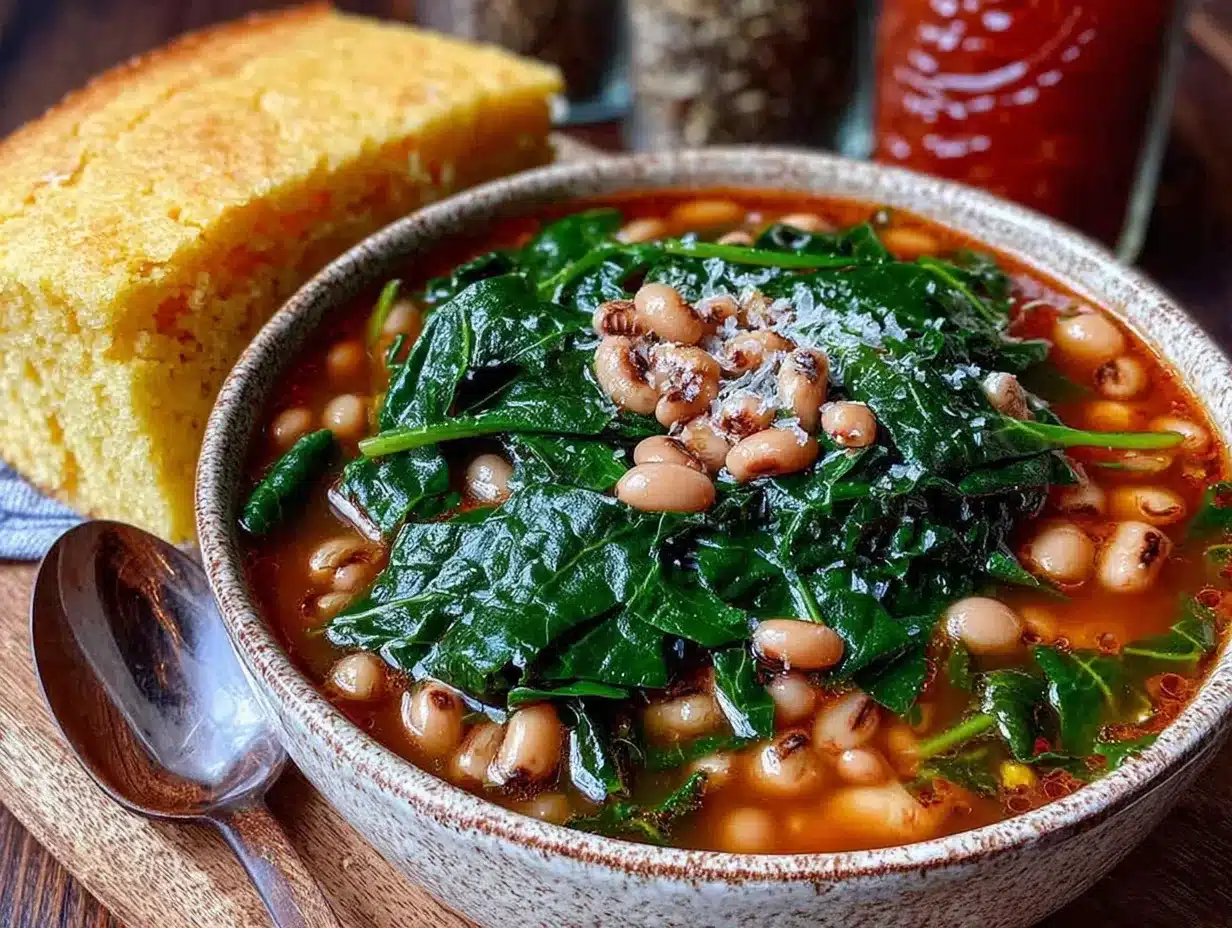
Let’s get cooking. This whole process takes about 30 minutes from start to finish, and most of that is hands-off simmering time. Here’s how to do it.
- Prep your ingredients first. Dice the onion, mince the garlic, and chop the collard greens. Remove the tough stems from the collards by folding each leaf in half and slicing along the stem, then stack the leaves and chop them into bite-sized pieces. Rinse and drain the canned black-eyed peas. Having everything ready before you start cooking makes the process so much smoother.
- Heat the olive oil in your large pot over medium heat. Give it about 30 seconds to warm up—you want it shimmering but not smoking. Add the diced onion and cook for 4-5 minutes, stirring occasionally, until it’s soft and translucent. It should look glossy and smell sweet.
- Add the minced garlic, smoked paprika, dried thyme, and cayenne pepper. Stir constantly for about 30 seconds until the garlic is fragrant. Be careful not to burn the garlic—it turns bitter quickly. You’ll know it’s ready when your kitchen smells incredible.
- Pour in the vegetable broth and bring it to a boil over high heat. This should take about 3-4 minutes. Once it’s boiling, reduce the heat to medium-low so it’s at a gentle simmer.
- Add the chopped collard greens and stir them into the broth. They’ll look like a lot at first, but they’ll wilt down significantly in about 3-4 minutes. Use your spoon to push them under the liquid so they cook evenly.
- Stir in the drained and rinsed black-eyed peas. Let everything simmer together for 10 minutes. The collards should be tender but still have a little bite, and the flavors will have melded together beautifully.
- Remove the pot from the heat and stir in the apple cider vinegar. This brightens the entire soup and balances the smoky flavors. Taste and add salt and pepper as needed—start with 1/2 teaspoon salt and 1/4 teaspoon pepper, then adjust.
- Let the soup rest for 5 minutes before serving. This allows the flavors to settle and the soup to cool slightly so you can actually taste it properly. I know it’s hard to wait, but trust me on this one.
A few notes from experience: If your collard greens seem particularly tough, let them simmer for an extra 5 minutes before adding the beans. And if you want a thicker soup, mash about half a cup of the black-eyed peas against the side of the pot before adding the vinegar—it creates a creamy texture without adding dairy. I forgot to add the vinegar once and served the soup anyway, and everyone noticed something was missing. Don’t be like me. Don’t skip the vinegar.
Cooking Tips & Techniques
After making this soup more times than I can count, I’ve picked up a few tricks that make a real difference. Here’s what I wish someone had told me from the start.
Don’t rush the onion. I know you’re in a hurry—that’s the whole point of this recipe. But those 4-5 minutes you spend cooking the onion are non-negotiable. If the onion isn’t properly softened, the whole soup will lack depth. Let it get translucent and just barely starting to brown around the edges. That’s where the flavor lives.
Toast your spices. When you add the smoked paprika and thyme to the hot oil with the garlic, let them sizzle for just a few seconds before adding the broth. This “blooming” step wakes up the spices and makes them more aromatic. I learned this after years of wondering why my soups tasted flat compared to restaurant versions. This is the difference.
Use the right collard green prep. The stems of collard greens are tough and fibrous—they won’t soften enough in a 30-minute soup. Take the extra minute to remove them. I fold each leaf in half and slice along the stem with my knife. It’s tedious but worth it. One time I was in a rush and left the stems in, and the soup had these chewy bits that nobody enjoyed.
Season in layers. Add a pinch of salt when you cook the onions, another when you add the broth, and then adjust at the end. This builds flavor gradually instead of relying on one big dose of salt at the end. It’s a small habit that makes your cooking taste more professional.
Multitask smartly. While the soup simmers, use that time to clean up your cutting board and knife, set the table, or chop any garnishes you want to add. The 10-minute simmer is your window to get everything else done. I usually wipe down my counters and pour myself a glass of water during this time—it makes the whole dinner experience feel less chaotic.
Variations & Adaptations
This soup is wonderfully flexible, and I’ve tried several variations over the years. Here are some of my favorites.
Smoky Bacon Version: Cook 4 slices of chopped bacon in the pot before adding the olive oil. Remove the crispy bacon bits and set them aside, then cook the onions in the rendered bacon fat instead of olive oil. Add the bacon back in at the end. This version is richer and obviously not vegetarian, but it’s absolutely delicious. I made this for a friend who claimed she didn’t like beans, and she asked for the recipe.
Spicy Southwest Twist: Add 1 diced jalapeño (seeds removed if you want less heat) along with the onions. Swap the smoked paprika for 1 teaspoon of cumin and 1 teaspoon of chili powder. Stir in a can of diced fire-roasted tomatoes with the broth. Top with fresh cilantro and a squeeze of lime. This version has a completely different personality—brighter, spicier, and more vibrant.
Vegan Creamy Version: After the soup finishes simmering, use an immersion blender to partially blend about 2 cups of the soup directly in the pot. This creates a creamy base without adding any dairy. Stir well to combine the blended and unblended parts. The result is a soup that’s thick and velvety while still having plenty of texture from the whole beans and greens.
Make It Heartier: Add 1 cup of cooked brown rice or quinoa when you stir in the black-eyed peas. This turns the soup into a complete one-pot meal that’s even more filling. I did this on a particularly hungry night and was pleasantly surprised at how well the grains absorbed the broth’s flavor.
Herb-Forward Version: Instead of smoked paprika, use 2 tablespoons of fresh chopped rosemary and 1 tablespoon of fresh thyme leaves. Add them with the garlic. The soup takes on a more rustic, garden-fresh character that’s lovely in spring and summer.
Serving & Storage Suggestions
This soup is best served hot, right after that 5-minute rest. Ladle it into deep bowls and top with something crunchy for contrast—I love a sprinkle of crushed red pepper flakes and some freshly cracked black pepper. A drizzle of good olive oil right before serving adds a lovely richness.
What to serve alongside: A chunk of crusty bread is practically mandatory for sopping up the broth. Cornbread is also fantastic—the sweetness balances the smoky, savory soup perfectly. If you want something lighter, a simple green salad with lemon vinaigrette works beautifully. I’ve also served this with grilled cheese sandwiches for a truly comforting meal.
Storage: This soup keeps beautifully in the refrigerator for up to 5 days. Store it in an airtight container and let it cool completely before refrigerating. The flavors actually get better after a day or two as they continue to meld together. I often make a double batch specifically so I have leftovers for lunch.
Freezing: This soup freezes wonderfully for up to 3 months. Let it cool completely, then transfer to freezer-safe containers or zip-top bags. Leave about an inch of headspace for expansion. Thaw overnight in the refrigerator before reheating.
Reheating: Reheat gently on the stovetop over medium-low heat, stirring occasionally. Add a splash of water or broth if the soup has thickened too much during storage. You can also microwave individual portions in 1-minute intervals, stirring between each. The collard greens will soften further upon reheating, which is actually quite nice—they become even more silky.
One thing I’ve noticed: this soup tastes even better the next day. Something about the flavors settling overnight makes everything more harmonious. So if you can, make it a day ahead and reheat it for dinner. Your future self will thank you.
Nutritional Information & Benefits
This soup is as good for you as it is delicious. Here’s what you’re getting in each serving (based on 6 servings):
- Calories: Approximately 220 per serving
- Protein: 12 grams
- Fiber: 10 grams
- Fat: 6 grams
- Carbohydrates: 34 grams
- Sodium: 480 mg (varies based on broth and added salt)
Health Benefits: Black-eyed peas are packed with fiber and plant-based protein, which help keep you full and satisfied. They’re also rich in folate, iron, and magnesium. Collard greens are a powerhouse of vitamins A, C, and K, plus calcium and antioxidants. Together, they make a soup that supports digestive health, immune function, and bone strength.
Dietary Considerations: This soup is naturally vegan, vegetarian, and gluten-free. It’s also dairy-free and nut-free, making it suitable for most common dietary restrictions. The fiber content is substantial, so if you’re not used to eating a lot of beans, start with a smaller portion and see how you feel.
I love that this soup makes me feel good without trying too hard. It’s not a “health food” that sacrifices flavor for nutrition—it’s just real food made from real ingredients that happen to be incredibly good for you. That’s my favorite kind of cooking.
Conclusion
This Quick Lucky Black-Eyed Pea & Collard Greens Soup is proof that you don’t need hours in the kitchen to make something truly special. It’s the recipe I turn to when I need dinner to be easy but still feel like an event—when I want to feed my family something warm and nourishing without spending my whole evening standing over the stove.
What I love most about this soup is how adaptable it is. You can make it exactly as written, or you can tweak it to match whatever you have in your fridge. Add more greens, swap the spices, throw in some leftover rice—it all works. The soup is forgiving, and it wants you to succeed. That’s rare in a recipe, and it’s why I keep coming back to it.
I’d love to hear how this soup turns out for you. Did you add your own twist? Did it become a weeknight staple in your house like it did in mine? Drop a comment below and let me know—I read every single one. And if you know someone who could use a little good luck and a great meal, share this recipe with them. After all, that’s how the best recipes travel—from one kitchen to another, one conversation at a time.
Frequently Asked Questions
Can I use dried black-eyed peas instead of canned?
You can, but you’ll need to soak them overnight and then cook them separately before adding to the soup. Dried beans take about 45 minutes to 1 hour to become tender. If you’re using dried beans, this recipe becomes more of a weekend project than a 30-minute weeknight meal. I recommend sticking with canned for the quick version.
Can I make this soup in a slow cooker or Instant Pot?
Yes! For the Instant Pot, use the sauté function to cook the onions and garlic, then add the broth, collards, and beans. Pressure cook on high for 5 minutes, then quick release. For a slow cooker, sauté the aromatics on the stovetop first, then transfer everything to the slow cooker and cook on low for 4-6 hours or high for 2-3 hours.
How do I store leftovers and how long do they last?
Store leftovers in an airtight container in the refrigerator for up to 5 days. The soup thickens as it sits, so you may want to add a splash of broth or water when reheating. You can also freeze it for up to 3 months—just let it cool completely before freezing.
What can I substitute for collard greens?
Kale, Swiss chard, or spinach all work well. Kale and chard will need about the same cooking time as collards, while spinach only needs 2-3 minutes. Mustard greens or turnip greens are also great options if you want a peppery kick. Just remove the tough stems from any hearty greens before adding them to the soup.
Is this soup spicy?
Not unless you want it to be. The cayenne pepper is optional, and the smoked paprika adds warmth without heat. If you’re sensitive to spice, simply leave out the cayenne. If you love heat, feel free to add more cayenne or a diced jalapeño with the onions. The base soup is mild and family-friendly.
Pin This Recipe!

Quick Lucky Black-Eyed Pea & Collard Greens Soup in 30 Minutes
A quick and easy soup made with canned black-eyed peas, collard greens, and a smoky broth that comes together in under 30 minutes. Perfect for weeknight dinners and New Year’s luck.
- Prep Time: 10 minutes
- Cook Time: 20 minutes
- Total Time: 30 minutes
- Yield: 6 servings 1x
- Category: Soup
- Cuisine: American
Ingredients
- 2 tablespoons olive oil
- 1 medium yellow onion, diced
- 3 cloves garlic, minced
- 1 teaspoon smoked paprika
- 1/2 teaspoon dried thyme
- 1/4 teaspoon cayenne pepper (optional)
- 6 cups low-sodium vegetable broth
- 2 (15-ounce) cans black-eyed peas, drained and rinsed
- 4 cups chopped collard greens (about 1 bunch), stems removed
- 1 tablespoon apple cider vinegar
- Salt and black pepper to taste
Instructions
- Prep your ingredients first. Dice the onion, mince the garlic, and chop the collard greens. Remove the tough stems from the collards by folding each leaf in half and slicing along the stem, then stack the leaves and chop them into bite-sized pieces. Rinse and drain the canned black-eyed peas.
- Heat the olive oil in your large pot over medium heat. Give it about 30 seconds to warm up—you want it shimmering but not smoking. Add the diced onion and cook for 4-5 minutes, stirring occasionally, until it’s soft and translucent.
- Add the minced garlic, smoked paprika, dried thyme, and cayenne pepper. Stir constantly for about 30 seconds until the garlic is fragrant.
- Pour in the vegetable broth and bring it to a boil over high heat. This should take about 3-4 minutes. Once it’s boiling, reduce the heat to medium-low so it’s at a gentle simmer.
- Add the chopped collard greens and stir them into the broth. They’ll look like a lot at first, but they’ll wilt down significantly in about 3-4 minutes. Use your spoon to push them under the liquid so they cook evenly.
- Stir in the drained and rinsed black-eyed peas. Let everything simmer together for 10 minutes. The collards should be tender but still have a little bite, and the flavors will have melded together beautifully.
- Remove the pot from the heat and stir in the apple cider vinegar. This brightens the entire soup and balances the smoky flavors. Taste and add salt and pepper as needed—start with 1/2 teaspoon salt and 1/4 teaspoon pepper, then adjust.
- Let the soup rest for 5 minutes before serving. This allows the flavors to settle and the soup to cool slightly so you can actually taste it properly.
Notes
Don’t skip the apple cider vinegar—it brightens the soup. For a thicker soup, mash about half a cup of black-eyed peas against the side of the pot before adding the vinegar. The soup tastes even better the next day.
Nutrition
- Serving Size: 1 serving (about 1.5
- Calories: 220
- Sugar: 6
- Sodium: 480
- Fat: 6
- Saturated Fat: 1
- Carbohydrates: 34
- Fiber: 10
- Protein: 12
Keywords: black-eyed pea soup, collard greens soup, quick soup, New Year's soup, vegan soup, gluten-free soup, weeknight dinner